UN Warns of Worst West Bank Crisis Since 1967 – Killings, Displacement, and Settler Violence Escalate
We hereby share an article published by The Palestine Chronicle. Since this article was issued, the situation in the West Bank continues developing, with more raids and attacks by the Israeli State, which continues carrying out illegal annexation movements, as well as detaining, displacing, injuring and murdering many Palestinians every week.
The occupied West Bank is facing its worst humanitarian crisis since 1967, as Israeli military operations, widespread settler violence, forced displacement, and large-scale demolitions converge to devastate Palestinian communities, according to multiple United Nations agencies and Palestinian officials.
UNRWA Commissioner-General Philippe Lazzarini warned that the occupied West Bank is witnessing an unprecedented collapse of humanitarian conditions, driven by Israeli assaults on refugee camps and the forced displacement of tens of thousands of Palestinians.
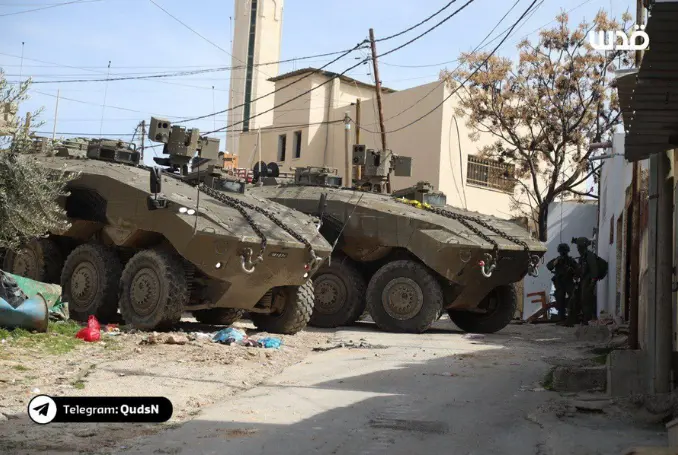
“After one year since the start of the Israeli military operation dubbed the ‘Iron Wall,’ 33,000 people remain forcibly displaced from Palestinian refugee camps in the northern West Bank,” Lazzarini said in a post on X. He added that Israeli forces continue to demolish large areas of the camps, sharply reducing prospects for recovery and return.
Lazzarini warned that the destruction is taking place amid a near-total absence of viable alternatives for health care, education, and social services, leaving displaced communities trapped in deepening poverty and instability.
Killings, Injuries, and Mass Displacement
The UN Office for the Coordination of Humanitarian Affairs (OCHA) reported that 240 Palestinians were killed and nearly 4,000 wounded by Israeli forces and settlers in the West Bank during 2025 alone. The agency documented more than 1,800 settler attacks, many of them resulting in injuries, property damage, and forced displacement.
OCHA said that over 100 Palestinian Bedouin and herding families from five communities in the central West Bank were displaced in just two weeks, between January 6 and January 19, due to persistent settler violence, threats, and intimidation. These attacks have prevented residents from accessing their homes, grazing lands, and water sources.
According to UN figures, Israeli demolitions in occupied East Jerusalem have reached record levels, with 256 homes and structures destroyed under the pretext of lacking building permits.
Settler Attacks in Hebron and Forced Expulsions
On Saturday, two Palestinians were injured in a settler attack in the village of Khallet al-Natsh, east of Hebron, according to local sources cited by Al-Jazeera. Settlers attacked a Palestinian home, demolished parts of a wall, vandalized crops, and threw stones at residents. Pepper spray was also used during the assault.
Local sources said settlers attacked residents with stones and sticks, causing injuries that required medical treatment. The area has been subjected to repeated attacks by settlers from the nearby Kiryat Arba settlement.
In a separate development, settler violence forced 15 Palestinian families to flee the Shallal al-Auja Bedouin community east of Jericho, raising the total number of displaced families from the area to 94.
Ahmed Ghuanima, a resident who is preparing to leave the community, told Anadolu that 120 families, comprising around 650 people, had lived in the area but were subjected to two years of sustained settler attacks, electricity cuts, and systematic harassment that rendered life impossible.
In May 2024, an Israeli settler established a grazing outpost near the Ein al-Auja spring, a vital water source for the community. Residents said the move was aimed at seizing control of the area and denying Palestinians access to water.
Attacks across the Hebron Governorate
Further settler violence was reported across the Hebron governorate. According to WAFA, several Palestinians were injured in coordinated attacks by armed settler groups while farming and tending livestock in Khallet al-Natsh, Wadi Sa‘ir, and Marah Abu Asida near Beit Ula.
In Khallet al-Natsh, settlers assaulted farmers, injuring several people, including one man who suffered a head injury after being struck by a stone. In Wadi Sa‘ir, settlers attacked homes and blocked the main road, disrupting movement.
Beit Ula Mayor Atiyah al-Adam told WAFA that settlers, accompanied by Israeli soldiers, attacked residents in Marah Abu Asida near the separation wall. When Palestinians confronted the settlers, Israeli forces fired tear gas, causing multiple cases of suffocation.
Collapse of Access to Services
The UN Population Fund (UNFPA) warned that ongoing Israeli operations, settler violence, and movement restrictions are severely limiting access to schools, workplaces, markets, and health care facilities.
The agency estimates that more than 230,000 women and girls, including nearly 15,000 pregnant women, face serious obstacles in accessing reproductive health services due to escalating violence and restrictions.
UN Accusations against Israel
UN Special Rapporteur on the occupied Palestinian territory Francesca Albanese accused Israel of conducting a systematic assault on the United Nations system itself, calling for the suspension of Israel’s UN membership and the imposition of international sanctions.
Albanese said the demolition of UNRWA’s headquarters in occupied East Jerusalem represents a dangerous escalation targeting both the international organization and the Palestinian people.
Settlements and Demographic Pressure
According to official Palestinian reports, the number of Israeli settlers in the West Bank reached approximately 770,000 by the end of 2024, living in more than 180 settlements and 256 outposts.
UN agencies warn that the combination of settlement expansion, settler violence, military raids, and demolitions is pushing Palestinian communities toward irreversible displacement, threatening to permanently alter the demographic and humanitarian landscape of the occupied West Bank.