AND – Editorial: Iran Joins the Camp of the World Revolution
We hereby share an unofficial translation of the latest statement from A Nova Democracia.
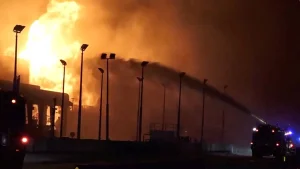
The Yankee-Zionist attacks of February 28, 2026 mark a new and unprecedented phase in the relentless campaign of aggression against the Iranian nation. Under the flimsy pretext of combating Iran’s nuclear program for “being a threat to the existence of the US,” the aggression has already claimed more than 1,200 lives, according to the Iranian press, 13% of whom are women and children. The number of civilians wounded exceeds 6,000, adding to the many crimes against humanity that are part of the track record of the Yankee demons and the Nazi-Zionist beast.
What is extraordinary, however, is the Iranian response, which demonstrates the dignity and determination of a nation that refuses to become enslaved by Yankee aggressors. The martyrdom—as they themselves call death in battle—of Ali Khamenei, supreme leader of the Islamic Republic of Iran, is not a sign of Yankee and Zionist superiority; rather, it is a final act of dedication to the national cause, of giving one’s life to unite the entire nation, knowing that this time, the attack by Yankee imperialism would be comprehensive and determined to cross several red lines in order to halt the nuclear program. Khamenei died with his loved ones, in his official office, which was not secret, at his command post. He is thousands of miles away from Netanyahu, who, upon hearing the crack of a firework, immediately seeks shelter and a safe place. The former, despite his past, died becoming a hero of the anti-imperialist struggle; the latter will always be a miserable lackey of imperialism.
These events are new and profound manifestations of a particular period in the general crisis of imperialism, a particular phase within the imperialist stage of manifest Yankee despair in the face of the clear decline of its hegemony in the world; a phase in which, on the basis of this general decomposition of the imperialist system, the explosiveness of the masses reaches extraordinary levels, expressed in the advance of the national liberation struggle and anti-imperialist and anti-fascist resistance in the oppressed countries and the workers’, popular and anti-fascist resistance in the developed countries, turning into a general environment increasingly favorable to the development of the subjective factor of the World Proletarian Revolution. Firstly, “those at the top cannot continue to rule as before”: the Yankees resort to aggression against Venezuela, Cuba, and Iran, in addition to maintaining more than 800 military bases around the globe, not because they are stronger than ever, but because they can no longer impose their will through simple military deterrence, but only through cannon fire. It is, above all, their fragility that stands out, and in doing so, it pushes entire nations into the camp of the World Proletarian Revolution. The Yankees cannot control as before, nor can their imperialist contenders: the redefinitions of NATO, the growth of contention with France, Germany, and especially with China and Russia demonstrate that Yankee hegemony is already openly questioned, and its downfall is evident in the intensification of inter-imperialist contradictions, in the wars of national liberation and popular rebellions against its lackeys in oppressed countries, and in the violent rise of class struggle in developed countries. The general counterrevolutionary offensive of Yankee imperialism is being defeated, plan by plan, ambushed by its internal contradictions and dealt a severe blow by the Al-Aqsa Flood, which laid bare the essence of the fragility of imperialism and its lackeys through armed struggle. Here, too, is the second element: “those at the bottom do not accept continuing as before.” The growth of the subjective factor, of the national liberation movement, is unprecedented in the last 50 years, as is the growth of the international proletarian movement, the resurgence of popular armed self-defense organizations in the US, the increasing level of consciousness among the masses, albeit incomplete, about the essence of the system of exploitation and oppression, and the reappearance of a revived International Communist Movement marching toward reunification, the likes of which has not been seen in 40 years.
Millions of masses in the Middle East, Asia, Europe, Latin America, and within the US itself are rising up in a new surge of the anti-imperialist movement; wars of national liberation, resistance, and People’s Wars around the world are rising up in a storm. Imperialist aggressions are throwing entire divisions of oppressed nations into the field of war against imperialism, against the Yankee demons; the importance of revisionism reappears, now in the form of Xi Jinping, as a dangerous trafficker who seeks, with the support of revisionists around the world, to hijack the anti-imperialist struggle for his hegemonic plans. This is truly a new period, a particular period with distinct characteristics; a new period of revolutions.
***
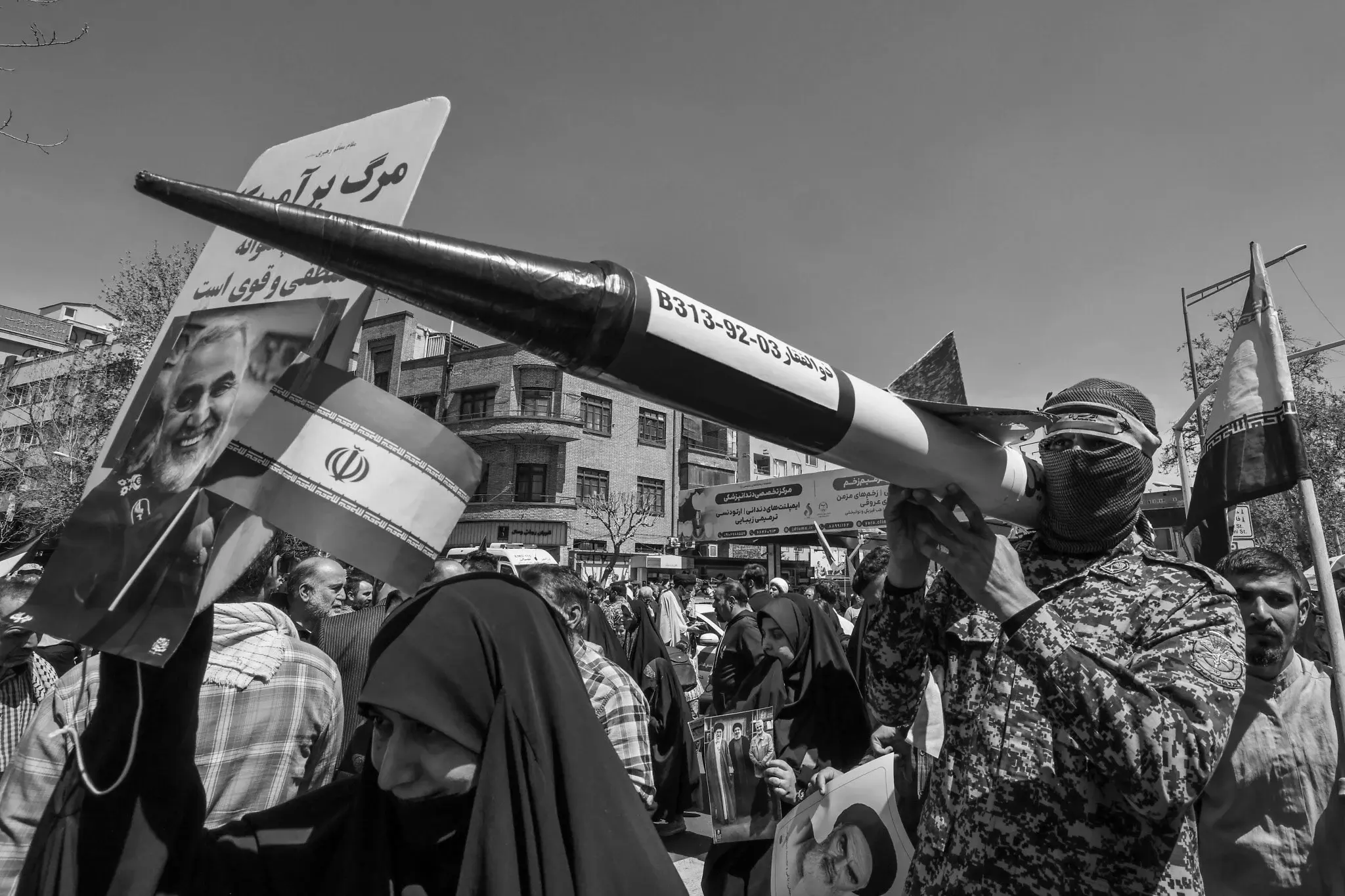
Iranian self-defense has dealt heavy blows to the aggressors, demonstrating great military capacity for a protracted defensive war. According to Iranian sources, there have been more than 650 casualties among the Yankee-Zionist troops, including deaths and injuries, which is obviously not admitted by the aggressors. Yankee military bases in Kuwait, Bahrain, Iraq, Qatar, and the United Arab Emirates have been hit by Iranian missiles and drones. More than 500 ballistic missiles have been launched by Iran, along with 2,000 drone attacks, against more than 27 Yankee or Zionist military bases or installations in ten different countries. Anti-imperialist organizations in the region also rose up and struck US targets in Yemen, Iraq, Kuwait, Syria, and Lebanon, with more than 100 rocket and drone attacks.
Iran’s strategy was clearly outlined in the early days of resistance to foreign aggression. Control of the Strait of Hormuz is a strategic part of the nation’s defense: with it, Iran controls 20% of the world’s oil traffic, which flows through this narrow sea route, or approximately 20 million barrels of oil per day.
The Persian country announced the closure of the route and, immediately afterwards, oil tanker traffic fell by around 70% – an interruption without recent precedent. Thus, Yankee-Zionist aggression inevitably results in an increase in the international price of oil – a barrel of which, which cost $45 a few months ago, is now being quoted at over $80 – and consequent global inflationary pressure, with severe risks of global recession, which affects all the imperialist powers and the lackey monarchies in the region, as well as divisions within the Yankee establishment, which result in pressure to end the aggression.
The longer the aggression continues, the greater the political, economic, and military cost to the Yankees will be—and, in any case, political isolation is already being felt, with the growing questioning of Yankee hegemony in Europe and Asia, which will only deepen. It is not without reason that France has announced, in the meantime, that it will resume the production of improvements to its nuclear arsenal, while Russia and China are also doing so.
***
We, the anti-imperialist movement and internationalists, must raise a powerful movement in support of the Iranian people’s national resistance war, in addition to the ongoing movement in support of the Venezuelan and Palestinian peoples. These are different fronts in the same international struggle against imperialism, of which the People’s Wars in India, Peru, the Philippines, and Turkey are part and vanguard—whose support movements are inseparable from those. Defending the Iranian people’s national resistance war is now part of the tasks of internationalists, always emphasizing the need for proletarian leadership, but in a united front against the common enemy, the imperialist aggressor.