
100,000 People in Brussels Show Their Anger: Streets Fill with Protests Against the Arizona Government
We hereby share an unofficial translation of a report published by Avrupa Haber.
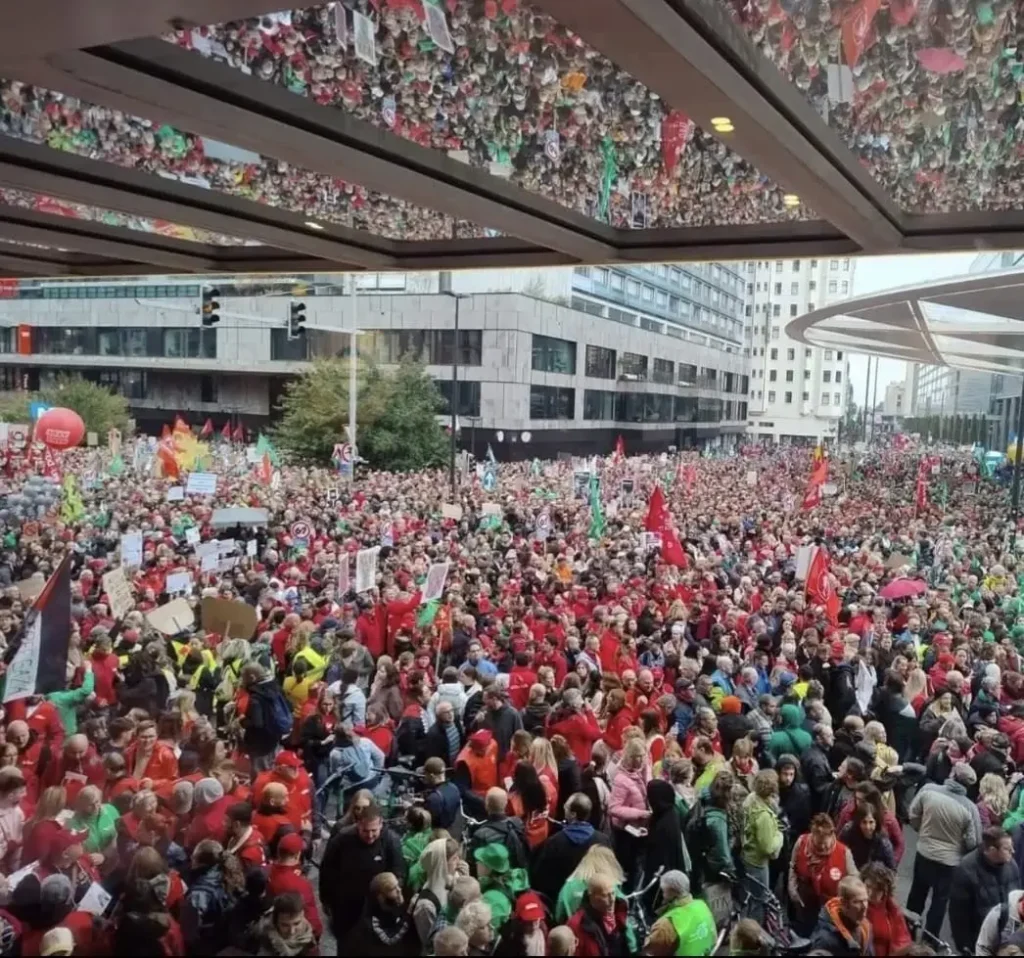
On March 12, the streets of Brussels became the scene of a massive outcry, with hundreds of thousands protesting against austerity policies, right-wing extremism, and social attacks on the working class. In a national demonstration called by unions and social movements, workers, youth, pensioners, and migrant workers marched against the Arizona government’s antisocial program [Translator’s note: Belgium government, called that way due to the colors of the Parties forming the Coalition, that are also the colors of the Arizona State]. According to unions, more than 100,000 people participated in the march.
The demonstration is seen as a new phase in growing social resistance against austerity policies implemented by the government led by Prime Minister Bart De Wever, which include cuts to the pension system, weakening of social aid, and the dismantling of public services.
Anti-Imperialist and Anti-Fascist Bloc Marches
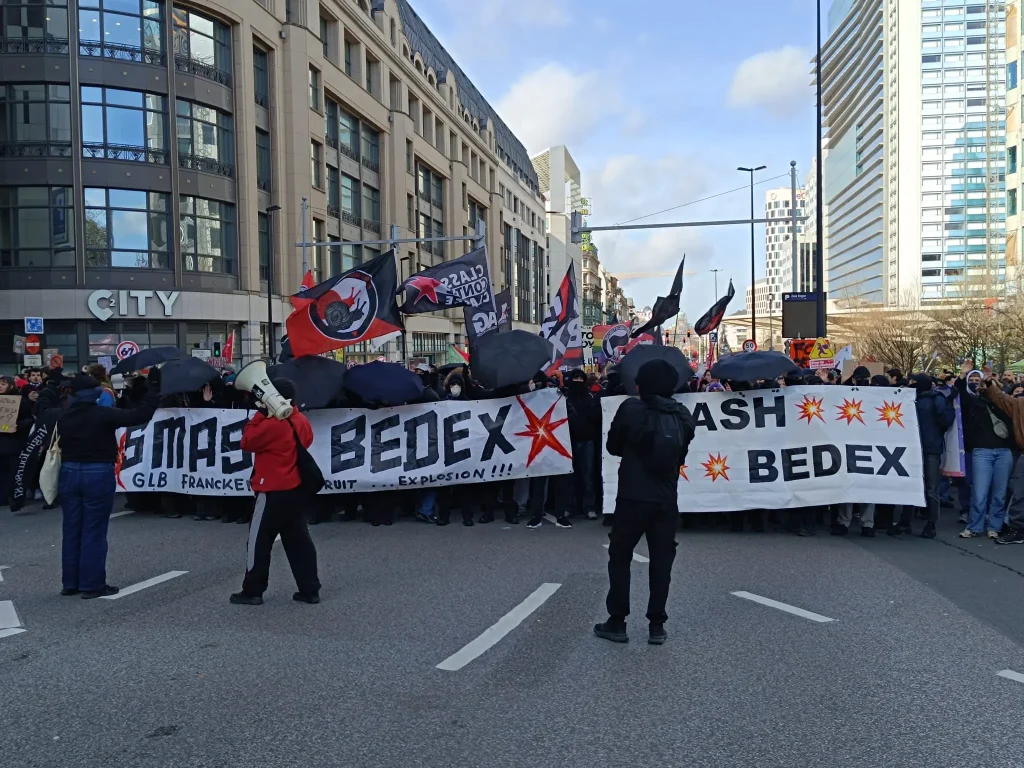
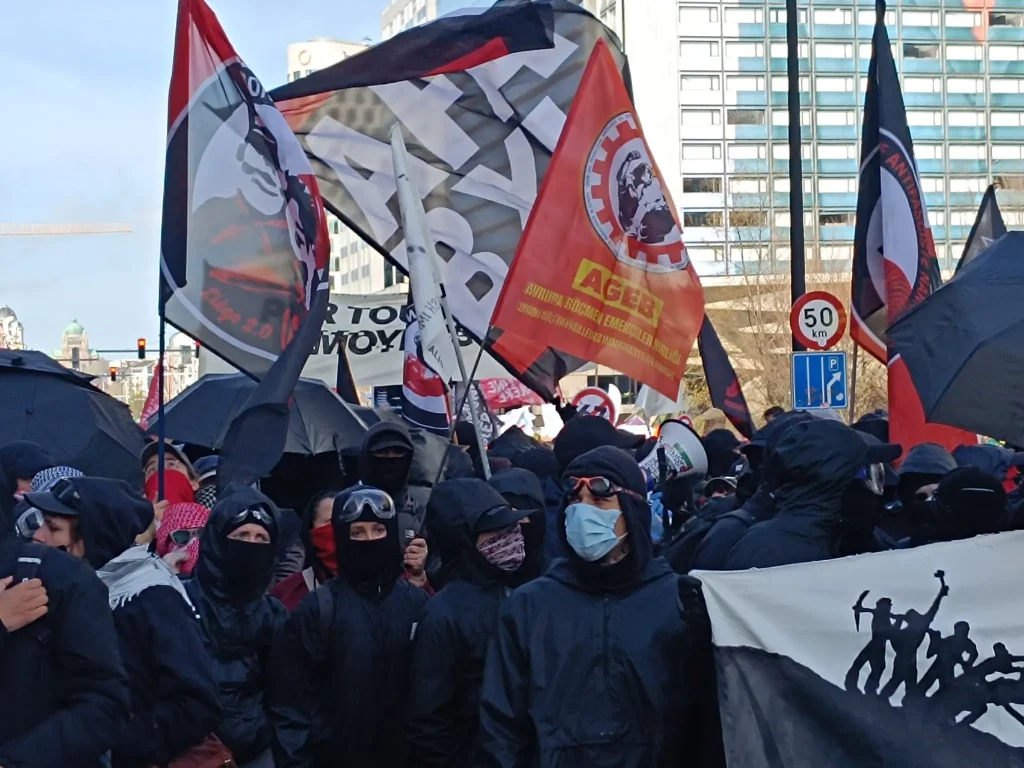
In addition to trade union contingents, militant blocs formed by anti-fascist and anti-imperialist organizations also participated in the march. Within this bloc, along with numerous youth and solidarity organizations, the Union of Migrant Workers in Europe (AGEB) also took its place in the anti-imperialist bloc.
Early in the march, the windows of a bank branch were broken along the route of the anti-imperialist bloc. The activists viewed this act as a symbolic protest against finance capital’s role as the architect of austerity policies.
Police Attack on the Road to the US Consulate
The crowd continued their march, heading towards the street where the consulates are located. According to eyewitnesses, as the march progressed towards the Embassy of the United States in Belgium, the police attacked before the crowd even reached the consulate building.
Riot police heavily sprayed protesters with tear gas , then attacked them with shields and batons. Witnesses stated that the intervention was launched without any justification and was solely aimed at halting the crowd’s progress.
As a result of the police attack:
– Three people were seriously injured and taken to hospital.
– Many people sustained minor injuries.
– At least 50 people have been detained.
Police also attempted to block the march by completely closing the road. However, the crowd did not retreat. The protesters forced their way through the police barricades and continued their march.
The State’s Apparatus of Repression is on the Streets
Many activists participating in the protest viewed the police intervention as a clear indication that State law enforcement agencies were being deployed to suppress social opposition. The activists emphasized that austerity policies could only be sustained through increased police violence and repressive mechanisms.
Radical local news networks and activist media platforms stated that the intervention was carried out specifically targeting the anti-fascist and anti-imperialist bloc.
A Resistance That Has Lasted Over a Year
The mass march on March 12th was a continuation of the strikes and protests that have been ongoing in Belgium for the past year. Numerous general strikes and national demonstrations were organized across the country throughout 2025 and the first months of 2026.
These mobilizations made it difficult for the government to implement its austerity program and led to the withdrawal of some attacks. However, unions and social movements emphasize that the government’s program still contains severe attacks against the working class.
Fighting Against Racism and Fascism
During the protest, it was frequently stated that the government’s policies were not only an economic assault but also a trend that strengthened right-wing extremism and racism in society. Activists argued that neoliberal austerity policies increased insecurity, paving the way for the rise of the far right.
Therefore, trade unions, anti-fascist organizations, and migrant worker collectives emphasize the need to establish a broader front of struggle.
Anger on the streets is growing
The hundreds of thousands who filled the streets of Brussels on March 12th turned the protest into more than just a demonstration; it was a clear expression of growing social anger against the government.
Workers, youth, and migrant workers marched with slogans such as “No to austerity policies” and “Fight against racism and fascism,” calling for the struggle to be expanded.
This rising anger in Brussels has once again demonstrated that the tradition of social movements and working-class struggle remains strong in Belgium.