France – LCDP: After November 5 – We Want it All!
We hereby share a translation that we have received per email of an article by La Cause du Peuple (LCDP) published on November 7.
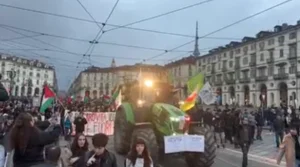
The movement that began with the high school student revolt is gaining momentum; November 5 marked yet another explosive outburst of the ongoing social revolt. The government had hoped that the anger would subside during the school break, but that was not the case. Despite the intensity of the repression and propaganda, the number of protesters was just as high during the two subsequent rounds of protests on October 17—a day that has now become the ultimate benchmark for measuring the level of violence, “disorder,” and “chaos” on everyone’s lips, against which all subsequent days of mobilization are compared. There’s no doubt about it: the regime is in crisis; the government no longer governs much of anything—all that remains is Macron and his cops. This is the result of a quantitative accumulation that, combined with this deep-rooted Popular Movement, marks a qualitative leap in the class struggle in the country—a struggle rooted in the economic crisis and taking the form of Macronism, the unadorned manifestation of decaying Bonapartism.
On October 18, Emmanuel Macron pathetically called on the French people not to protest in the streets, reminding them that next May’s presidential election would be the ultimate moment of decision. What the persistence of the ongoing movement shows us is that the people couldn’t care less about that deadline. More specifically, a segment of the masses no longer expects anything from the 2027 presidential election. Even without a short-term solution, even without unanimous demands, the people—and especially the youth—are ready to fight. Young people embody the spirit of the times by proclaiming, “We’ll stop when we want to.” The possibilities for the popular movement are vast, because the government has nothing but crumbs to offer—and only repression if “consultation” fails. On the other side, the masses have time and historical depth on their side. If the movement takes root, the only options left will be another dissolution of the National Assembly—which would deepen the regime’s crisis—or the resignation of the phony Jupiter in his Ray-Bans. But a resignation by the President of the Republic would set an extremely dangerous precedent by destroying the very raison d’être of the Fifth Republic.
November 5 marked the first day of the strike called by the entire inter-union coalition. By the end of the day, the final figure was in: there were 1.6 million strikers and protesters across the country—a number not seen since the massive mobilizations against pension reform in 2023. The mobilization was just as strong in the private sector; for example, one in three railroad workers did not show up for work.
Of course, the inter-union coalition’s entry into the fray brings with it the same pattern of control, pacification, and resumption of “dialogue” between prefectures and “intermediary bodies” that we observed during the “September” movement of 2025. We can nevertheless note that this effect has remained relatively limited, as young people are at the forefront of the movement, continue to refuse to be scattered, and have also learned to fight back over the past several weeks. Whether at the grassroots or at the top, the unions also have little interest in being polite during this twilight of the regime: summoned to the Élysée Palace to “condemn the violence” in the aftermath of October 17, the state has since forced them to take responsibility for the demonstrations, as the “only legitimate” bodies authorized to organize them—in defiance of all basic democratic principles. They are being lectured while being begged to calm things down. Crucially, we see that a segment of the CGT is finally beginning to understand the times we live in and the risks ahead. In Toulouse, the Departmental Union courageously rejected the route designated by the Prefecture and, in effect, proclaimed that the streets belong to the working class. This defiance of public authority was quashed by the police, who cowardly beat up the union’s security detail. Step by step, the working class must defend every position; it alone can ward off an authoritarian regime.
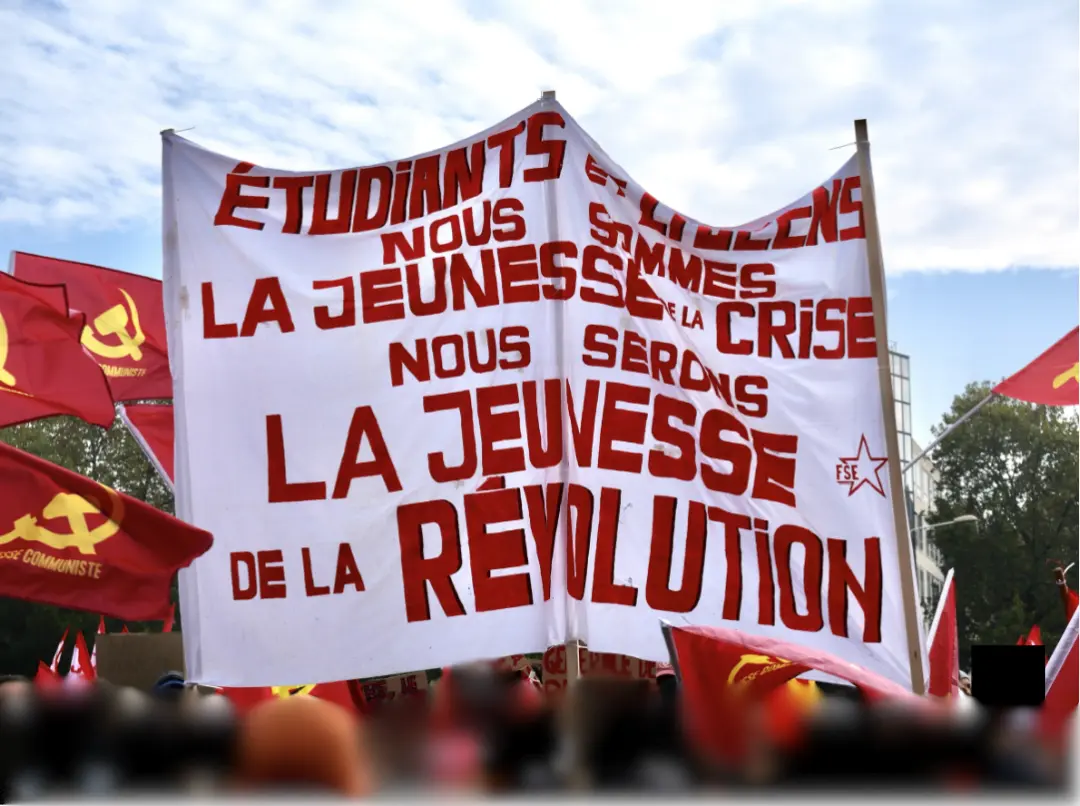
More than 1,000 high schools were blocked or disrupted on Thursday, with one in two staff members on strike. In the Seine-Saint-Denis department (a Paris suburb), the student union of Le Corbusier Highschool condemned the prefecture’s efforts to pressure schools into staying open “so as not to tarnish its statistics by claiming that the high school student movement is insignificant.” As for universities, 90% of them were blockaded or mobilized in some way. Against all odds, and despite a brief lull at the start of the school year, the mobilization of working-class youth continues. It remains strong on a large scale. Those who have seen their parents suffer over the past 15 years know that the only times the people have achieved anything is by embracing confrontation. Renaud Dély may try to bluff on France Info by claiming that the working-class youth movement is over and that the majority of “attainable” demands have been “met,” but high school students remain steadfast, insisting that the movement will only end when they decide it will! This assertion is confirmed by the mobilization that continued even the day after the 5th, despite—once again—the violent repression.
In terms of repression, the Ministry of the Interior reported a total of 6,059 arrests between September 28 and October 5. When combined with the national days of mobilization in October, the number of arrests surpassed 10,000. These figures have never been seen at such high levels or over such a short period of time in French political history, apart from the major anti-Semitic and colonial roundups. As of Thursday, the tally stands at 11,623 people detained (not counting the arrests that took place during the major national demonstrations, which number in the hundreds). Now more than ever, defending our democratic rights by every possible means is a historic necessity. The establishment of a dictatorial regime is not inevitable. The masses must defend each of their positions step by step, without backing down.
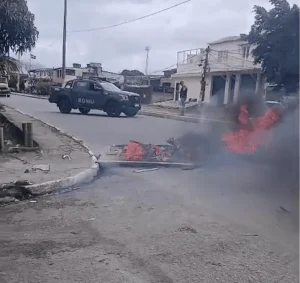
The demonstrations on the 5th were the scene of particularly violent police charges, images of which left a lasting impression on people across the country. In Lyon, footage shows a woman in a wheelchair being struck in the face for no reason by a police officer, while the charges resulted in numerous skull fractures, cases of asphyxiation from tear gas, and other injuries—yet despite their brutality, these incidents did not deter the demonstrators.
In Strasbourg, the police have once again been displaying a particularly barbaric sadism over the past several weeks, both in police custody and during protests, where they crammed about sixty people into a requisitioned bus to take them to the police station. These scenes, as we have pointed out, are reminiscent of the sordid images from the roundup of high school students in Mantes-la-Jolie in 2018, where about a hundred were forced to kneel under similar conditions. These images are only a tiny fraction of everything that managed to bypass media censorship on this 5th, when scenes of state barbarism were visible in most of the mobilized urban areas.
The media and political climate of terror and demoralization no longer works, whereas it had been effective against the Yellow Vests. Despite the state’s excessive violence against the struggling masses, they keep coming back again and again, week after week, without faltering! The situation is different; so are the times.
This Saturday, Act IV of the “against the high cost of living” movement will once again bring together thousands of people in major cities. Across Europe, at the initiative of the Spanish Confederation of Tenants’ Unions, unions and associations are calling for large-scale, coordinated mobilizations over the weekend of November 20–22, in support of wages and against militarist policies. This “Act VI” could bring millions of people out onto the streets of France, Belgium, the United Kingdom, Spain, Greece, Italy, and Portugal.
The government is attempting to defuse this escalating tension by convening a “social conference,” scheduled for Monday, November 9, with the unions, youth organizations, and employers’ groups. Let Lecornu take note: the masses will not repeat the farce of the 2019 Great Debate—they want it all, and they will take it all!
Whether these events are a success or not, whether the broader movement continues with vigor or wanes in the coming weeks, whether November 5 marks a grand conclusion or the beginning of a new wave of social revolt—all these possibilities are merely secondary. We can be certain that, at present, the state is on edge; the realization that the intensity, the rapid succession, and the mass character of these successive social revolts merely accompany the convulsions of an old body already in a state of decay. The big bourgeoisie is entangled in the contradictions between its own interests and the mechanisms of an old state that struggles to stay afloat, so failing is it. Whatever the tactical outcome of this phase, we are the vast majority, and the struggle is our crucible. Since everything is a contradiction, the march toward an authoritarian regime is also a march toward a broad-based mass awareness of the situation. Paradoxically, this movement also acts as a brake on the policy of reactionary resurgence, which is not merely a purely military strategy but a policy that seeks to influence people’s minds in order to subjugate them.
Now more than ever, the defense of democratic and social rights goes hand in hand with the rejection of preparations for war, and only the working class and its youth seem capable of waging the struggle on both these fronts. The fact that there is no wait-and-see attitude just a few months before the regime’s most critical moment proves to us that the rank and file are ready for the struggle for our class’s political autonomy, in all its aspects: “The enemy advances, we retreat; the enemy stands still, we harass him; the enemy grows weary, we strike him; the enemy retreats, we pursue him.”