The EU Provisionally Approves the Agreement with Mercosur
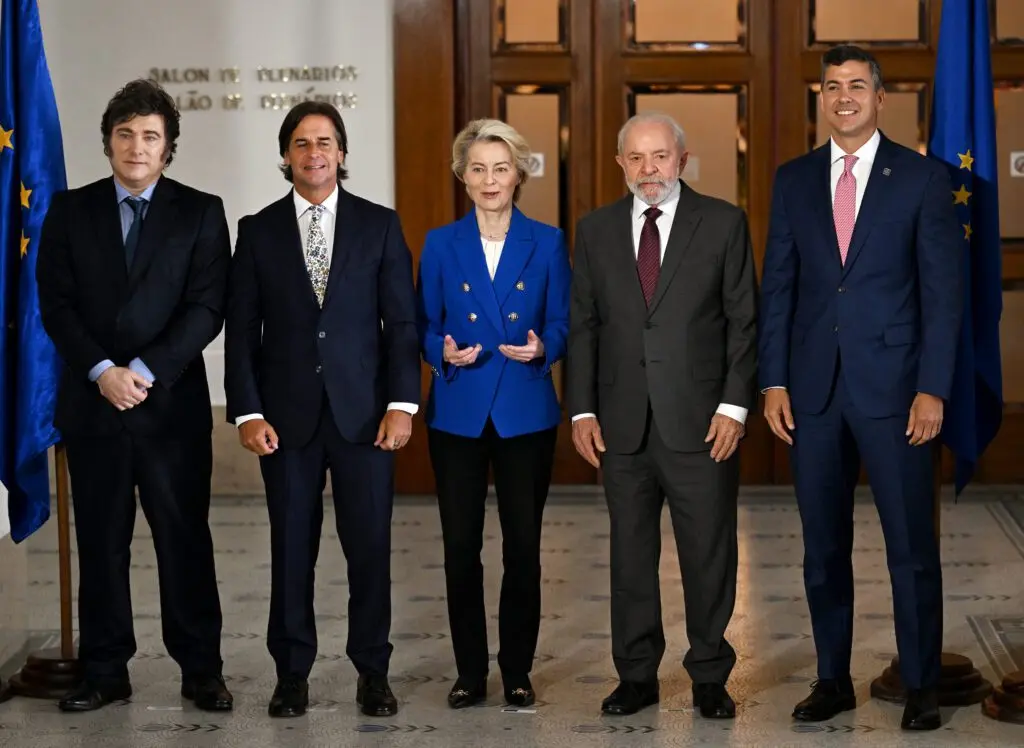
Featured image: Latin American and European leaders. Source: AND.
On January 9, the European Union (EU) approved the “free trade” agreement with Mercosur, which has been negotiated for 25 years, reports A Nova Democracia (AND). AND reports that the agreement “promises to strengthen ties between big landlords in South American countries and the European monopoly big bourgeoisie, reinforcing semi-colonial domination in the subcontinent. In practice, the treaty mainly benefits agro-export groups integrated into the global production chain, favoring latifundium in countries such as Brazil, Argentina, Uruguay, and Paraguay, as well as large mineral export companies, ensuring that these countries remain suppliers of raw materials and promoting monoculture.”
Low value-added products such as different types of meat, sugar, and ethanol will be exported to the EU, while Latin America will import high value-added products such as cars and tractors, which will be shipped to Mercosur countries with low tariffs. The agreement provides for “asymmetric commercial exploitation.” The EU is expanding access for its industrial products to the Mercosur market, while Mercosur countries must intensify their agrarian and mineral production, therefore weakening their local industrial policy. This deepens their status as exporters of primary sector products and their semi-colonial character.
AND reports on several harmful aspects of continuing to promote latifundium and its interests: its enrichment does not mean better living conditions for the people or an increase in national production, since despite successive record increases in agricultural exports poverty has and the cost of living for the masses have increased. This sharpens also the concentration of land, causing more conflicts in the countryside. In recent years, poor, indigenous, and Quilombola peasants have intensified their struggle and organization under the leadership of organizations such as the League of the Poor Peasants (LCP) against land grabbing and the crimes carried out by big landlords. Another negative aspect is the increasing deforestation and loss of river flow, affected by mega-plantations of export products such as soy.
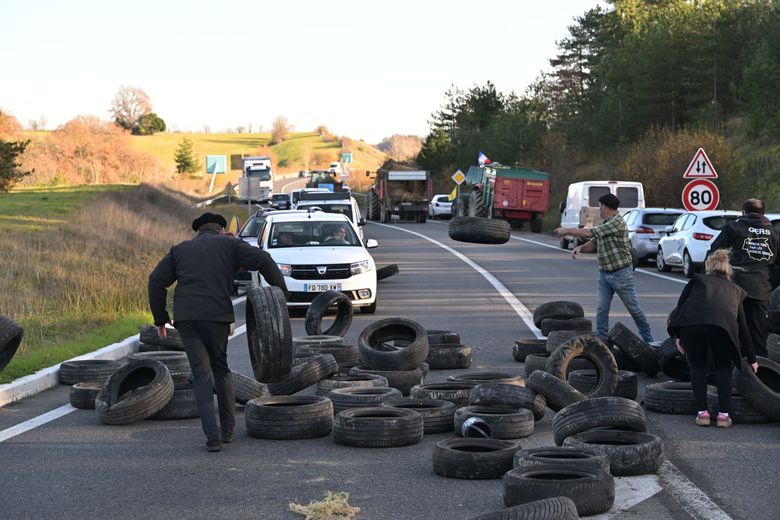
Although the agreement has been provisionally approved, it has been opposed by several countries, pressured by large protests in the countryside, for example in France, Poland, Hungary, Ireland, and Austria. There were also violent clashes in Brussels, where thousands of farmers protested against the agreement and made the UE delay its decision for weeks:
La Cause du Peuple reported on the increasing protests in the countryside in France:
.
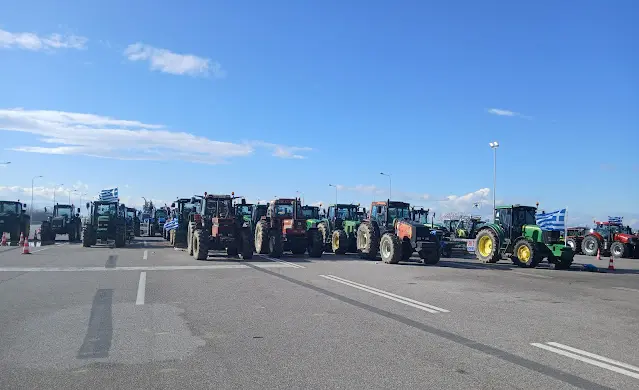
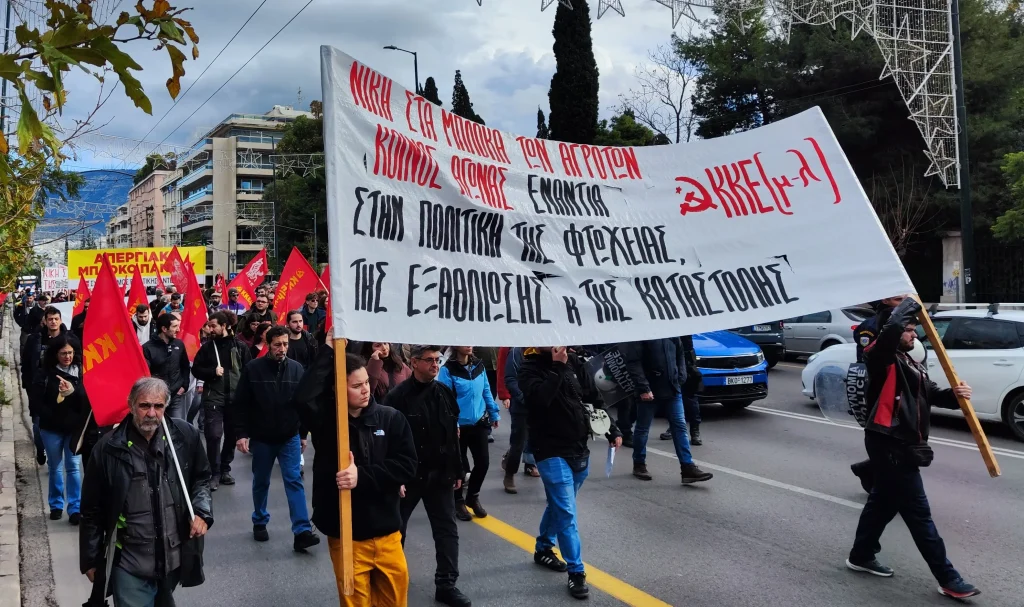
In Greece, there have also been blockades and various protests, despite this, the government supported the agreement.
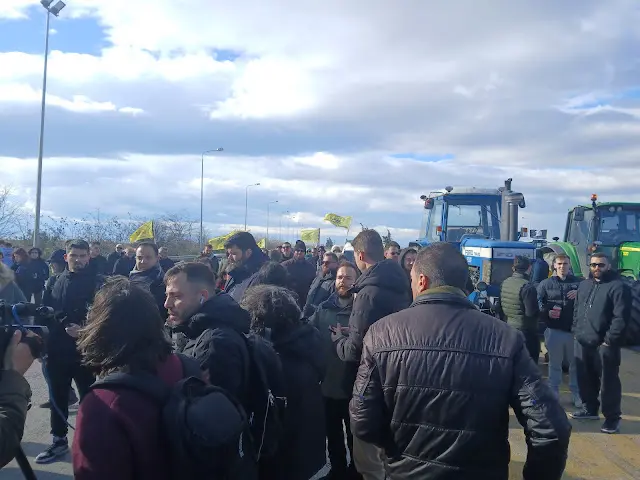
There have also been demonstrations in solidarity with the peasants, in which the Communist Party of Greece (Marxist-Leninist) [KKE (m-l)] has participated.
In the past month we reported on the struggles in the countryside of Europe: