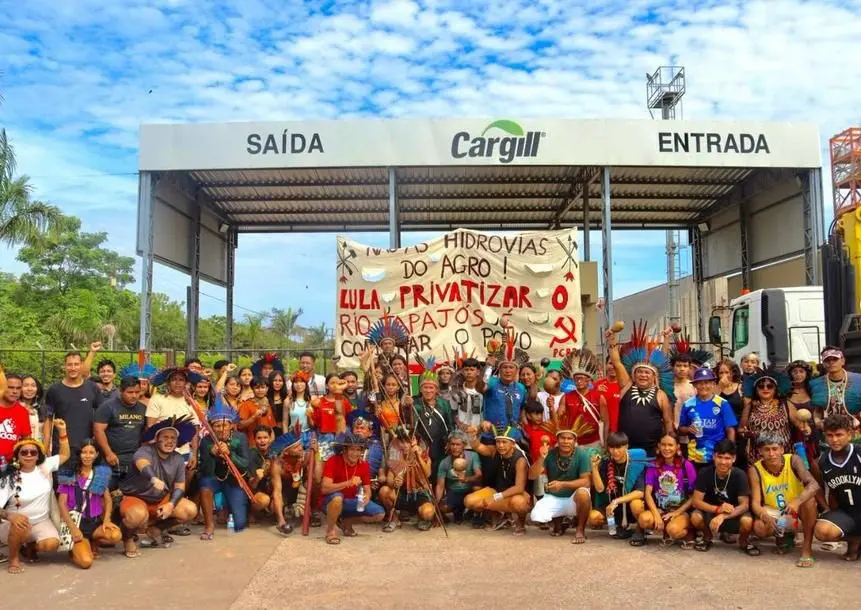
Brazil: Indigenous Peasants Occupy the Port of the Imperialist Monopoly Cargil
On January 22, indigenous peasants from the Lower Tapajós region and social movements carried out a large mobilization in Santarém, Pará, Brazil, occupying the port of the US monopoly Cargill. This action, reported by A Nova Democracia, denounces the privatization of the Tapajós River and the works that will affect indigenous peasants.
The federal government issued an edict on December 23, valued at R$ 74 million, for the management of the Tapajós River and the execution of dredging over the next five years, with the aim of ensuring its navigability throughout the year, even during periods of extreme drought. This measure seeks to benefit the current drainage produced by soy and other products.
Indigenous peasant peoples and social movements condemn the edict as illegal because neither the prior consultation nor the environmental study required by law were conducted. Additionally, they denounce Decree 12.600/2025, which authorizes the privatization of the Tapajós, Madeira, and Tocantins rivers, all in the Brazilian Amazonia, within the National Privatization Plan (PND). This decree favors sectors linked to the export of commodities, such as mining and agribusiness.
Technical documents from various environmental institutes indicate that the impacts of dredging include the release of heavy metals such as mercury, increased water turbidity, reduction of fish and other aquatic species, affecting the lives of peasants who depend on the river for their livelihood.
The protesters wrote a Public Letter in Defense of the Tapajós River, Territory, and Life, stating that projects like dredging and privatization represent serious setbacks and put at risk their territories, ways of life, and the environmental balance of the region. They denounce Decree No. 12.600, signed by Lula, which allows the concession of the Tapajós River to the private initiative, while sidelining indigenous peasants.
The mobilization also highlights how this project benefits the big landlords and that it is not isolated, being part of a historical project that seeks to remove indigenous peasants from their territories. Examples include the Marco Temporal Law, the Constitutional Amendment Proposal (PEC 48/2023), the weakening of Environmental Licensing, institutional violence, and the attempt to end indigenous school education.
Finally, the protesters demand the immediate revocation of Decree No. 12.600, interrupting any initiative of privatization, concession, or commercialization of the Tapajós River and guaranteeing the integral respect for the rights of indigenous peasants. The mobilization continues with the call to other movements to show solidarity with the cause throughout Pará.