Mexico – APRIL 30: SANDRA LIVES!
We hereby share an unofficial translation of an article published by the Mural Newspaper on the 30th of April.
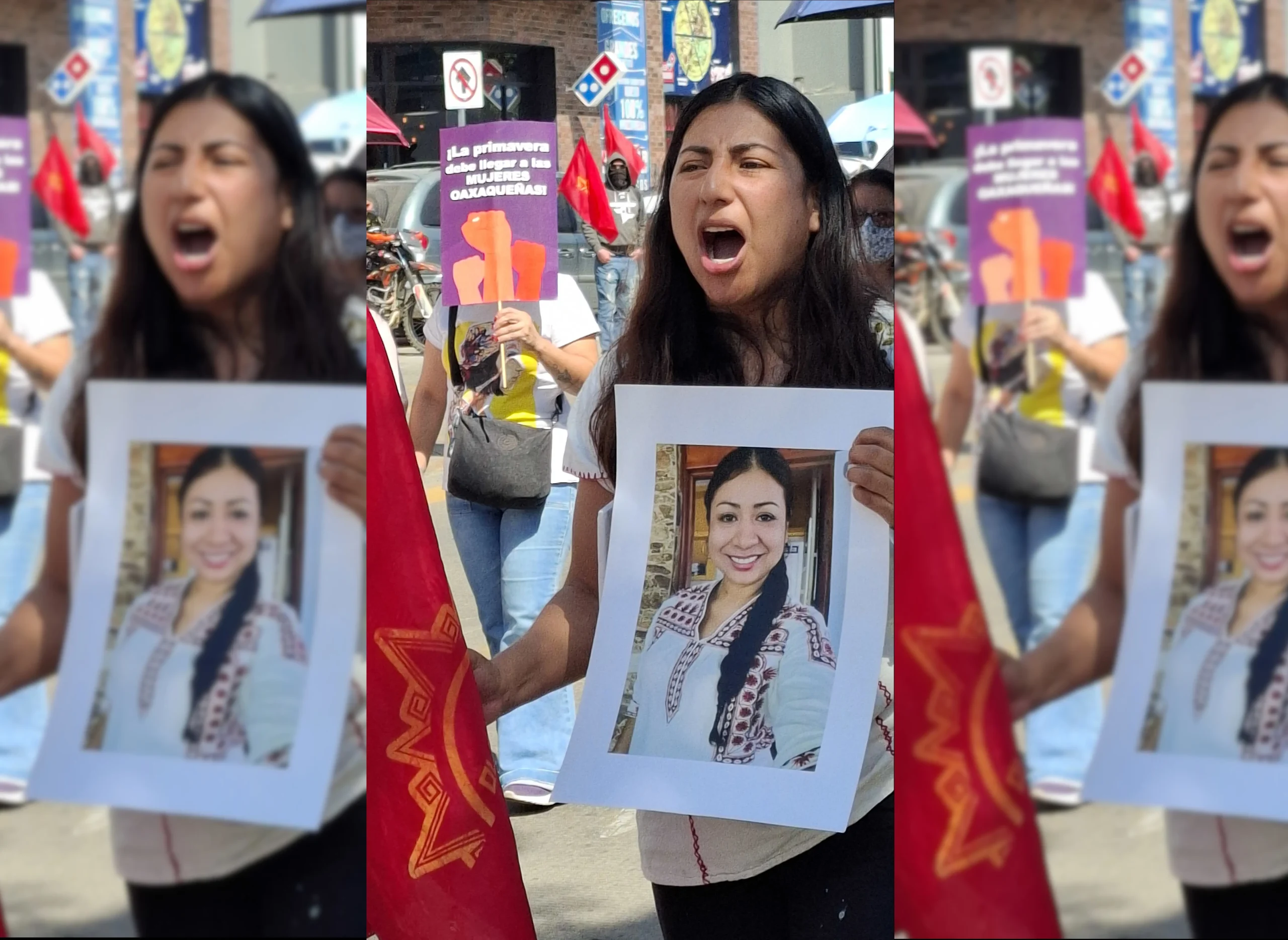
One year after Sandra Estefana Domínguez Martínez’s body was buried, her story has not ended—neither in the earth nor in our memory: it lives on in the anger, fear, and outrage of a people who can no longer pretend that nothing is happening. Sandra’s story is not an isolated case; it is a brutal reflection of a system that permits, tolerates, and protects violence against women. It is proof that, in Oaxaca and throughout Mexico, being a woman—and even more so, an Indigenous woman—means living in constant danger, even as official discourse speaks of justice and transformation.
Sandra, a native of the Sierra Mixe, was not only a victim of femicide; she was a victim of a system that singled her out from the moment she decided to speak out. She reported public officials who, from positions of power, objectified and abused women (including minors, as well as women who worked with them) in WhatsApp groups where they exchanged images, comments, and insults as if it were normal, as if women’s bodies were public property. The most serious issue was not merely the existence of these spaces, but the impunity with which they operated, knowing that the system itself would protect them.
When Sandra reported the abuse, what she received was not protection, but neglect. There were no effective measures, no preventive justice, and no genuine interest in safeguarding her life. On the contrary, what followed was isolation, harassment, and persecution. The message was clear: speaking out has consequences, and it is the victims who pay the price.
Sandra’s femicide cannot be understood as an individual crime. It is a crime of the State. It is the result of omissions, complicity, and an institutional apparatus that decides whom to protect and whom to let die. While she demanded justice, those who were implicated remained in their positions, with power, protection, and the peace of mind that comes from knowing they are untouchable.
In Oaxaca, violence against women is not an exception; it is a constant. It has become part of the everyday landscape: disappearances, assaults, and femicides that pile up in ever-rising numbers, while public outrage seems to fade into acceptance. Each case is treated as an isolated incident, as if there were no pattern, as if there were no one responsible beyond the direct perpetrator. But there are: they are in the institutions, in the decisions that are not made, in the files that are shelved, in the complaints that are ignored.
What is most alarming is the message being sent by those in power: in Oaxaca, a woman who speaks out becomes a threat to the system. And the system responds. Disappearances and femicides serve as mechanisms of silencing. They are not accidents; they are warnings. They are ways of disciplining those who dare to break the silence.
Even more outrageous is that some of the people who hold public office today, who speak of justice and rights, know exactly what is being discussed. They know that these spaces of violence existed. They know who was involved. They know that complaints were filed. And yet, they choose to remain silent. Silence is also a form of violence, but above all, it is a form of complicity.
Sandra’s case lays bare an uncomfortable truth: the State not only fails, it also covers things up. It protects the perpetrators, revictimizes those who speak out, and leaves women to fend for themselves. This creates a vicious cycle in which impunity fuels violence, and violence reinforces impunity.
As long as those in power protect the guilty, every femicide will have perpetrators with names and titles. Sandra lives on, the struggle continues!
Komite Pëjy Tyotk.
Committee of Family and Friends Seeking Justice for Sandra Domínguez.