Latest News in the Struggle for Land in Brazil
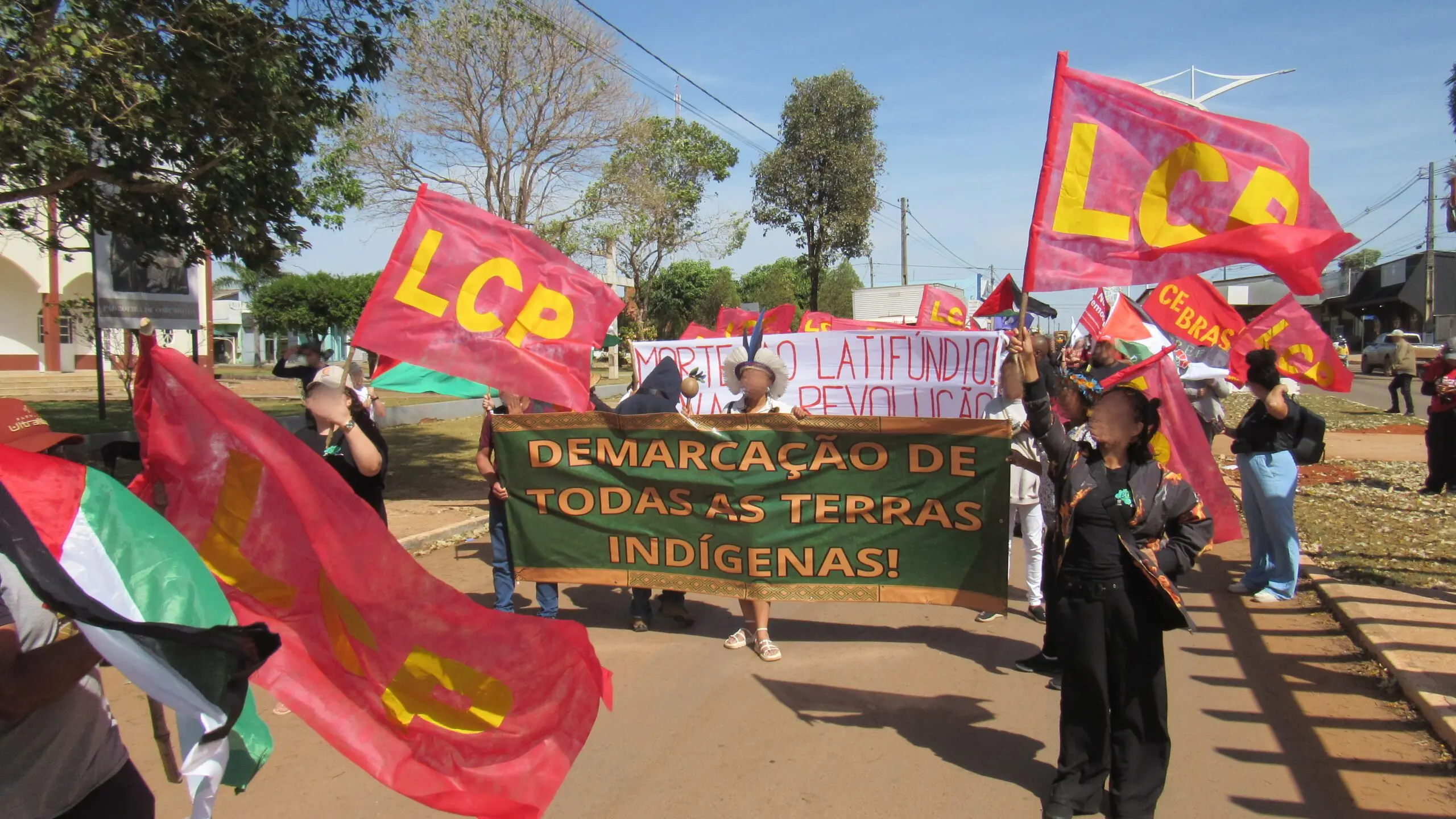
Featured image: March marking 30 years since the Santa Elina Battle in Corumbiara. Source: AND
We hereby share some updates on the struggle for land and the ongoing Agrarian Revolution in Brazil, based on the latest “New Brazil Bulletin”, published by A Nova Democracia (AND) on the 6th of August.
31 Years Later: Commemorating the Battle of Santa Elina
On August 9, 2026, 31 years will be commemorated since the Heroic Peasant Resistance of Santa Elina, an event that took place in 1995 in Corumbiara, Rondônia (Brazil). That year, peasant families occupying the Santa Elina farm faced violent repression by police and goons working for big landlords. The resistance, involving men, women, and children, resulted in murders, injuries, torture, and arrests – but it became a symbol of struggle for the peasant movement in Rondônia and strengthened the League of the Poor Peasants (LCP).
Despite the massacre, in 2010, families organized by the Santa Elina Victims’ Defense Committee (Codevise) and the LCP conquered a big portion of the land, establishing the Zé Bentão, Renato Nathan, and Maranatã camps. In 2020, on the 25th anniversary, they occupied the remaining 6,000 hectares of the former farm, creating the Manoel Ribeiro camp and fully reclaiming the land.
In 2025, on the 30th anniversary, hundreds of peasants, Indigenous people, and students marched in Corumbiara, denouncing impunity and reaffirming the slogan: “Conquer the land! Destroy the latifundium!” For 2026, a new act is called for August 15 in Porto Velho, organized by the AND Support Committee and the Committee for the Struggle for Land (CALT).
One Year Since the Assassination of Raimundo Nonato by the BOPE
On August 8, one year will have passed since the assassination of peasant Raimundo Nonato de Souza Gomes, murdered by the BOPE (Special Operations Battalion) of the Rondônia Military Police during a violent raid on the Valdiro Chagas Area in Machadinho d’Oeste. The operation, carried out on the eve of the 30th anniversary of the Santa Elina Resistance, involved helicopter shootings, destruction of crops, homes, and belongings, and further threats against families.
Raimundo Nonato, who had arrived just two months earlier to struggle for land, was remembered for his discipline and commitment. Even while imprisoned, he earned respect as a detainee representative and completed high school. Six months after his death, peasants affirmed that his example would strengthen their struggle: “His example will fuel our determination to keep the struggle for land alive.”
The slogan “Comrade Raimundo Nonato, present in the struggle!” symbolizes his legacy in peasant resistance.
São Paulo: Governor Accelerates Land Grabs for Latifundium
The government of Tarcísio de Freitas (São Paulo) has accelerated the legalization of the land grabbing by latifundium on public lands, particularly in the Pontal do Paranapanema, through State Law 17.557/2022, which allows occupiers to purchase land at up to 90% below market value. Already, 250 properties (131,000 hectares) have been grabbed, benefiting big landlords at the expense of peasants.
Around 7,000 families, organized by the Landless Rural Workers’ Movement (MST) and the National Front for the Struggle of the Countryside and City (FNL), demand that public lands be used for agrarian reform—not handed over to latifundium. Leandro Dias (FNL coordinator) denounced that over 300,000 hectares are illegally usurped lands. The law also allows large properties to be subdivided to bypass legal limits and has been extended until 2026.
While Brazil’s Supreme Federal Court (STF) reviews its constitutionality (with Justice Cármen Lúcia voting against it), the government is rushing land titling to consolidate private appropriation, legalizing land grabbing by the latifundium against peasant demands.