Colombia: Residents of Granizal Mobilize for Water and Against State Abandonment
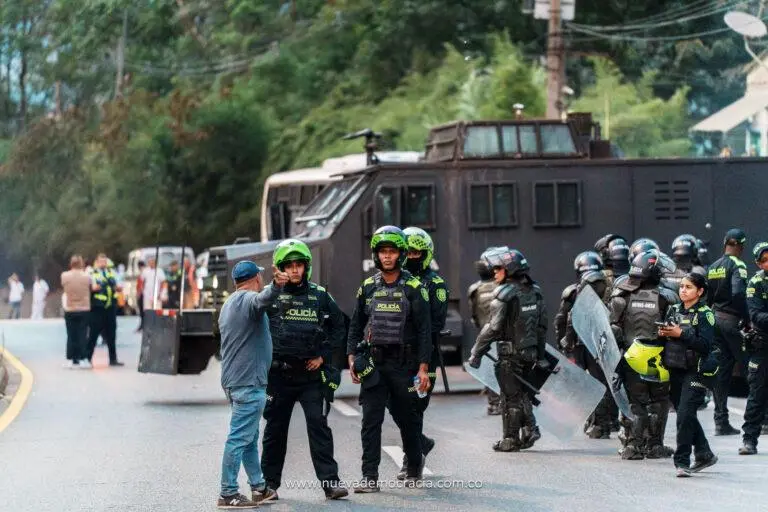
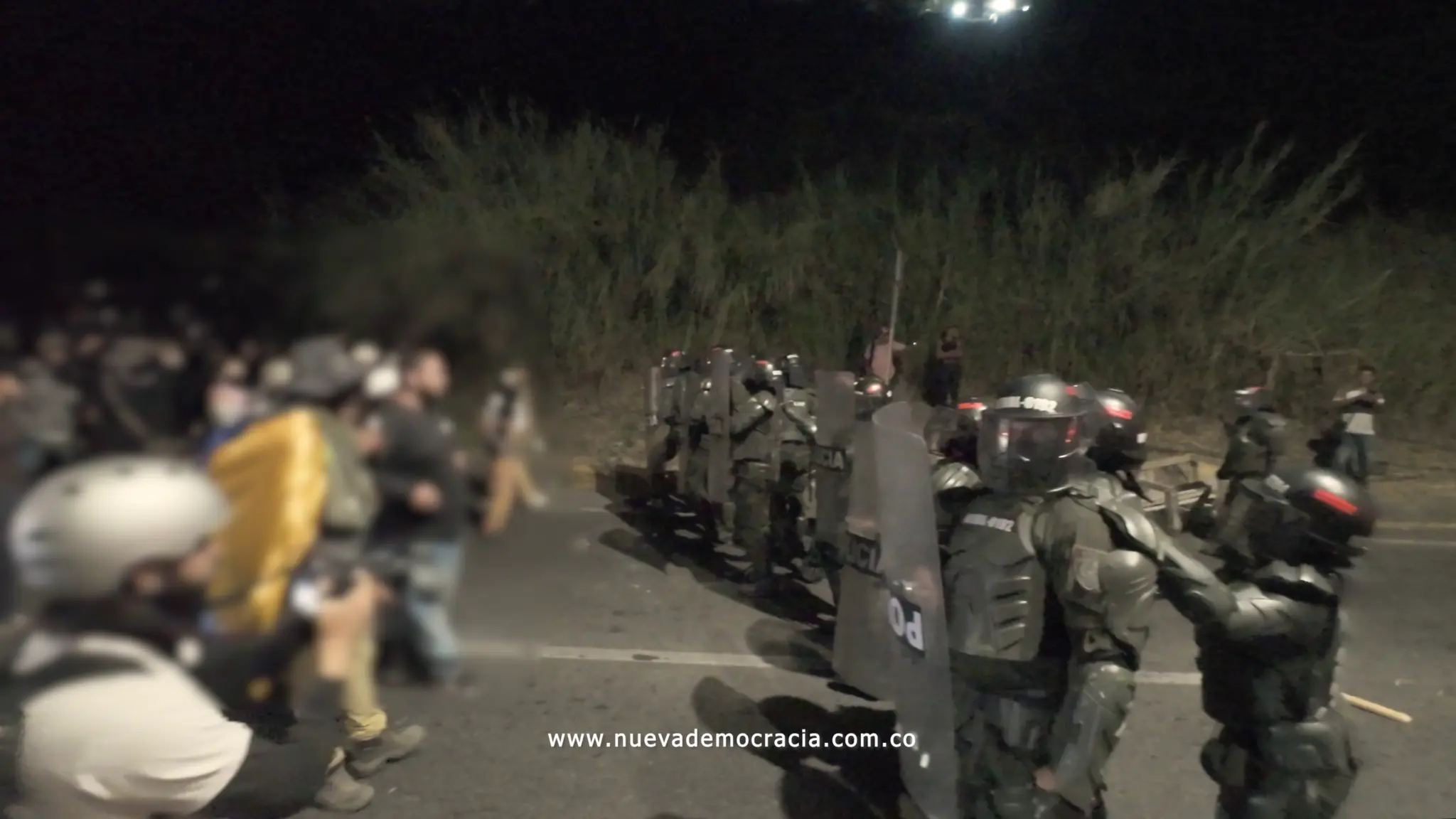
Featured image: Residents facing police. Source: Nueva Democracia
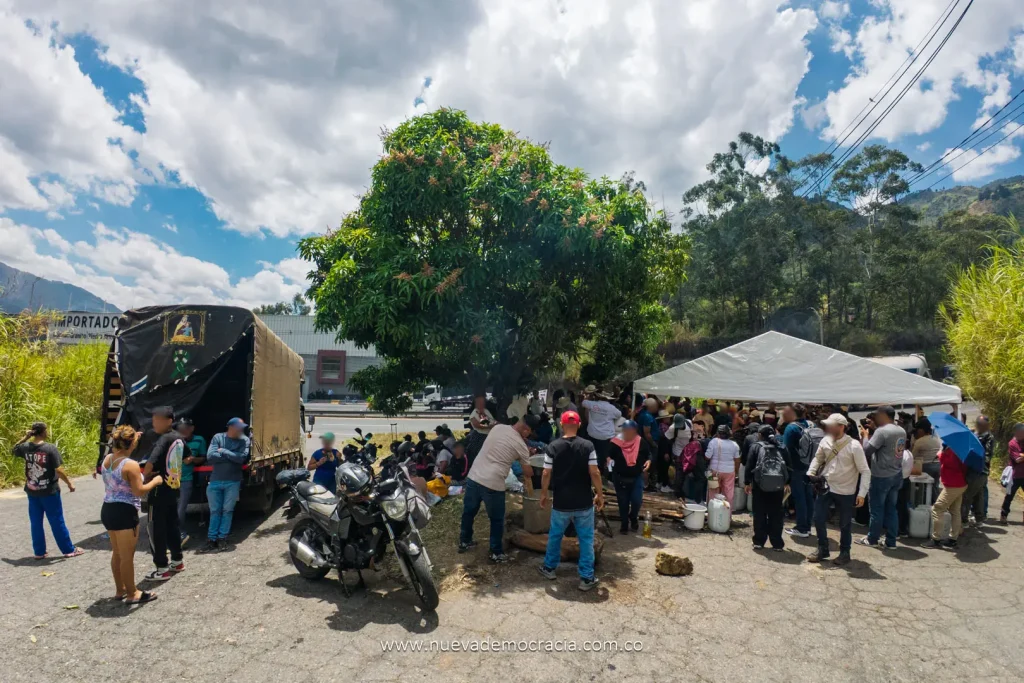
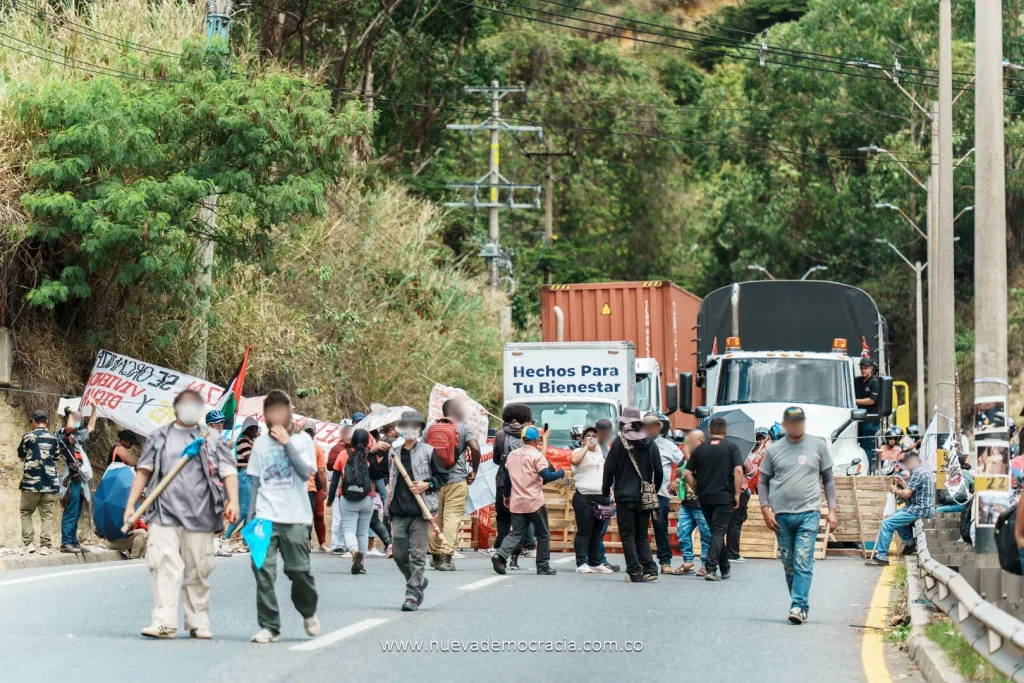
The Newspaper Nueva Democracia (ND) reports on the protests of residents of Granizal, Antioquia, who blockaded one of the main roads, which connects Bogota and Medellin, on August 13, demanding a solution for the water problem.
The residents do not have running water at home, forcing children, elderly and adults to walk long distances on unpaved roads. The little water the town hall provides – between 5 and 8 liters per day – only 15% of what the World Health Organization (WHO) recommends as the vital minimum per person a day.
The residents demand also other measures, such as paving the roads, the improvement of trash collection, and aid to the people affected by the landslide in June 2025, when dozens of people died and hundreds faced related consequences.
The landslide of 2025 led the residents to blockade roads, and in 2015, the residents filed a Popular Action (class action) that forced the mayor’s office and EMP (Public Companies of Medellin) to carry out a technical study to construct an aqueduct and sewage. 11 years later, the problems remain.
ND explains the link between the semi-colonial State and the informal camps like the Granizal: “It is primarily inhabited by people of peasant origin who migrate to the city due to the ongoing land wars in Colombia, a reflection of the country’s semi-feudal nature, where big landlords and warlords struggle for the control of peripheral regions. […] The struggle of this suburban neighborhood for public services, is not unique in Colombia. On the contrary, it is the primary way in which most working-class neighborhoods in the country’s cities have been formed. In a dynamic also characteristic of Colombia’s semi-feudal society, people displaced from the countryside occupy the outskirts of cities, building their neighborhoods through self-construction, confronting State and paramilitary repression, and fighting for the State to plan, regulate, adapt, and develop the territory.”
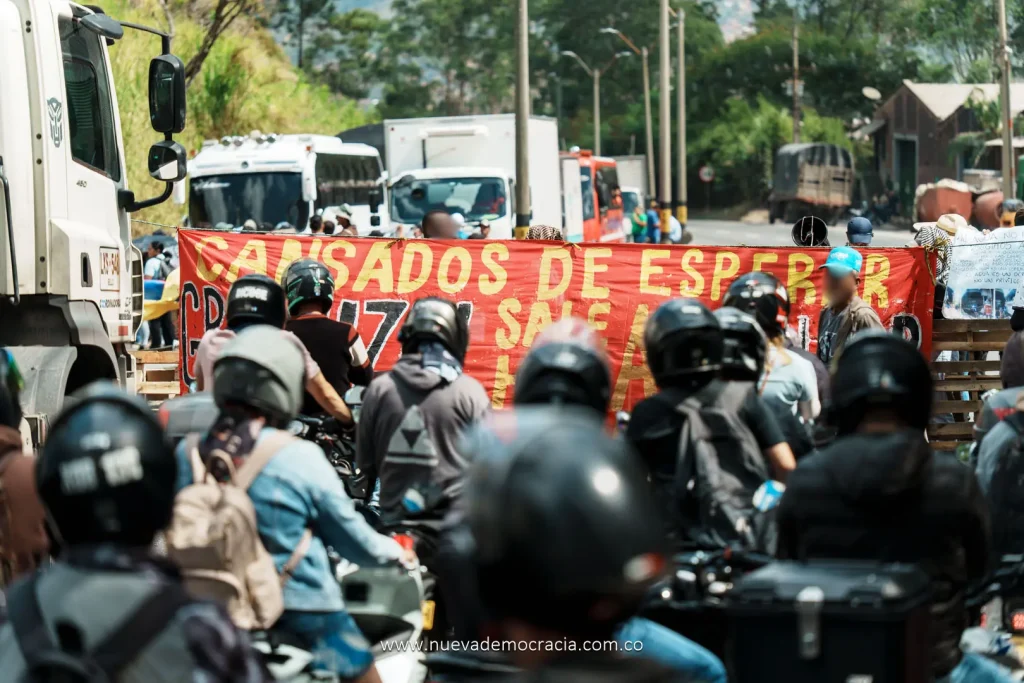
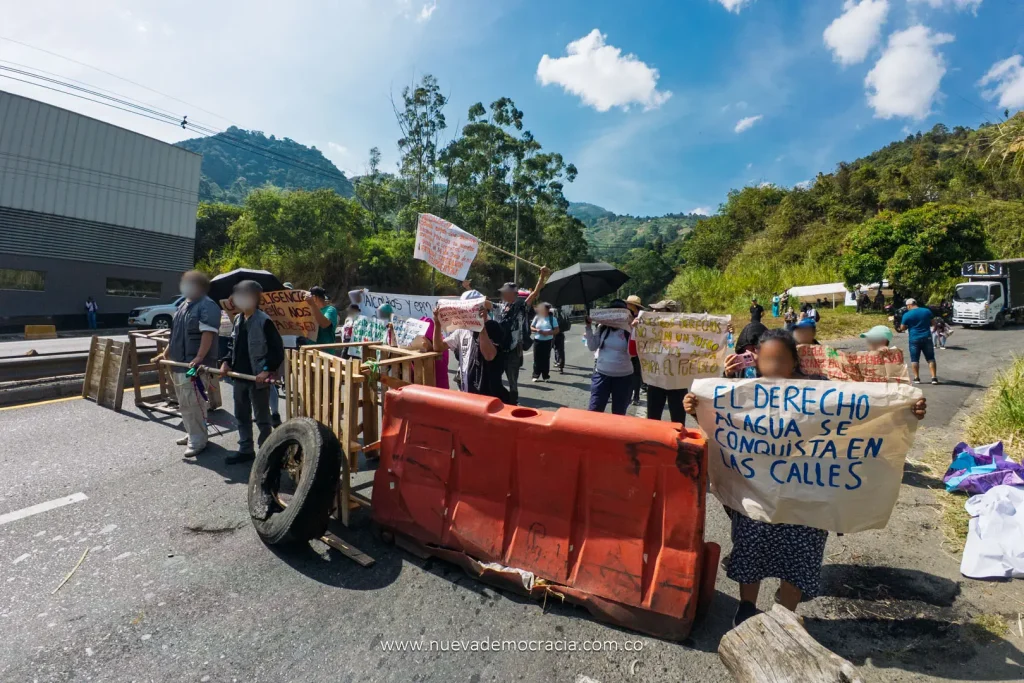
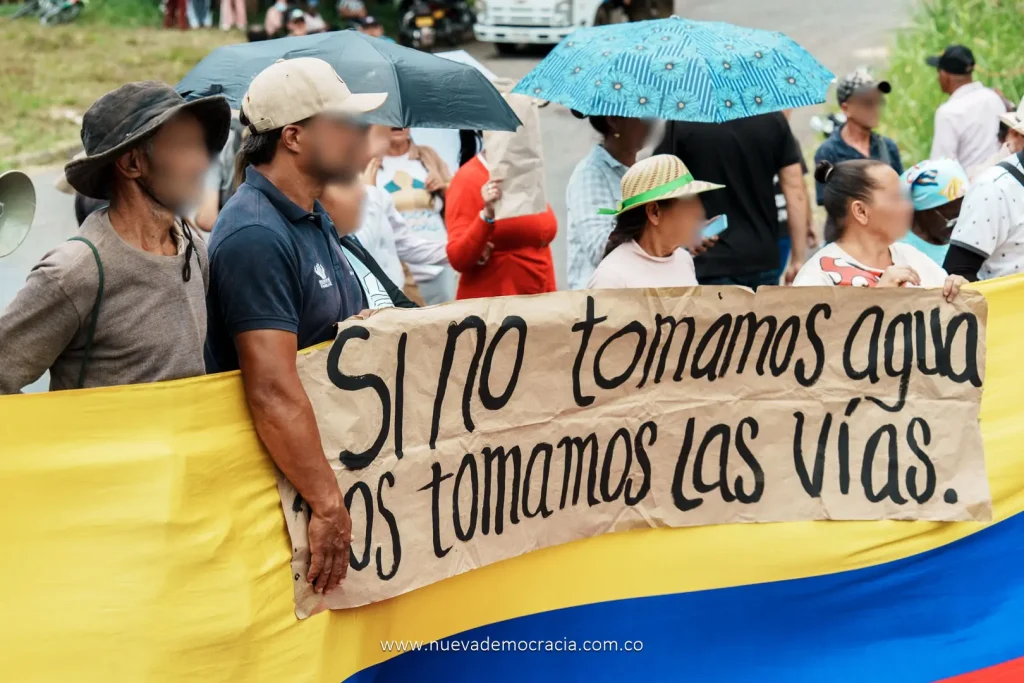
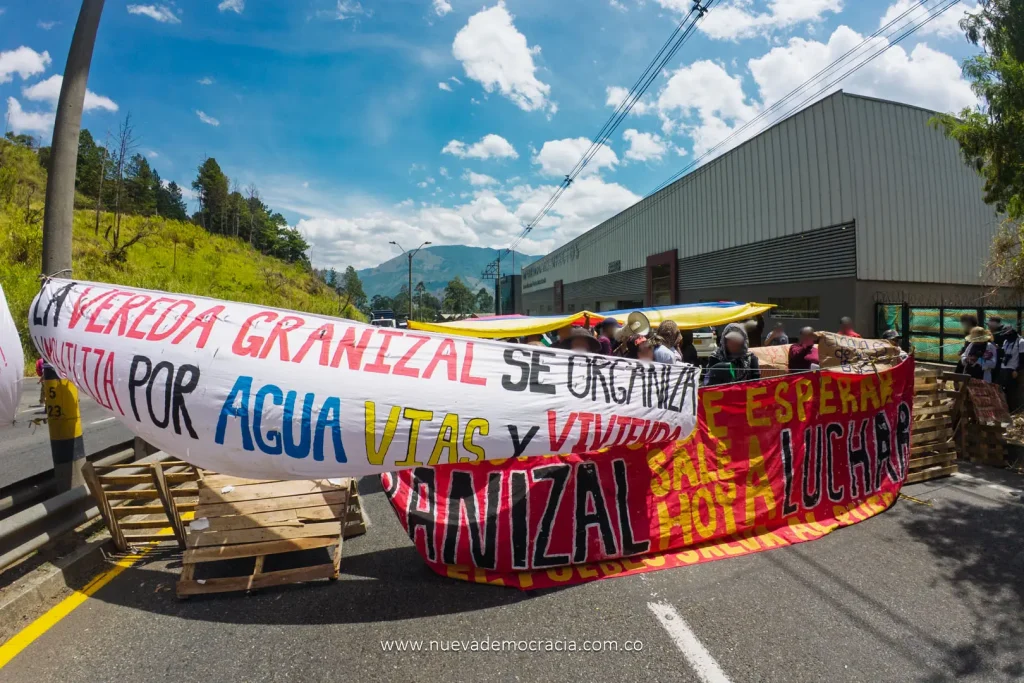
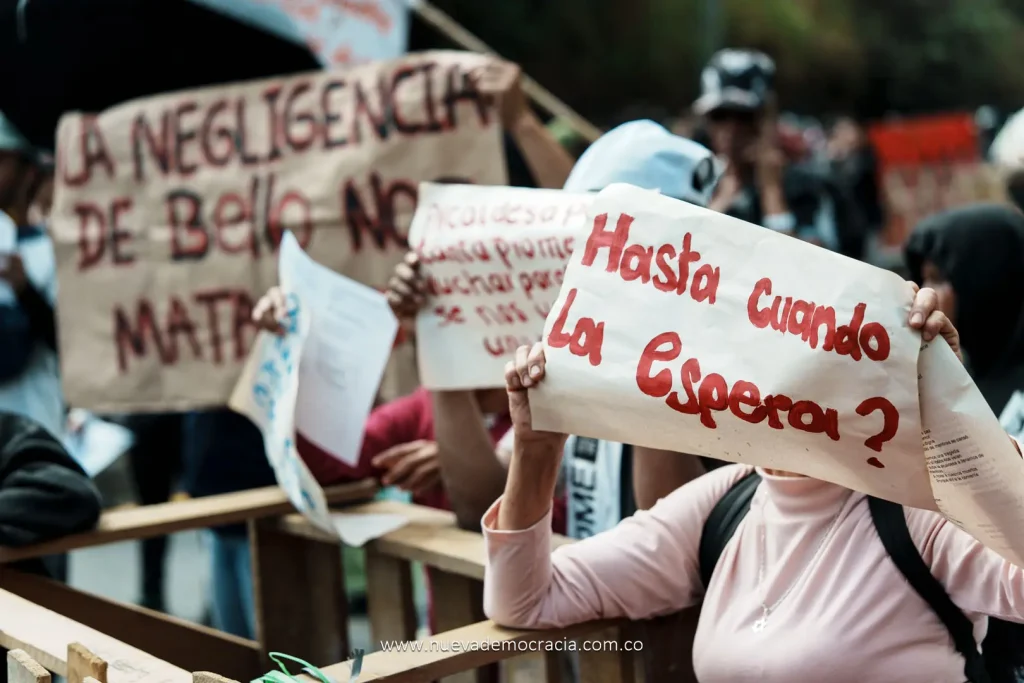
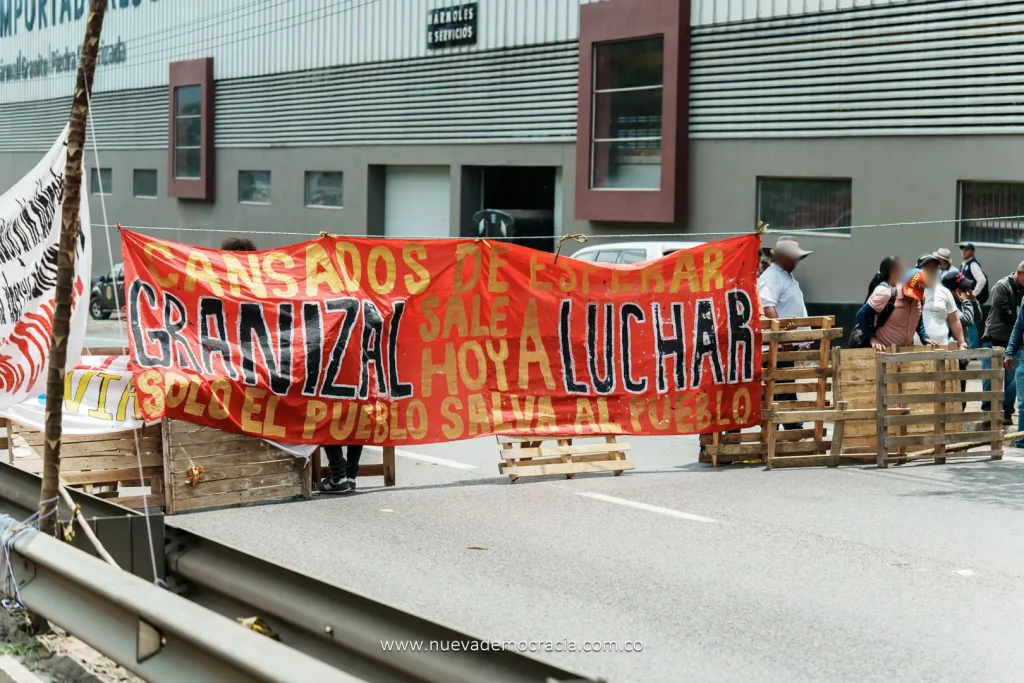
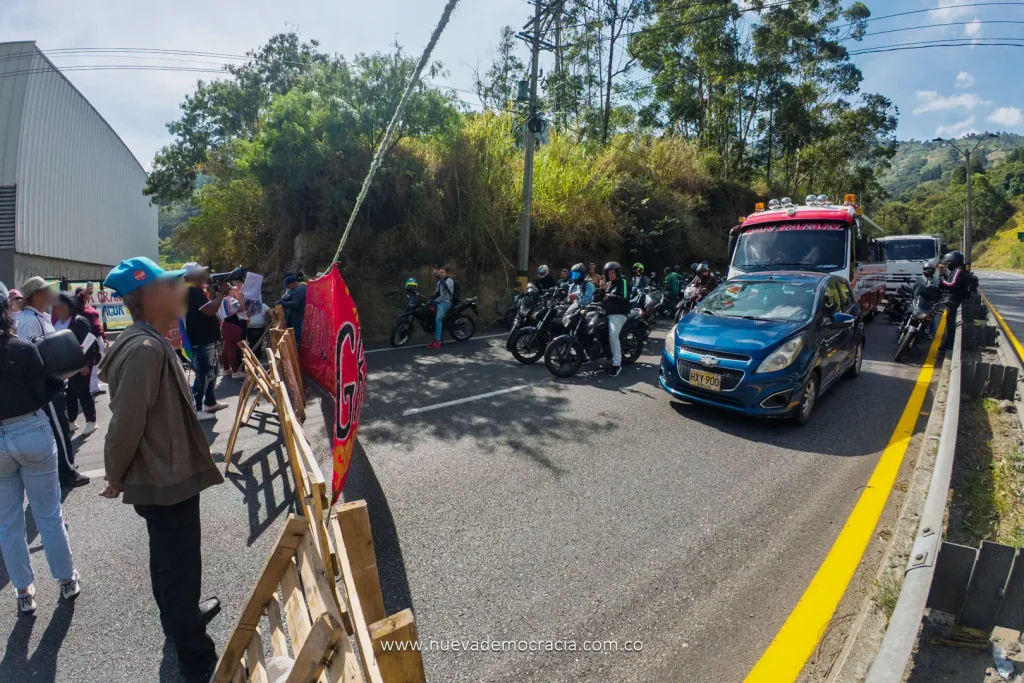
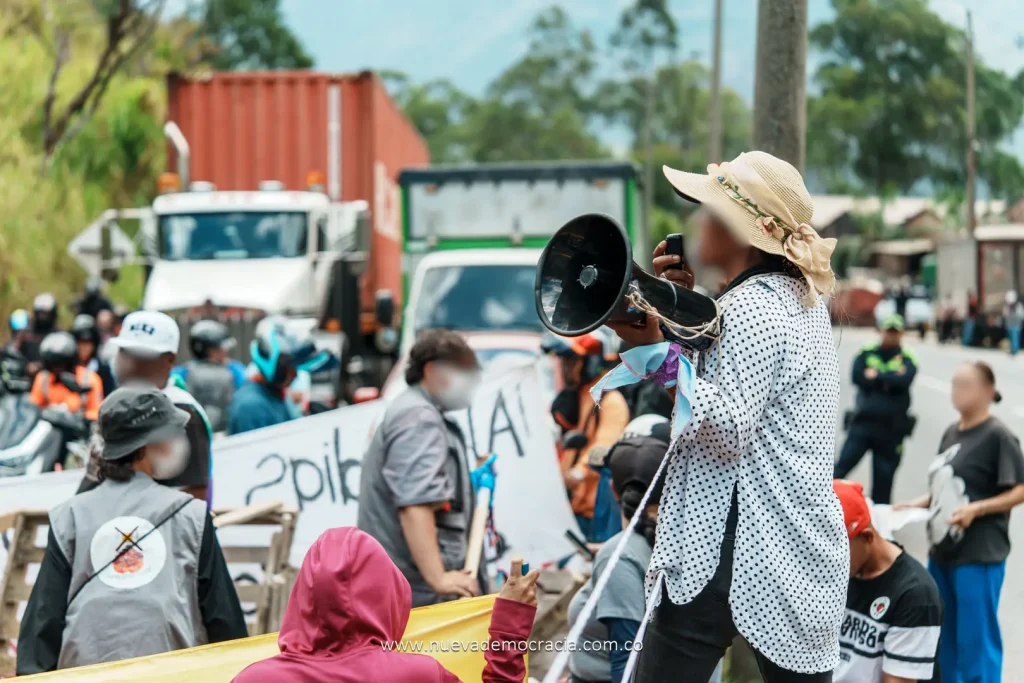
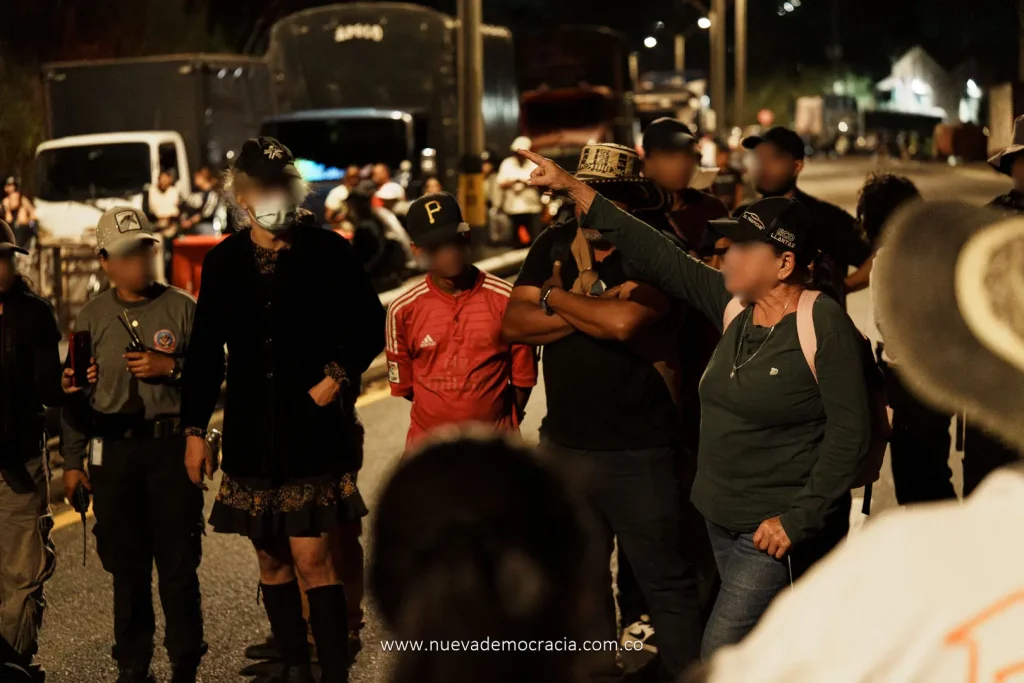
The road blockade lasted for 12 hours, and police officers were deployed from the beginning. Only after several hours, during the afternoon, the official negotiators arrived. “This showed that, on the part of the State, there was no will to diligently attend to the community and that they were prepared to repress from the very beginning.”
Once the negotiations were facilitated, the representatives of the State only offered a new meeting in two weeks. When the spokesmen refused, the State began to repress the demonstrators, including the elderly, with tear gas and stun grenades.
This repression caused a fire in a wooded area, which was used by the governor of Antioquia to misdirect and to implicate the demonstrators, blaming them for the fire. The bourgeois press echoed the governor’s lie, “demonstrating that the State and the media are colluding in repressing and violating a people in struggle,” ND declares.
In contrast, popular media, including Nueva Democracia, people standing in solidarity, as well as the residents themselves have made an effort to deny the allegations.
ND writes: “Furthermore, this cowardly way of repressing and blaming the repressed for their own repression, typical of a State that considers its own people its enemy, only created more reasons for the community to continue demonstrating and to increase its combativeness, organization, and struggle for its rights. […] Granizal showed the country that, as long as there are violated rights and a State that is an enemy of its people, there will be popular struggle: as the community sang during the protest: “we will fight no matter what it costs”.”