Brazil: The Struggle for Public Transport in Rio Branco and the Student Occupation of the Urban Terminal
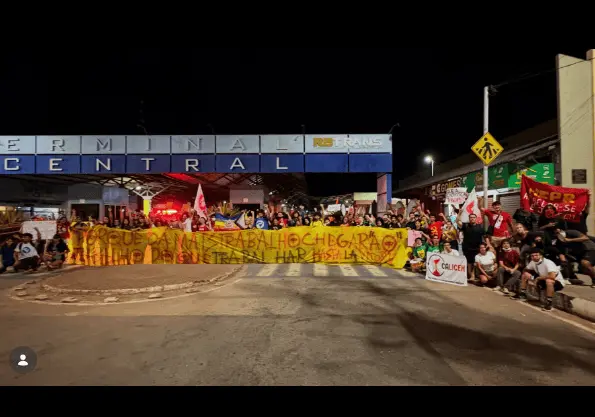
Featured image: Occupation of the Urban Terminal on July 15, 2026. Source: AND
In July 2026, Rio Branco, Acre, was the scene of intense mobilizations in defense of public transport by the student movement – driven by the collapse of a system that had been deteriorating for years. As A Nova Democracia (AND) reports, the crisis led students to suspend activities at the Federal University of Acre (Ufac) and to launch a strike, demanding the restoration of the busses and the normalization of the service.
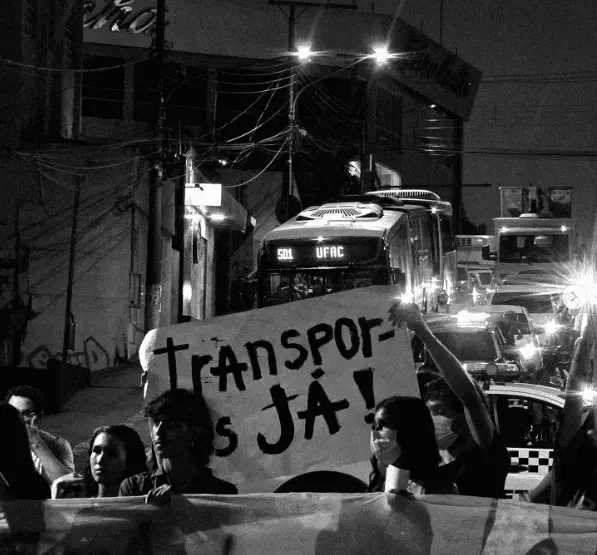
On July 13, a demonstration in front of the City Hall was violently repressed by the Military Police (MP). They used pepper spray, batons, and attempted to detain a protester, who was released as a result of the actions of the rest of the protesters. The Public Prosecutor’s Office of Acre have opened an investigation into human rights violations during the police repression.
Despite the repression, on July 15, students and organizations such as the Popular Revolutionary Student Movement (MEPR), the Zé Bentão Collective, PCBR, PCO, UJC, UJS, JPT, and PSTU occupied the Urban Terminal, counting on the support of passengers tired of hours of delays, and the poor transport conditions. The occupation, marked by slogans such as “Jump the turnstile!” and “Occupy the terminal!”, reflected the demands of the public transport in the city by the masses.
A struggle that spans decades
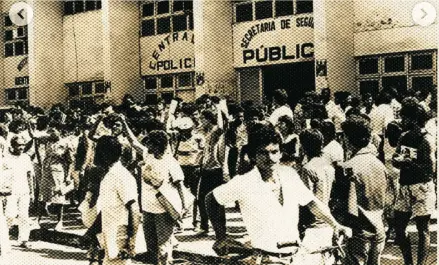
The struggle for transport in Rio Branco is not new. Since the 1970s, students and workers have mobilized against abusive fares and for the improvement of the service. In 1987, the “Jump Day” a protest against fare increases was carried out, which was repressed by the MP. Furthermore, transport workers had been denouncing precarious working conditions, such as the failure to pay FGTS (severance fund) and delayed wages, worsened by the emergency contracting of Ricco Transportes in 2022, without a bidding process, which lasted for years.
Ricco accumulated reports of irregularities, including labor debts and suspicions of asset shielding, which led to worker’s mobilizations – repressed by the MP – and the judicial seizure of 38 buses in June 2026. The company also conditioned the payment of labor rights on funds not recognized by the City Hall, leaving hundreds of employees in a state of uncertainty. “It was in this scenario — buses seized, hundreds of workers fired, payments in dispute and the population waiting for hours at the stops — that Ufac suspended classes and the student movement expanded the July demonstrations,” AND reports.
While the Judiciary acted quickly to prohibit protests (with an injunction and police support granted in less than 24 hours), investigations into the hiring of Ricco advanced slowly, despite evidence of irregularities since 2022. The bidding process for a new contract, launched in March 2026, was suspended in April, and a new emergency contract was signed with JTP Transportes, with rates higher than those paid to Ricco.
The occupation of the Urban Terminal—similar to one in 2018 when people with disabilities protested for basic rights—demonstrates that the struggle is not isolated, but a response to the State’s inability to guarantee essential services. “Faced with a system incapable of ensuring regular transport for the masses, [students] occupied the streets and the terminal to demand what successive contracts, subsidies and administrations of the old State could not guarantee.” The youth of Rio Branco, nearly four decades after the “Jump Day,” reaffirm that popular mobilization is the only path.