Colombia – Nueva Democracia: On the False Agrarian Reform and the Current Outlook for the Peasant Movement
Hereby we share an unofficial translation of an article published by Nueva Democracia on October 30.
The so-called “agrarian reform,” one of the main programmatic priorities of the previous administration, continues to be the focus of widespread public controversy today. Taking stock of its final outcome and conducting a critical analysis of its consequences is an important task for the popular movement: Were there actually any steps forward in the promised democratization of access to land in Colombian society? Whose class interests did the Petro administration’s “agrarian reform” serve, and who were its true beneficiaries? And ultimately, what is the current outlook for the peasant movement following the return of the far right to the helm of the Colombian State under the new De La Espriella administration? In this article, we will present our reflections on these various issues.
Agrarian Reform: In Whose Service and for What Purpose?
At first glance, it is clear that Petro’s “agrarian reform” failed to meet its stated goals. During his campaign, he promised to distribute 3 million hectares, based on the commitments made by the Colombian government to a faction of the FARC that demobilized under the 2016 Havana peace accords. Once the electoral circus was over, this promise was cut in half, with the target adjusted to 1,500,000 hectares of land. And what was the final outcome? In this regard, the PARES Foundation, in a recent report, analyzes that, compared to the target set in the National Development Plan, actual progress stands at only 7 percent, which amounts to 98,148 hectares transferred that formally have definitive title, based on figures provided by the outgoing government itself in its handover report. These poor results were glossed over by the former director of the National Land Agency (ANT), Felipe Harman, through a clever maneuver: including in the final tally provisional land transfers that offer weak legal guarantees and security for peasant families’ continued presence on the land, thereby reaching a figure of nearly 350,000 hectares of land transferred during his term, which would equate to 23.4% fulfillment.
Although these figures have clearly fallen short of the expectations raised and have disappointed millions of peasants eager to obtain a plot of land, some sectors have described the previous government’s handling of agricultural issues as “historic,” highlighting the amount of land distributed and rural property titles formalized, as well as its public stance that appeared to favor the peasantry and oppose the big landlords. However, the reality is that distributing a few hectares of land does not represent a “historic” change if the key issue, the agrarian structure of society, remains intact. The long-standing policy of “trickle-down” (the slow and limited distribution of land) has been used by successive governments to maintain the peasantry’s hope that they might gain access to a plot of land through the State. But these results are clearly insufficient in terms of access to land and in no way represent a significant or “historic” change in the country’s unequal agrarian structure, where the top 10% of landlords hold 80.6% of rural land, according to recent data from the Agustín Codazzi Geographic Institute (IGAC), reflecting that Colombia ranks among the countries with the greatest inequality in land distribution worldwide. But beyond the figures, the discussion must go beyond the issue of appearances to address the very essence of the problem: What class interests lie behind Petro’s “agrarian reform”? Is the narrative true that small peasantry were its main beneficiaries and that the power of the big landlords was curtailed?
From the democratic, independent, and revolutionary current within the popular movement, we affirm that the Petro government’s so-called agrarian reform has essentially been a sham, disguised with populist rhetoric, which pursues the reactionary objectives of appeasing and co-opting the peasantry to steer them away from revolutionary paths and of covertly strengthening the most backward and decadent sector of all of Colombian society: the class of big landlords. We believe that this false agrarian reform never aimed at a genuine redistribution policy that would decisively break with the monopolistic concentration of land in the country and ensure that the land truly belongs to those who work it. It was rather fundamentally limited to a policy of purchasing and allocating unproductive plots, negotiating at market prices with the big landlords for the very lands they had previously seized and monopolized, following the disastrous model of the agrarian reforms of López Pumarejo and Lleras Restrepo during the 20th century, which – far from contributing to democratization – resulted in a phenomenon of reconcentration of land ownership in the hands of a few increasingly powerful big landlords.
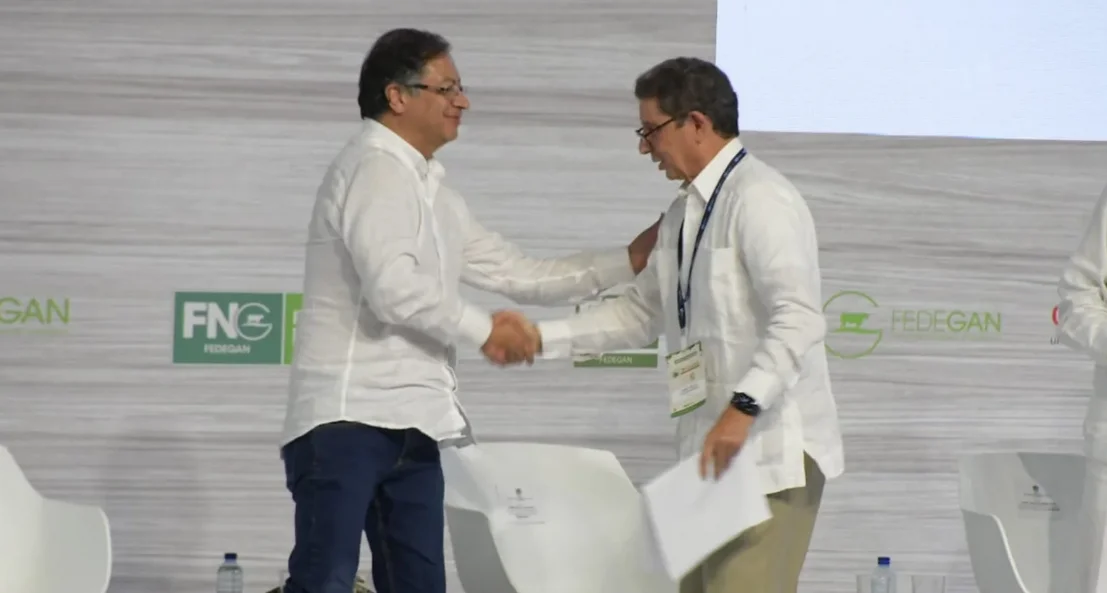
Reforms of this kind ultimately strengthen the economic power of the landlord class, which reaps enormous profits from the sale of its least desirable properties. Furthermore, with the collapse of their proposal to amend agrarian jurisdiction, it has been reaffirmed that the ruling classes are unwilling to make even the slightest adjustment to the entire legal framework that for decades has shielded big landlords from any legal attempt to expropriate their properties, thus revealing the utter absurdity of attempting to modify the country’s agrarian structure for the benefit of the peasantry through dialogue with the political representatives of big landlords and capitalists within the institutional arenas that they dominate and manipulate at will. To top it all off, this “agrarian reform” has served as a repugnant whitewashing of organizations such as the Colombian Federation of Cattle Ranchers (Fedegán), presenting them as a sector willing to contribute to the country’s agrarian development by “generously and selflessly” making some of their land available for agrarian reform and burying their old image as active promoters and financiers of paramilitarism. In this way, the peasantry’s old enemies suddenly become allies with whom to negotiate and work for the good of the nation, thereby denying the doctrine of class struggle espoused by Marxism and, in practice, implementing the class collaboration that serves the decadent, prevailing capitalist system.
To underline these arguments more, we will analyze some aspects of the two main methods of land distribution under this so-called agrarian reform: the purchase of properties voluntarily offered by big landlords and the transfer of assets “confiscated” by the State from drug traffickers, paramilitaries, and criminals of all kinds.
The “historic pact” between the latifundium and the Petro administration
One of the sources of land under the “agrarian reform” was the purchase of unproductive properties from big landlords, especially from cattle ranchers, through the Petro administration’s controversial agreement with Fedegán, led by its president, José Felix Lafaurie. There are two key issues to denounce regarding this lucrative deal for those at the top, which ultimately favored the interests of the landlord class: 1) The economic aspect, through the empowerment of big landlords by purchasing their properties; and 2) The legal aspect, through the State’s blatant protection of land illegally appropriated by latifundium.
Regarding the first point, it is clear that the government’s purchase of land from big landlords at market prices does not weaken those who monopolize land but, on the contrary, strengthens them. A close examination of these purchases reveals even more troubling findings: there are numerous cases of land purchased at prices above market value, and much of this land was not even suitable for agriculture or was burdened by serious legal issues. There is abundant information from the Attorney General’s Office detailing irregularities in land purchases totaling 136,911 million pesos under the guise of the so-called agrarian reform. To cite one example, there is the case of the Los Cachorros property (Meta), some 18,000 hectares valued at 38 billion pesos [translators note: around 11,7 million USD], of which the ANT managed to pay about 27 billion [translators note: around 8,3 million USD], despite the land being unsuitable for agriculture and having legal issues related to the incorporation of unclaimed national lands.
From a legal standpoint, one of the greatest obstacles to implementing the Petro administration’s agreement with the big landlords centered precisely on the legal issues surrounding the properties. For example, during the technical meetings between the peasantry and the ANT in Codazzi (César), one of the recurring excuses given by ANT officials to justify the slow pace of land purchases was that more than 90% of the properties offered for “agrarian reform” had legal issues, since their alleged owners could not demonstrate through their title deeds that the properties were not the result of dispossession of small peasantry or the direct appropriation of unclaimed State lands.
Despite demands from the peasantry that these properties be confiscated by the State or that officials provide information on the location of these lands and the identity of their owners so that they could take matters into their own hands, the ANT repeatedly refused these requests. Its justification was the legal impediments to proceeding in such a manner, and it invoked a couple of principles, not enshrined in any law, that had been established as part of an agreement with the big landlords within the framework of the “agrarian reform”: the principles of “trust and confidentiality.” It turns out that the ANT could not breach its confidentiality with the big landlords regarding sensitive information about the properties, as the big landlords might lose confidence and stop offering their land in the face of the possibility of further recoveries through de facto means, which would halt progress on the reform. This clearly demonstrates the solid legal structure that protects latifundium and the ANT’s de facto alignment with the interests of big landlords by treating the agreements made with them as the guiding principles of the so-called agrarian reform, to the detriment of the peasantry’s interests.
In short, the landlords kept their best lands and ended up selling the worst properties, or even lands stolen from the nation or seized from small and middle peasantry, to the government at market price, all as a supposed act of good faith to contribute to rural development and peace in the countryside. This was how the task of economically strengthening our country’s landlord class was carried out under the Petro administration without undermining the latifundium structure of landownership. Without a doubt, this was an excellent deal for these enemies of the people, skillfully orchestrated and executed by a government that proclaimed itself a friend and defender of the peasantry. But as the old saying goes, “He who is a friend to all is a friend to none.” From a class-based and revolutionary perspective, we could clarify: “He who is a friend to the big landlord is no friend to the peasant,” no matter how much he may wish to appear so.
The Double Threat Facing the “Beneficiaries” of the False Agrarian Reform
One of the main sources of land transfers to fulfill the promises of the so-called reform was the property held by the SAE (Special Assets Society). The asset forfeiture proceedings carried out by the SAE highlight the robust legal framework that big landlords have to protect their land rights, even when the courts have convicted them of crimes. These proceedings take decades, may be shelved, and while they are pending, the land is administered by “provisional custodians.” But in reality, what ends up happening is that family members, friends, companies, or individuals connected to the former owners become the new administrators, thereby legally guaranteeing ownership for the old landlords. Furthermore, as long as the asset forfeiture process remains open, the ANT cannot grant formal title to the land to the peasants, forcing it to issue only provisional titles.
The combination of a solid legal framework that protects the property of the latifundium and a government that claims to promote agrarian reform while adhering to the laws of a State that serves imperialism, big capital, and the big landlords, has created the situation that peasants are currently facing. The SAE and the ANT entered into agreements regarding 537 properties, which cost the State nearly 1 trillion pesos [translators note: around 307 million USD]. More than 300 are in the hands of peasant associations, but only 3 of them have been properly deeded and registered in public records. Regarding the remaining properties, the peasantry has no legal security whatsoever.
This means that peasant associations such as those located on the Caja de Ahorros #1 and Las Américas properties (lands reclaimed through recuperation actions) or La Alquería, all of which were seized from Hugues Manuel Rodríguez Fuentes (a former paramilitary leader known by the alias “Comandante Barbie”) in the department of Cesar, are now facing serious legal and security risks in the area. What risks are we referring to? Well, one need only look at the incident that occurred last July at the El Central farm in the rural area of Montería. There, more than 46 families were evicted by the police in conjunction with officials from the SAE – the very same institution that, two years earlier, had granted the farm to the Agrarian and Popular Peasants’ Association of Córdoba under a loan-for-use agreement as part of the “agrarian reform.” In response to questions on the matter, ANT officials have publicly argued that promises of sale are sufficient to guarantee the legal security of these properties. The reality tells a different story.
Carlos Duarte, a scholar at Javeriana University, states in his article “Anticipatory Agrarian Counter-Reform” that: “Hundreds of communities exist in a limbo between the administrative act that established them and the registration that would protect them. They hold an expectation, not a vested right. Armed groups understand this limbo better than many legal experts (…) ‘return’ presupposes reversibility, and reversibility is exactly what provisional transfer without formal title leaves open. This is where the armed and legal avenues of dispossession converge.” These words are brought to life in cases such as the threats on the Jamaica property (Magdalena Medio), where AGC paramilitaries warned the community that “El Tigre has already arranged everything with the boss to return that property to him.”
But criminal groups have not limited themselves to threats. A representative case was that experienced by peasants and indigenous people in San Zenón (Magdalena), where several peasant families organized under the Association of Victims Displaced by the Struggle decided to reclaim a plot of land administered by the SAE called El Garzal, demanding that the government grant them title to it. For years, the community resisted harassment there from “El Turco,” a front man for the clan of the bloodthirsty paramilitary Enilce López, known as “La Gata.” In November 2025, Luis Cisneros was murdered, and a month later, the ANT announced the award of the property to the peasants via a provisional title, which proved ineffective since it did not deter local authorities, who continued to harass the community; in February 2026, a second leader, Diomedes Mejía, was murdered. Following this incident, the families were forced to abandon the plot entirely.
In the face of dispossession, whether through legal or illegal means, there is another crucial point: What happens to all the work accumulated by the peasants to cultivate the land, to prepare it for habitation, and to grow crops and raise livestock? Well, it ends up being unpaid labor that benefits the former owners of these estates, thus illustrating one of the ways in which semi-feudal relations of exploitation have evolved in our country, relations marked by the latifundium and serfdom. And if this story sounds suspiciously familiar, it is because we have, in fact, already lived through it. In the paper “Failures of Agrarian Reform Attempts in Colombia: Lessons Learned for a Future Redistribution Process” by Jenniffer Vargas Reina, the author points to a very similar phenomenon, noting how big landlords “carried out a continuous process of land concentration by appropriating the improvements made by peasant settlers who, through slash-and-burn techniques, cleared large tracts of land that became suitable for agriculture and livestock farming thanks to the peasants’ efforts.” Just like the peasant settlers during the 20th century, many of the peasants “benefiting” from the false agrarian reform risk losing the land they have claimed and all the labor they have invested in it, while land continues to be concentrated in the hands of a few and the power of the big landlords grows stronger as they benefit from all this free labor, leaving their lands ready to be exploited for their own purposes.
What appears to be a reformist attempt by “democratic” governments such as those of López, Lleras, and Petro, which are later opposed by counter-reforms from far-right governments such as those of Gómez, Pastrana, and De La Espriella, is in reality a reactionary strategy orchestrated and carried out by our country’s ruling classes, amid their collusion and rivalry, consisting of: 1) appeasing the poor peasantry with illusory promises of land redistribution and social justice that are never fulfilled and that get lost in the tangle of legal traps and obstacles imposed and defended by the representatives of big landlords within the State, which make any progress toward land democratization in the country through institutional channels impossible; 2) to weaken the revolutionary line within the peasant movement by fostering illusions in the institutional framework, contrary to the path of land reclamation through direct action, and by attempting to co-opt the peasant masses into State-controlled bureaucratic instruments, such as Lleras Restrepo’s failed attempt with the National Association of Peasant Users (ANUC) or the recent Agrarian Reform Committees promoted by the Petro administration; 3) to attack the unceasing peasant armed struggle in Colombia and to deepen its sinister plans for the “pacification” of the country – aligned with the Yankee counterinsurgency doctrine – outlined in the false and unfulfilled peace agreements with a faction of the FARC in 2016; 4) to give the appearance of major transformations in rural areas and offer supposed “solutions” to the country’s century-old land problem, while leaving the power of the big landlords and the semi-feudal relations of exploitation intact, under the logic of class conciliation where the big landlords and the peasant can coexist and cooperate harmoniously without harming one another, while in reality it ends up serving to strengthen the economic, political, legal, and military power of the latifundium.
The current outlook for the peasant movement: It is time to defend what we have won!
While under the previous government the peasantry encountered an ANT that, in words, claimed to support their interests, but in practice protected the interests of the property of big landlords and strengthened their economic power, today they face – with few achievements and many uncertainties – an ultra-reactionary government that from the outset has made explicit its pro-landlord and anti-popular stance, as well as its defense of the latifundium. Faced with this complex landscape, the peasant movement has a twofold challenge ahead: to break with all the institutional illusions sown by the previous government’s false agrarian reform and to organize to confront the anti-popular onslaught being prepared by the new government. Without breaking with the promises and crumbs offered by a “land reform” – dispensed in dribs and drabs and harmless to big landlords – carried out through bureaucratic channels and conditioned by the power of the big landlords, it will not be possible to confront the threat of reactionary violence from the far right.
All governments use the carrot-and-stick approach. This was skillfully employed during Petro’s opportunistic administration and will also be used by De La Espriella, each in his own way. As the Brazilian peasantry, organized in the League of the Poor Peasants of Brazil, aptly explains: “The old State and its various administrations, regardless of the Party or coalition of Parties in power, confront the peasant struggle in two ways – and through a combination of both – through repression and through co-optation. At one moment, it uses violence against peasants in struggle; at another, it proposes negotiations and agreements, presenting ‘agrarian reform’ policies and programs solely for publicity. Through this, the government seeks to halt the struggle for land, attempting to isolate the most militant sectors while co-opting the conciliatory and opportunistic sectors of the movement.”
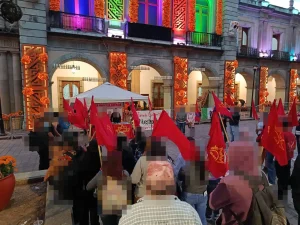
Faced with the dual threat of eviction, both from the far-right government and the various paramilitary groups serving the interests of the latifundium, that hundreds of peasant families are facing, we must strengthen our organization, unity, and revolutionary class consciousness to resist the onslaught of reaction. It is time to defend through struggle what we have won through struggle! Likewise, the millions of peasants who have not yet managed to secure their longed-for piece of land must gradually come to understand that the false agrarian reforms and promises of land coming from those in power will only lead them to an eternal and fruitless wait. Only by being united, organized, and fighting will it be possible for them to secure and defend a plot of land on which to live and work.
It is the task of Colombian revolutionaries to build, within the peasant movement, a new, democratic, independent, and militant current. It is the task of this new generation to rebuild the revolutionary peasant movement that the reactionaries have unsuccessfully sought to annihilate. The past four years and the prospects that lie ahead only serve to confirm the relevance and necessity of a true Agrarian Revolution in our country. Under this magnificent banner, the peasantry will be able to unite with the working class, with students, with the democratic intelligentsia, with small and medium-sized merchants, and, in general, with all the popular masses in the countryside and the city to completely do away with the land monopoly and finally throw the latifundium to the dustbin of history, where it belongs. The actions of the peasantry – who organized and moved forward to reclaim land from the big landlords and took up the banner of land to the tiller – offer a glimpse of their enormous revolutionary potential and the leading role they will play as the main force in the New Democratic Revolution that is taking shape in Colombia.