Finland: Deteriorating Conditions in Overcrowded Prisons
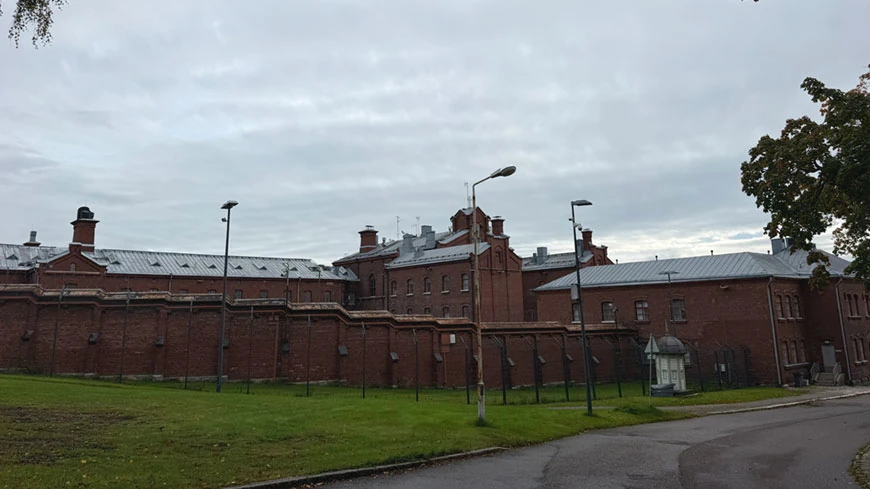
Featured image: Helsinki Prison. Source: CPT
On November 25, the European Committee for the Prevention of Torture and Inhuman or Degrading Treatment of Punishment (CPT) published preliminary observations from their visit to three prisons in Finland from September 22 to October 2, to be followed by a full report. The preliminary observations point to several issues about deplorable prison conditions. Fundamental rights are being denied, prisons have become more overcrowded, prisoners are being forced to sleep on a mattress on the floor, some are even accommodated into a sauna, health confidentiality is violated and exceptional restrictions and measures made de facto systematic.
The CPT says that most criminal suspects are quasi-systematically, at the outset of deprivation of liberty, denied the fundamental right to notify one of their next-of-kin about their custody, which appears to be the rule rather than the exception, in some cases for several days and even up to one week. The observations continue:
“[…] the delegation was informed that the median stay of remand prisoners in police facilities is still around seven days, and in exceptional cases can last up to several weeks. During that time, they are usually held alone in a cell – often without sufficient access to natural light – for 22 to 23 hours per day, with neither meaningful human contact nor activities offered to them.
[…]
The delegation therefore reiterates the CPT’s call to the Finnish authorities to implement as a matter of priority their long-standing plans to fully eliminate the practice of holding remand prisoners in police establishments. This matter has already been the subject of High-level talks held 10 years ago, during which the Finnish authorities had assured the CPT that this practice would be ended by 2025.”
The CPT delegation visited Helsinki, Riihimäki and Turku prisons, and stated that their main concern in all three prisons visited were the effects of overcrowding, pointing also to the fact that a significant number of prisoners live under a very restricted regime, with only a few hours out of cell time each day. Isolation cells intended for disciplinary purposes are being used for prisoners not formally being disciplined.
“As a result, in Helsinki Prison for example, prisoners had to be placed in cells not intended for long-term accommodation, such as the transit cell (Matkaselli) in the basement of the building, or even, occasionally, in the prison’s main sauna. […] In Turku prison, cells designed for single use were turned into double cells by adding an extra bed or, in some cases, by placing a mattress on the floor.”
Remand prisoners and prisoners segregated for their own protection or for security reasons might spend up to 23 hours a day locked in their cells with little, if any, human contact. Some prisoners have had no meaningful human contact for months, if not years on end, thus spending their time in solitary confinement for extended periods.
Concerning healthcare, the delegation noted a lack of confidentiality in accessing healthcare, as healthcare request forms were sorted by custodial staff, absence of injury registers, and most medication (including psychotropic drugs) routinely distributed by custodial staff.