Brazil: The Number of Deaths in the Struggle for land is Growing
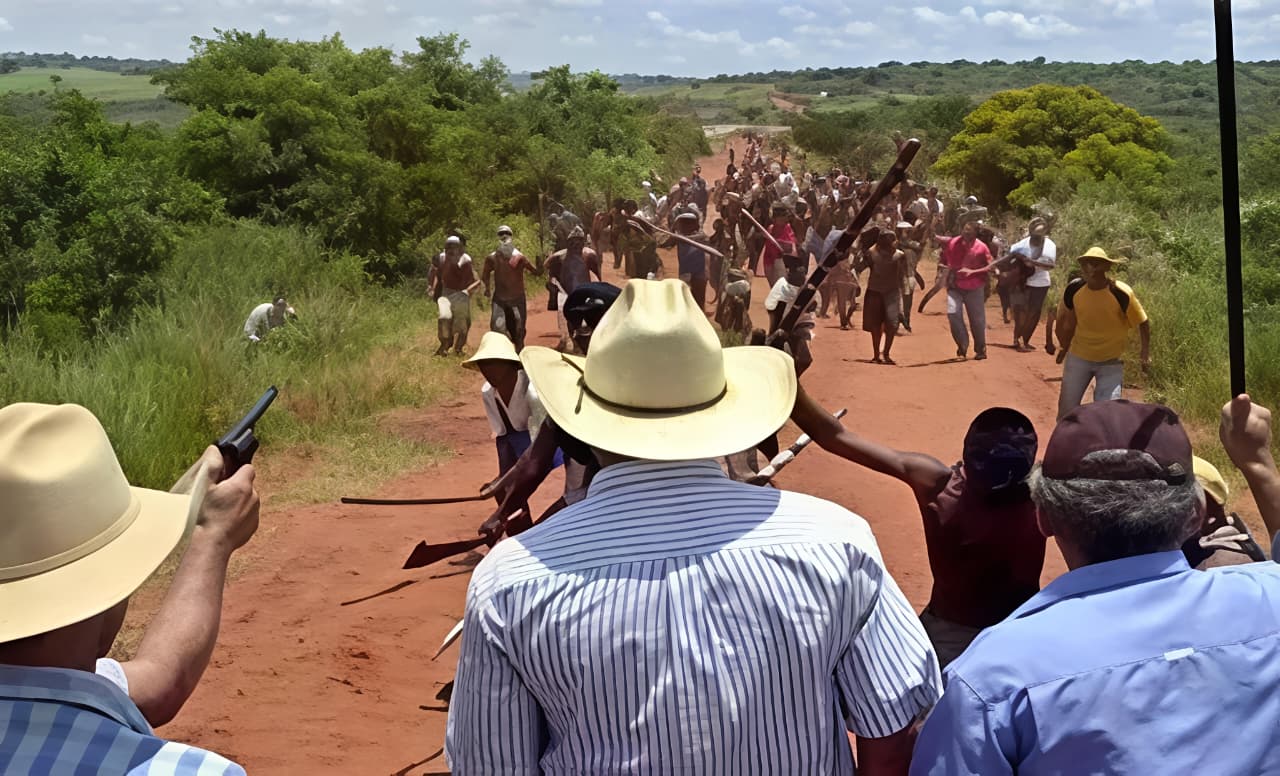
In an article from A Nova Democracia, citing preliminary data from the Pastoral Land Commission (CPT), they show that the amount of murders related to conflicts in rural areas has doubled since 2024, with the numbers rising from 13 in 2024, to 26 in 2025.
They write that “the level of conflict in rural areas is growing as an intrinsic part of the agrarian problem, a product of the contradiction between the high concentration of land in latifundiums and the resistance struggle of poor, landless, or land-poor peasantry.”
They go on to write that this rise in murders has happened despite the change in government, thus dismantling “the discourse of “pacification” in the countryside propagated by the opportunistic PT government”
According to CPT the main victims continue to be poor, landless and poor peasants, indigenous people, and Quilombola communities, and is concentrated mostly in Rôndonia, especially in the Tiago Campin dos Santos Area.
“The expansion of latifundium, known as “agribusiness,” is driven by record-breaking State credit policies, such as the billion-dollar Plan Safra granted by the opportunistic government of Luiz Inácio Lula da Silva (PT). This is in addition to generous tax exemptions and infrastructure investments, almost exclusively focused on the export of primary products. In the 2024/2025 Plano Safra alone, the government allocated approximately R$ 475 billion in financing, much of it with subsidized interest rates, while the sector continues to benefit from billions in tax breaks, such as ICMS (a State sales tax) exemptions on exports and incentives for the use of pesticides. Added to this are logistics projects financed with public funds to transport soybeans, corn, and meat, which artificially increase land values, exacerbate land disputes, and put pressure on peasant, indigenous, and Quilombola (Afro-Brazilian) communities.” AND writes.