Brazil: Memorial Installed in Honor of the Peasant Struggle
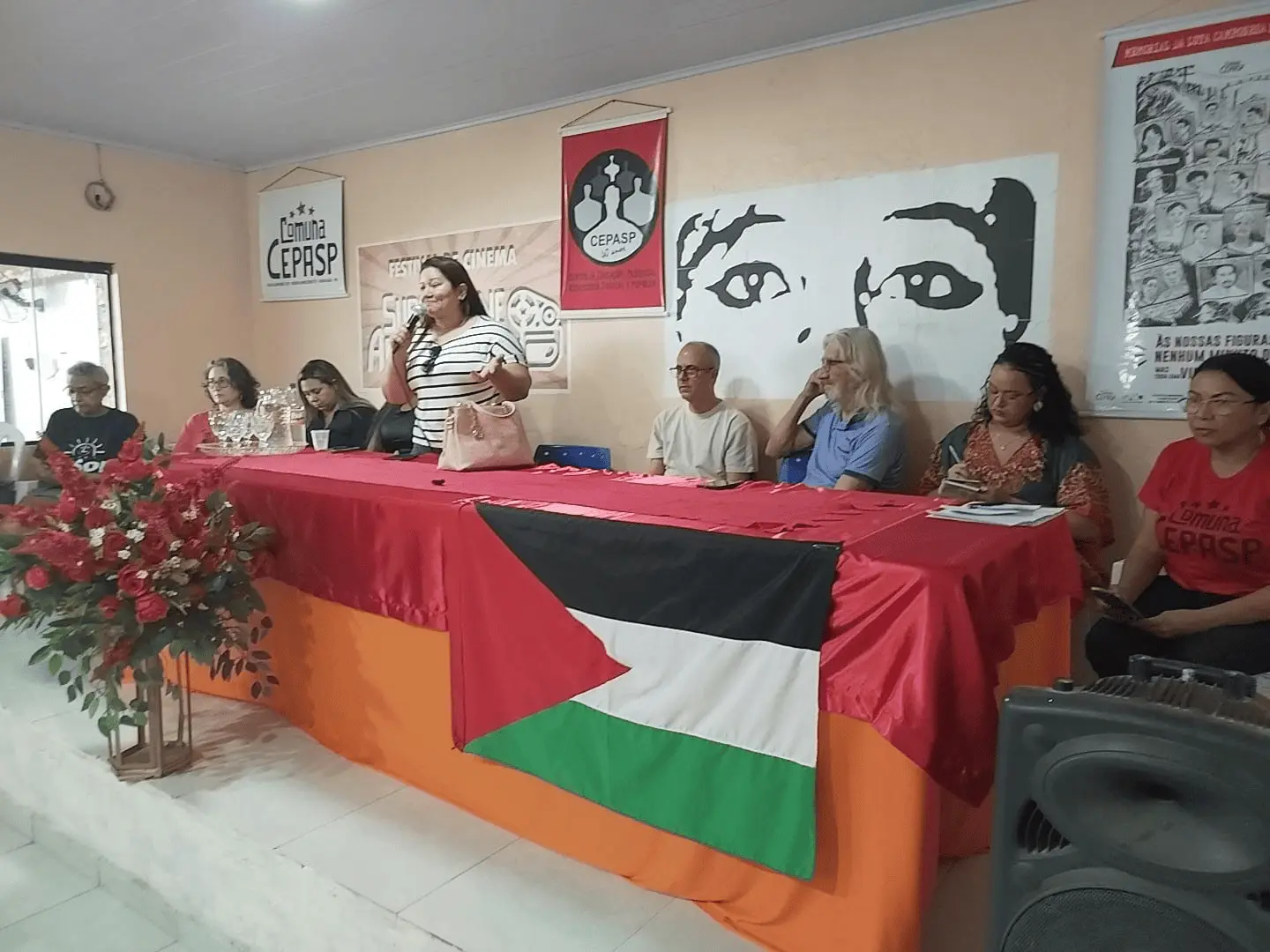
Featured image: Opening ceremony for the installation of the Memorial to the Peasant Struggle. Source: AND
On August 29, in Marabá, southeastern Pará, Brazil, the Center for Education, Research, Trade Union and Popular Assistance (CEPASP) has installed a memorial in honor of the peasant struggle in southern Pará, A Nova Democracia (AND) reports.
In an event attended by peasants, indigenous people, social movements, teachers, workers, and students, a visit to the memorial space was organized. The memorial space consists of maps of land claimed by peasants, which now field settlements, and maps depicting land conflicts. Additionally, four panels of photos and texts of the heroes and heroines murdered in the struggle for land, with photos and accounts.
After the viewing of the memorial, a welcoming panel took place with representatives including, among several others, CEPASP, CPT (Pastoral Land Commision), the Zé Cláudio and Maria Institute and FETAGRI.
Regarding the speeches, AND reports: “the speeches recalled the moment of CEPASP’s creation in 1984, amidst the struggles of land occupiers against latifundium, land grabbers, goons, and police; the confrontation with the fascist military regime; the assassinations of peasant leaders, lawyers, and religious figures; the Araguaia Guerrilla; and the terror imposed by the Armed Forces.”
The second panel was reserved for the families of the heroines and heroes murdered in the struggle for land and against the fascist military regime, where multiple accounts were heard. Closing the panel, Professor Angelina, on behalf of the CEPASP Women’s Collective emphasized the need for a combative struggle againstlatifundium, bureaucratic capitalism, imperialism and also sexual oppression: “To remember, to resume the struggle, to resist and to fight is our task. […] only revolutionary struggle can resolve this situation.”
A third panel on the agrarian question, with representatives from FETAGRI, CPT, MPA, and CEPASP, “addressed the advance of capital in the countryside through agribusiness and mining, the unity between financial capital, latifundium, and imperialism, the presence of drug trafficking in disputed areas, land grabbing, and growing conflicts […] and and the need to resume the struggle at the local, national, and international levels.” AND reports.
You can read the full article of AND here, with detailed reports on the various accounts and speeches made throughout the memorial event: