Clashes in the Spanish State Against Right-Wing SALF Stooge
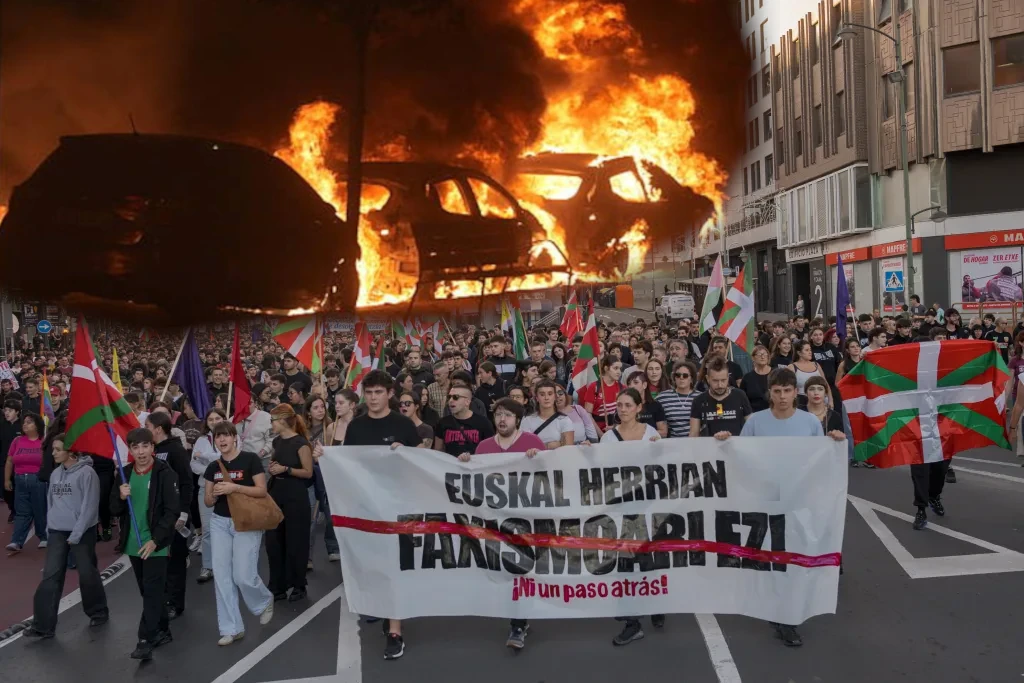
Featured image: Collage of the protests in Bilbao.
On October 26, thousands of demonstrators took to the streets of Bilbao, in the Spanish State, against a scheduled appearance of the right-wing figure Vito Quiles, who was scheduled to speak at a local university, which developed into clashes with the repressive forces of the Spanish State.
Vito Quiles is known in the Spanish State for so-called right wing provocational content on social media, with many referring to him as a “Spanish Charlie Kirk”. He is known for being a spokesperson and press officer for the Se Acabó La Fiesta (SALF) Party of the Spanish State. After the mobilization of the people of Bilbao, and the ensuing clashes, he was forced to cancel his appearance, as well as his following appearance set to take place in Valencia today. According to reports, 14 demonstrators were arrested during the clashes.
For more context on these protests and Vito Quiles we include below a translation of an article from Servir al Pueblo, published on October 26.
Antifascists Clash with the Police and Drive Vito Quiles out Wherever he Goes
The fascist agitator Vito Zoppellari Quiles, the good kid of Elche’s shoe-making bourgeoisie, is touring several cities across the State to spread his reactionary propaganda (which consists, primarily, of hoaxes and slander against immigrants). Thus, repeating the 2025 tour in which he tried to emulate Charlie Kirk and which he called “Combative Spain,” he announced the Combative Tour II: “Mafia or Fatherland.”
The working class is responding forcefully to this reactionary tour, especially the militant youth. Wherever he goes, Vito Quiles is met by demonstrations or considerably large antifascist groups. If it weren’t for the protection of the National Police and his bodyguards, members of eviction firms and other fascist squads (and for the occasional outdated pacifist), Vito Quiles would be in the hospital or the cemetery from the very first day of his tour.
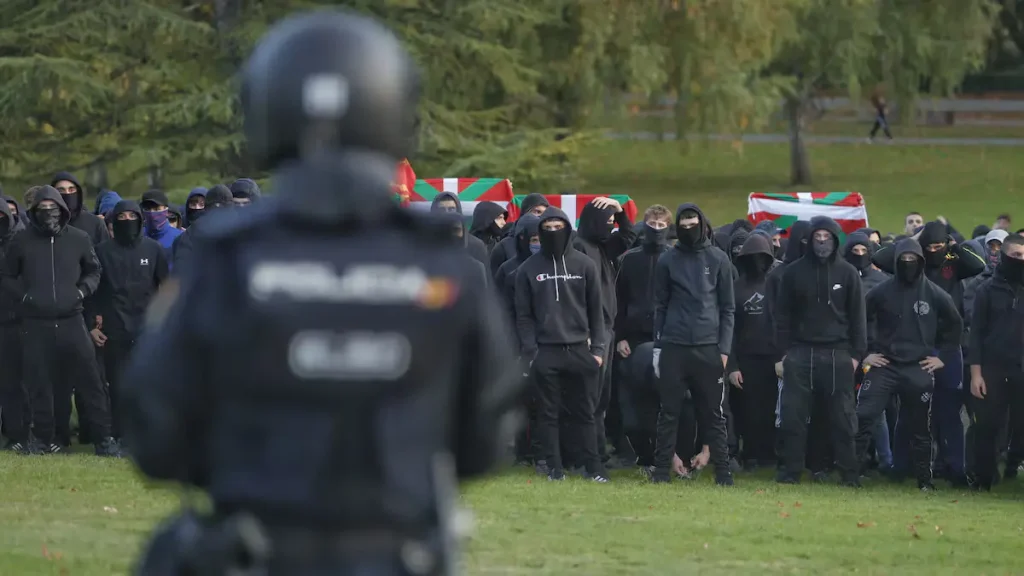
On October 15, Quiles went to Iruña and officially kicked off the “Mafia or Homeland” tour. The anti-fascists responded with a combative demonstration, chanting Faxista. Alde hemendik “Fascist. Get out of here,” erecting barricades to block streets, and throwing Molotov cocktails. After 15 minutes, the fascist agitator had to flee with his tail between his legs, escorted by the police. Several anti-fascists were injured and arrested.
On October 19, Quiles traveled to Barcelona. The Autonomous University of Barcelona, fearing that the anti-fascist protests might be as intense as those in Iruña and might damage university property, denied Quiles entry. The agitator then went to the IKEA in Sabadell and gathered a mere 20 people. The anti-fascists managed to break through the security perimeter, and with the protesters closing in, Quiles fled quickly.
On October 22, Quiles went to Zaragoza. Just as had happened in Barcelona, the University of Zaragoza prevented him from entering its campus, and the agitator held his event at a nearby location. The anti-fascists responded by going there and countered with charges and pepper spray. Once again, Quiles was forced to flee, protected by the repressive forces of the State, after someone spat on him.
The next events, according to Quiles’s own schedule, are on October 26 in Bilbao (that is, today) and on the 28th in Valencia.
Wherever Vito Quiles goes, there are police charges and self-defense by the anti-fascists, using whatever level of violence they can muster depending on the circumstances and whatever they have at hand. Young people want to fight fascism. The anti-fascist movement wants to escalate its forms of struggle.
The idea that, in the face of a fascist rally, one must hold a peaceful counter-demonstration at another location in the city, without any plan for direct confrontation, and call that an “anti-fascist response” has run its course. That tasteless joke has been rendered obsolete by the events described: the anti-fascist youth want to fight.
What will the pacifists of all stripes say? Will they keep repeating the refrain that such actions “are not representative” and that they are wrong because they “scare”the masses, thereby preventing the mass spread of antifascism? Isn’t it obvious that it is struggle that makes antifascism a more solid, strong, and committed movement?