The US Subjects Brazilian Imports of Advanced Chips to its Approval in Order to Restrict Chinese Access.
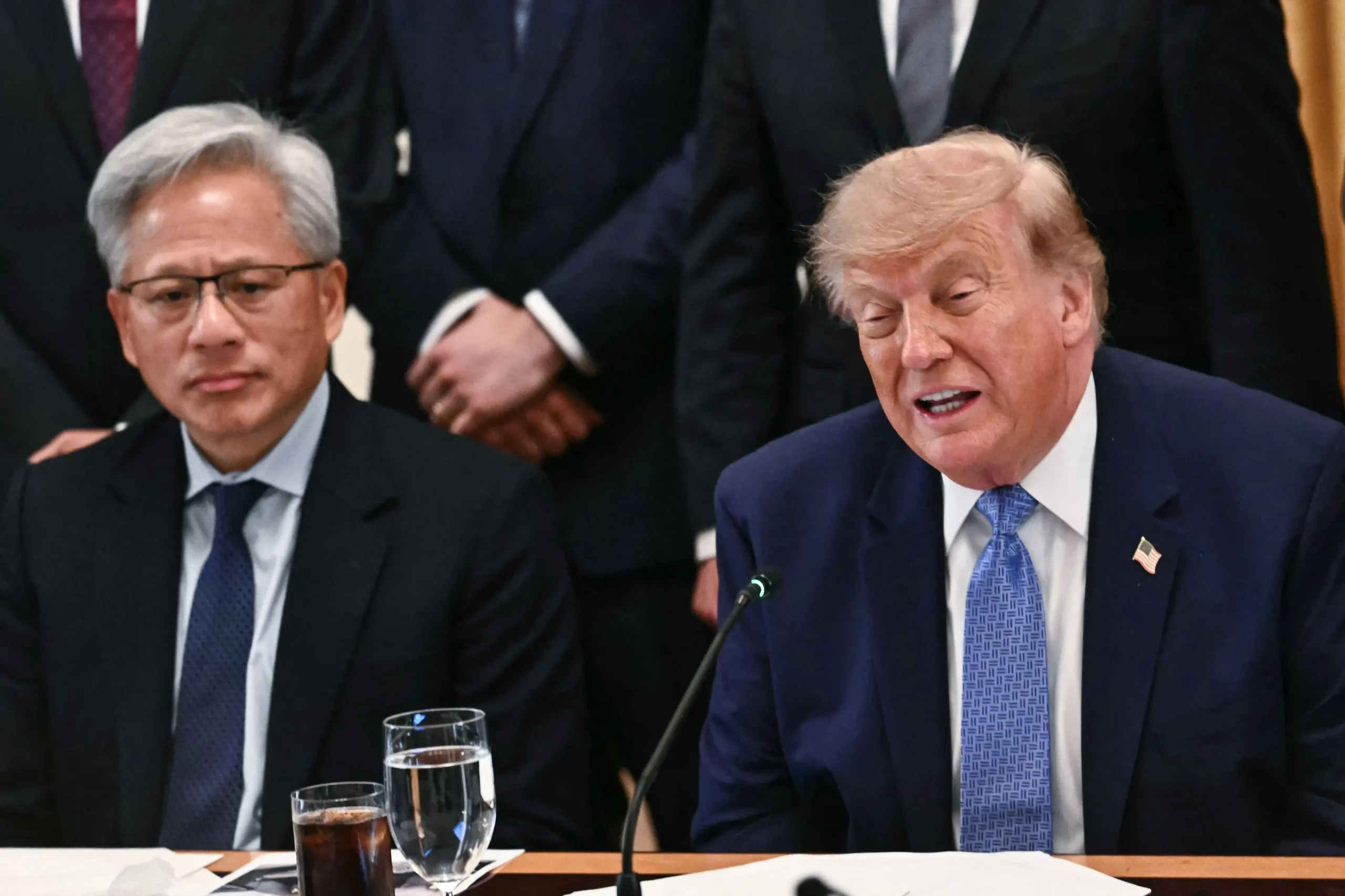
Featured image: Donald Trump and Jensen Huang, then CEO of Nvidia, at the White House in September. Source: A Nova Democracia.
Yankee imperialism, in its concern over electronic components, and in competition with Chinese social-imperialism, strives to restrict the export of advanced chips, semiconductors and other key electronics components, A Nova Democracia (AND) writes.
According to Trump the measure is intended to stop Chinese companies from accessing powerful processors remotely through data centers in those countries. It also applies to some chips made outside the US, while exempting certain transactions involving companies headquartered or ultimately controlled there.
The US already bars direct sales of the most advanced AI chips to China, but Chinese companies have continued to access them by renting computing capacity at data centers in countries that can legally import the chips. Trump has also said on Friday that the US would also penalize American companies that build data centers overseas.
This gives US-based companies an advantage and leaves Brazil more dependent on foreign suppliers. Brazil imported $6.8 billion in semiconductors from January to September 2026, and the new licensing could affect data-center projects.
AND states that the Yankee decision directly undermines Lula’s promise of “digital sovereignty.” His government had just created tax incentives to attract data centers, but Brazil will still depend on imported chips, and US will decide whether some advanced chips can be supplied or used for certain projects.