Spanish State – Servir al Pueblo: Summer in Cañada Real – Extreme Heat, Fires, and Drought
We hereby share a translation we have received per email of an article published by Servir al Pueblo on September 15.
Just 14 km from Madrid’s downtown lies a neighborhood without electricity, internet, garbage collection service, or public transportation. This is Cañada Real, and as we’ve explained in previous articles, this is neither a mistake nor a coincidence. It is a State strategy to drive out residents and use their land for real estate speculation. Proof of this can be seen in the Valdecarros, Los Berrocales, Los Ahijones, and El Cañaveral (translator’s note: different neighborhoods) projects, which have expanded until they are practically adjacent to one another. Cañada Real stands in the way of the expansion of these types of projects, and therefore financial monopolies are seeking to wipe it off the map, using the various branches of the State government – which is entirely at their disposal to enforce their interests – to do so. Thus, when these projects began to encroach on Cañada Real around the year 2000, the Madrid City Council shifted from simply neglecting the neighborhood to actively working to evict its residents.
Seeing that there was strong popular resistance and that brute force would not work, they gradually shifted to a strategy of continuous siege, systematically denying any services to Cañada Real, stigmatizing its residents, and promoting constant police harassment in order to worsen living conditions to the point that the residents would leave “of their own will.” At best, residents who leave are offered a temporary rental apartment in a town dozens of kilometers from the city. In most cases, they are offered absolutely nothing.
Thus, as acknowledged in the 2018 Regional Pact for Cañada Real, the goal is to completely dismantle Sector 6 (translator’s note: the poorest part of the neighborhood); to this end, electricity was cut off in 2020, and internet access in 2025, not to mention the lack of garbage collection services or public transportation. We could write hundreds of pages explaining how every aspect of the residents’ lives is affected by these population-cleansing policies, but in this case we will focus on how the State exploits the summer and the heat to intensify the pressure on them.
Extreme Temperatures Inside and Outside the Home
It is very common (and increasingly so) for summer temperatures in Madrid to approach or exceed 40°C, turning the middle of the day into a true hell for those who cannot find shelter. In Sector 6 of Cañada Real, there is no electricity for fans or air conditioning beyond the few watts that a solar panel can provide. Many homes have not been equipped to dissipate heat in the summer, so, in reality, there is no real refuge. Residents are forced to endure the heat, doing whatever they can to mitigate it.
The simplest way to do this is to use water – by drinking it, cooling down the area around the house with a hose, or setting up small pools for the children… except that there are areas of Cañada where water doesn’t reach, or only trickles in. Most of the houses in the neighborhood were connected to the water pipes when their owners built them, without the State ever bothering to ensure a supply for all residents. Added to this is the fact that when a house is demolished because a family has been evicted, the police and city employees leave the rubble on site, without bothering to plug the water leaks either – which contributes to lowering the overall water pressure in the pipes, as the residents themselves tell us.
As a result of all this, water pressure is so low during the summer that there are areas in Sector 6 that receive no water at all, or at best a trickle during the day, forcing families to ration water during heat waves. The lack of maintenance also causes occasional outages, such as the one that left seven homes without water in early July of this year. Faced with this situation, the Commissioner of Cañada Real – the official appointed by the city council to “manage” the neighborhood – said he could do nothing to restore the water supply. The government, it seems, is incapable of enforcing a right as basic as access to water. The only proposal these families received came from the Red Cross, and it consisted of them paying for water tanks themselves so that a truck could refill them with non-potable water a few days a week.
Seeing that no one else was offering a real solution, the “Cañada se Queda” (Translator’s note: Cañada Stays) campaign – created specifically to fight for the residents’ right to the area where they live – mobilized, conducting interviews with residents to investigate how the plumbing system worked and the possible cause of the outage, and raising funds to purchase drinking water tanks for the affected homes. A group of volunteers from the campaign installed three tanks in the homes, and the residents themselves eventually found the source of one of the breakdowns.
More burdens on women’s shoulders
Another problem associated with the heat and the lack of electricity is food preservation. Families in Cañada are forced to buy only what they will consume in the short term so that it doesn’t spoil due to the lack of refrigerators, which means they have to go shopping much more often each week (in winter, it’s so cold in the houses that food stays fresh without electricity). However, the nearest supermarket is about a 40-minute walk away, so if they don’t have a car, they must walk the entire distance in the sun while carrying heavy loads. Of course, this particularly affects those who bear the burden of domestic labor – that is, women.
In general, the lack of services hits women particularly hard, since they are the ones who perform most of the household chores and therefore spend more time in Cañada. Another example is childcare. During the summer and school breaks, women must juggle their usual chores with caring for their children all day long, since there is nowhere to leave them. This care becomes even more complicated when there is no running water, no electricity, no recreational options, and no pediatricians nearby. All the tasks women are burdened with become more difficult under the conditions the State imposes in Cañada Real. In other words, the State uses patriarchy to intensify its policies of eviction, thereby reinforcing it at the same time.
Fires as a weapon against residents
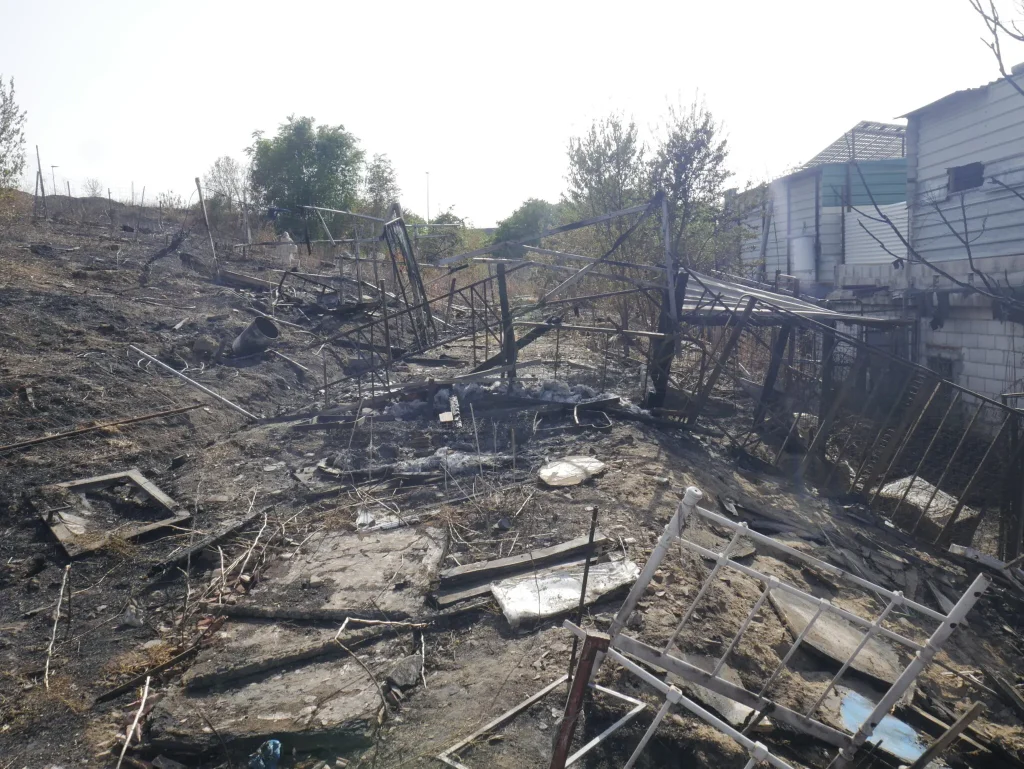
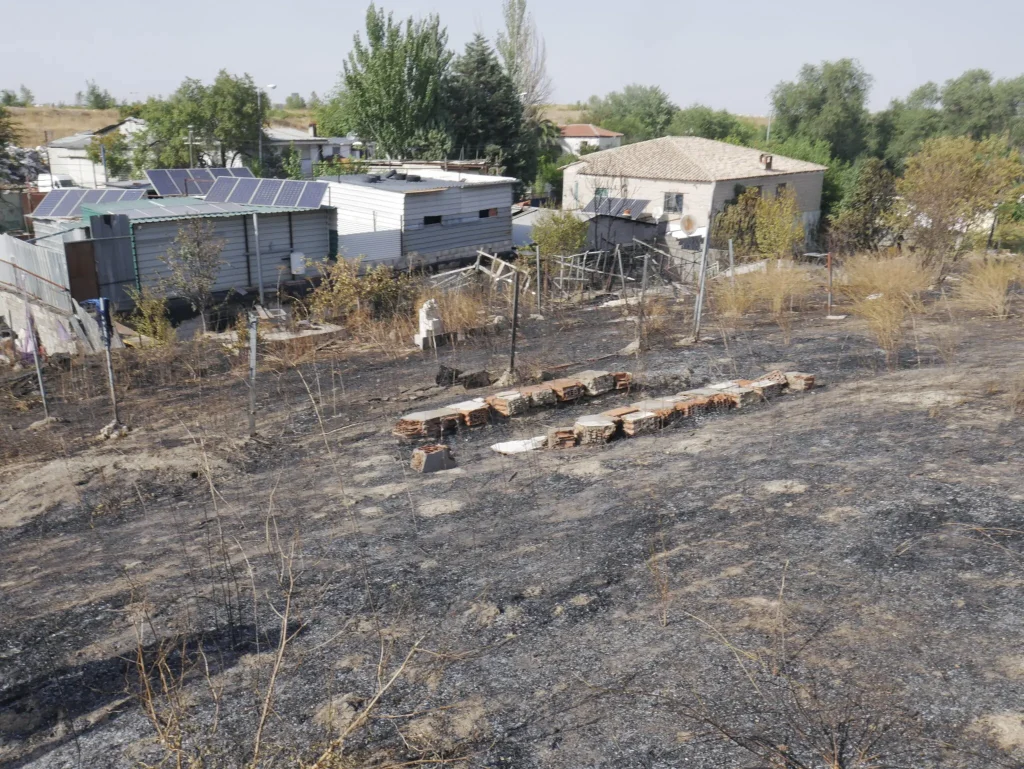
Last but possibly most serious of all is the risk of fires. For years, local authorities have refused to clean the streets throughout Cañada, allowing trash and dry vegetation to accumulate. They have prohibited the removal of debris from demolished houses to prevent them from being rebuilt, have refused to allow any renovation of homes to remove flammable materials or carry out any fire prevention measures, and force residents to use gas stoves due to the lack of electricity. All of this creates a perfect breeding ground that causes multiple fires every year and poses an ever-greater danger that a major fire will devastate a large part of Cañada and its families – which is precisely what the State seems to be aiming for.
Once again, in the face of the institutions’ passivity – which, in reality, seems more like deliberate planning – Cañada se Queda has also begun launching initiatives to reduce the risk of fires. First, they contacted committed firefighters who came to provide advice and help plan prevention efforts; then, they organized volunteer brigades that came to begin clearing combustible materials from the streets. Activists from the housing, student, and revolutionary movements participated in these efforts, and although the scope of these actions is still limited, they have had some impact, as this is the first time in years that people from outside the community have come to carry out this type of work. In the past, the city councils of Madrid and Rivas have even refused to allow sanitation workers and firefighters to go to Cañada, even when they themselves requested it.
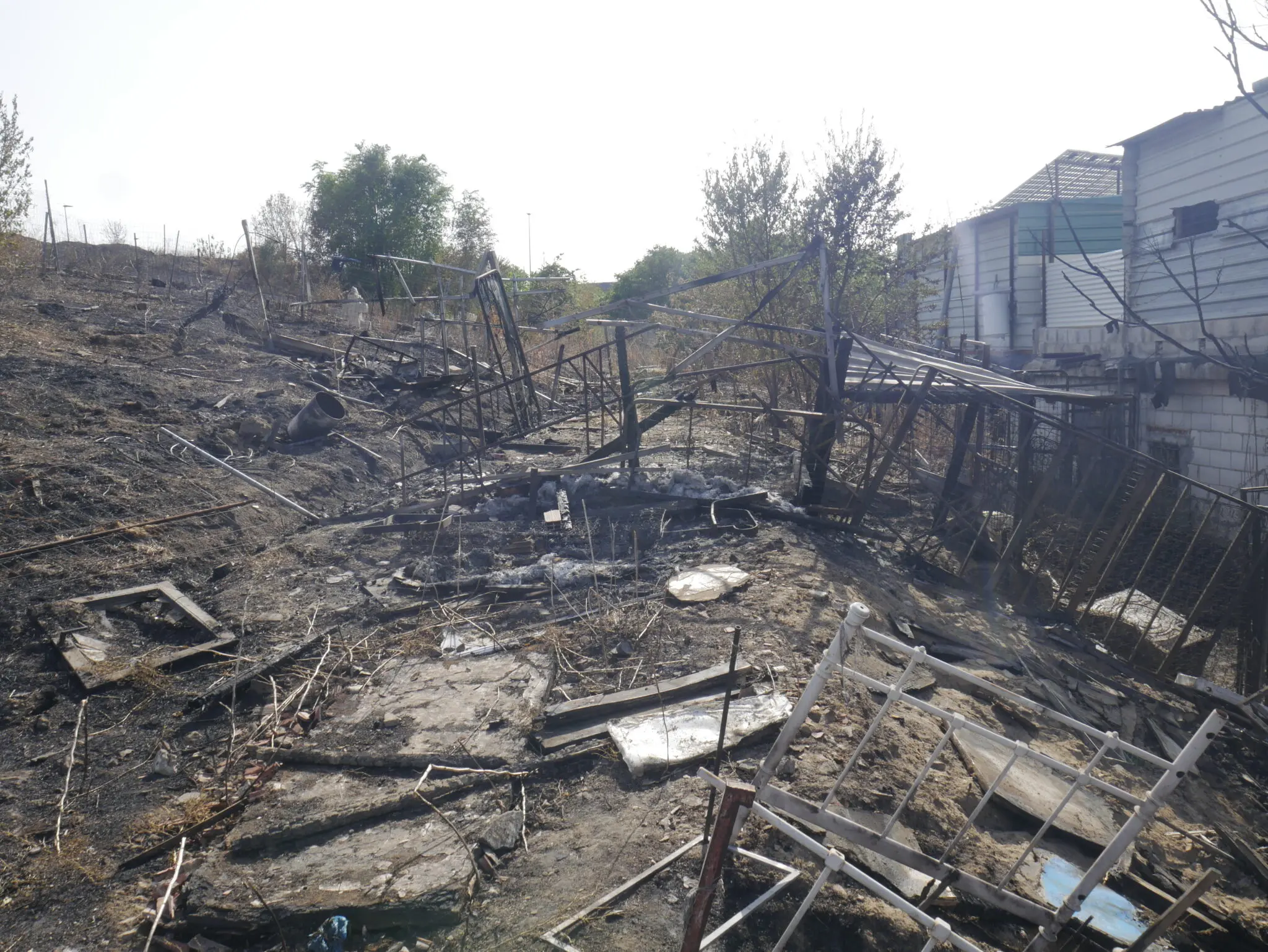
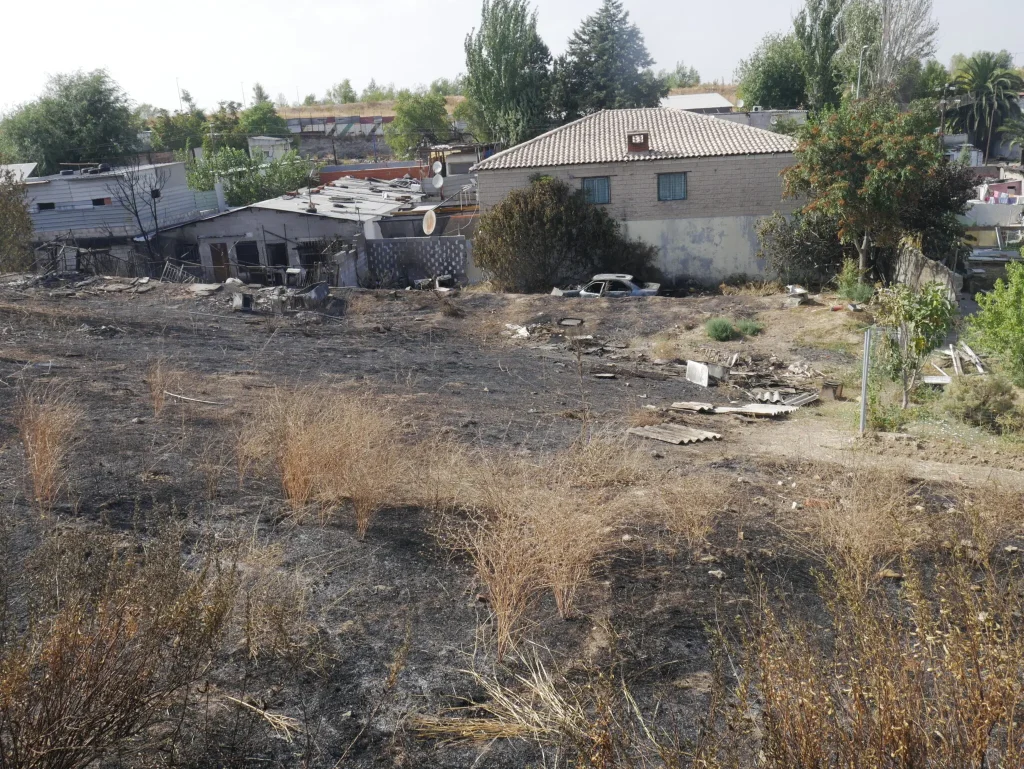
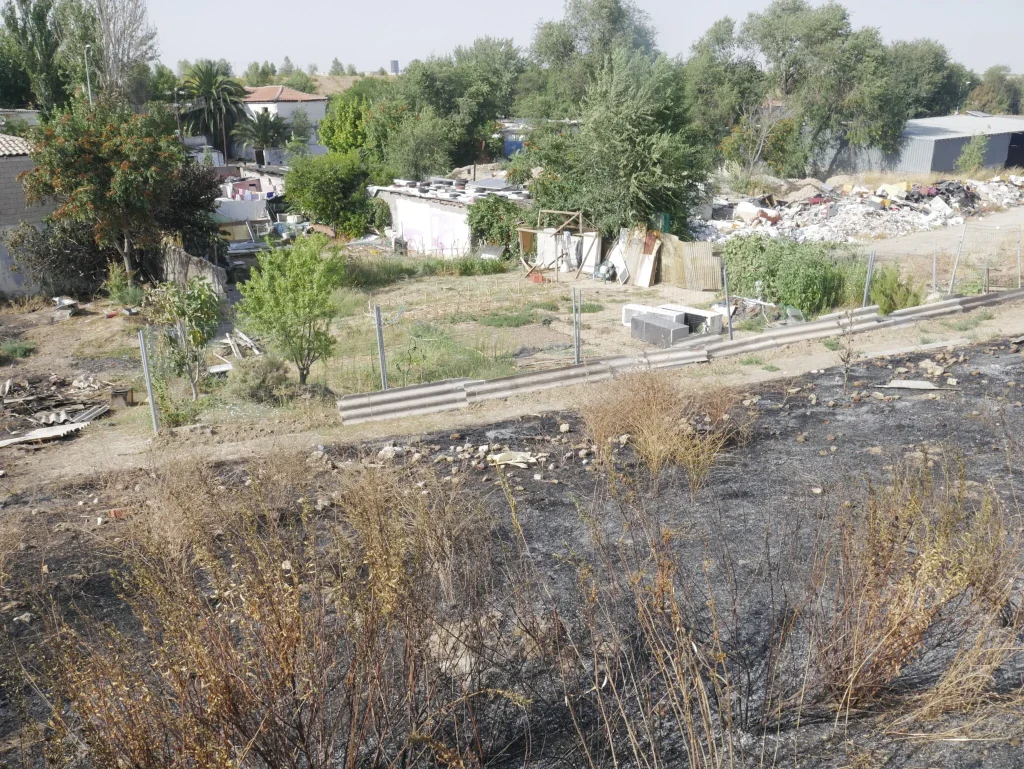
There have already been two major fires in Cañada this summer: the first occurred in July and burned a large area of dry grass in the surrounding area, coming within just a few meters of the houses. The second occurred in early September and burned a strip of grass about 100 meters wide, also on the outskirts, as well as the facades of several houses and at least three properties; fortunately, however, it only affected brick houses and did not reach the most flammable areas. Even so, if the situation continues, it is only a matter of time before a major fire reaches the plastic and wooden roofs, the large piles of trash, the warehouses, the dry vegetation, or a car – and then a tragedy will occur.
We do not intend to sow pessimism or be sensationalist. The bourgeois press will already take it upon itself to blame the residents themselves, drug trafficking, or “natural disasters” for whatever may happen. It is essential that the reader know the truth, which is that it is the State – through its actions (and inaction) that is worsening the situation and putting the lives of the residents of Cañada Real at risk – and that the reason for this is that the financial monopolies (including real estate developers) cannot accept the existence of a community on the outskirts of Madrid that lives in self-built homes, puts a limit on real estate speculation, and has shown itself willing to do whatever it takes to stand up to them.