Brazil – MFP: “Revelando” and the Imperialist Policies of Controlling Births.
We hereby share an unofficial translation of an article published by the People’s Women’s Movement (MFP) – Brazil on October 19.
In September of this year, the first episode of the series of documentary series “Revelando” was released. This investigative project, linked to the “Calma, urgente” channel and other initiatives, exposed the issue of mass sterilization of women in Brazil, and its connection to the eugenic project aimed at exterminating the black and poor population, highlighting alarming data on birth control programs targeting the country’s poor populations. According to the mini-documentary, nearly 50% of Brazilian women of reproductive age had been sterilized by the early 1990s, with rates reaching nearly 80% of women in states such as Maranhão, 75% in Goiás, and 64% in Alagoas and Pernambuco. The sterilization rate in northeastern Brazil was the highest in the world. Millions of these women were sterilized through tubal ligation [translator’s note: “getting your tubes tied”], a procedure that is practically irreversible, without their consent or under conditions of coercion and complete incapacity to make decisions, including women in the postpartum period who were in fragile health and exhausted, without accurate information about the procedure and its implications.
The episode showed how countless so-called “influencers” on “social” media have been peddling the notion that, if you’re poor, you shouldn’t have children, be it under the guise of “family planning,” or openly revealing their rotten, reactionary, racist, and eugenicist views: “Poor people can’t have children,” “poor people are poor because they choose to be,” “poor people are extremely irresponsible,” “poor people are stupid,” “earning less than two minimum wages and already on her second child, she should be sterilized without her consent,” and other such infamies. They even go so far as to propose abortion in cases where prenatal tests show a child has a physical or intellectual disability.
Furthermore, it revealed that sterilization measures, so widespread in the 1970s and 1980s, were championed by proponents of eugenics, which is an ultra-reactionary ideological position advocated by fascist regimes such as Hitler’s Nazism, according to which there were superior races – white and of “pure” lineage – and inferior races that should be enslaved and/or exterminated. While it is true that these policies are common in fascist circles, it is erroneous to think that these measures are identified solely with eugenic fascism. In reality, it is the policy of various governments in power representing the reactionary imperialist ruling classes or, in the case of oppressed countries, of States controlled by the big bourgeoisie and big landlords and their governments, which act as lackeys of imperialism, mainly Yankee imperialism, as in our country, which has historically applied anti-poor and racist birth control policies.
Malthusianism and Neo-Malthusianism

Classical birth control policies have been associated with the reactionary bourgeois economist Thomas Malthus. His population theory – which was, in fact, plagiarized, as Marx blatantly denounced in Book IV of The Capital – asserted that the population grew at a faster rate than food production, the former in a geometric progression (2, 4, 8, 16…) and the latter in an arithmetic progression (2, 4, 6, 8, 10…). According to this false “law,” population control of the poor was recommended, who, unable even to afford the costs of raising children, were to be the primary focus of birth control policies in order to curb population growth and contain the crisis of famine and shortages. Nothing could be further from the truth. Malthus’s theories influenced the creation of “workhouses”, of forced labor for “vagrants” in 18th- and 19th-century England, who were in fact peasants expelled from their lands and forced to eke out a living without jobs in the big cities as part of the industrial reserve army, as Marx demonstrated in his analysis of the emergence of the Industrial Revolution.
Despite the false premises and the blatantly anti-people and racist character of Malthusian policies, they were not abandoned, but rather recycled under different guises and names throughout the 20th century, retaining their bourgeois essence and reactionary content, albeit under the supposedly progressive guises of the false defense of women’s rights and motherhood and the propaganda of “family planning.” For poor women of the people, it is practically impossible to experience motherhood with dignity and under even minimal conditions of health and care, with prenatal care that is precarious and routinely neglected in the public health system or prohibitively expensive and accessible only to the wealthiest in the private system. Basic costs and the necessary time off from work are not guaranteed, with millions of women being fired and pushed into unemployment because they are pregnant, making motherhood a factor that drives millions of families of the popular masses further into poverty and destitution. One cannot truly speak of an effective right to motherhood for women of the people, whether in imperialist countries or those with bureaucratic capitalism, semi-feudalism, and semi-colonialism/colonialism.
After World War II, neo-Malthusian theories made a strong comeback in public debate, articulated by “multilateral” institutions such as the United Nations (UN) and its affiliate, the United Nations Educational, Scientific and Cultural Organization (UNESCO), which recommended strict birth control policies, especially in poor countries. Their premise was that poverty was the result of overpopulation and that, therefore, for a country to escape poverty, reducing the excess population was a prerequisite.
Colonialism, slavery, and whitening
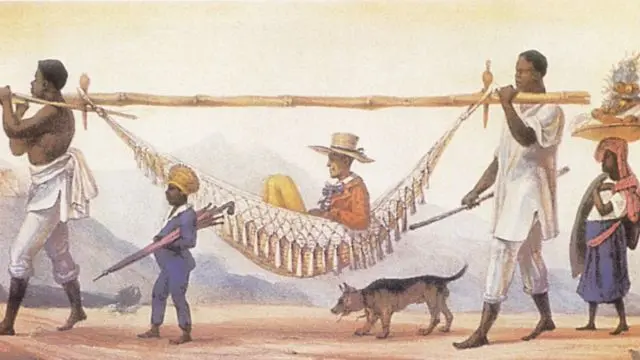
In Brazil, since colonization, racial and anti-people conceptions regarding population control were enforced by the ruling big landlord classes, who were lackeys of the Portuguese Crown. While the rape of enslaved Black and Indigenous women by the owners of land slaves, as well as by the mercenary slave-catchers and bandeirantes [translator’s note: soldier groups tasked with expanding colonialism and enslaving indigenous people], was permitted and tolerated, since it would increase the population available for labor, the big landlord family remained white, free from intermarriage with “inferior races.” Even so, the maids, black enslaved women assigned to domestic service for their masters, were forced to serve as “wet nurses,” bearing children along with the “Lady of the house” so they could breastfeed their white children. This practice persisted until the emergence of medical “theories” in the 19th century, which labeled the milk of enslaved women as dirty and impure.
In resistance and struggle against slavery and serfdom, colonization, and the monarchy, the Brazilian people emerged from the fusion of families of different ethnic backgrounds, namely, indigenous peoples, black people enslaved in Africa, and poor white people from Europe.
At the end of the 19th century, with the decline of the slave labor system under the Empire’s feudal-slave-owning regime, campaigns were launched to make the population whiter by bringing millions of poor European migrants to the country to subject them to conditions of servile and semi-servile labor on the plantations, which were now reeling from the loss of their primary source of labor: enslaved black people. The racist ideas of the newly formulated “eugenics” would spread throughout ruling circles.i
These whitening policies would continue long after the end of slavery and the Empire (1888 and 1889, respectively), into the regime of Coronelism marked by the “coffee-with-milk republic” [república do café com leite] and even later, under the Vargas regime, following the 1930 coup. The colonial, feudal, and slave-owning ideology retained its full force, manifested throughout the political, cultural, and legal superstructure, with the blatantly racist tones that had once “justified” slavery. In the 1930s, marked by the rise of Nazifascism in Europe, such policies took on increasingly eugenicist contours and became identified with Brazilian fascism, openly advocated by the green chickens [translator’s note: in reference to their green uniforms] of Plínio Salgado’s circle and by the Brazilian branch of the Nazi Party (the largest branch outside Germany!), as well as through the demagogic rhetoric of creating the “new man” promoted by Getúlio’s fascist “New State” government. Organizations such as the Pro-Sanitation League (1918), the São Paulo Eugenics Society (1918), and the Brazilian League of Mental Hygiene (1920) were already advocating eugenicist ideas and calling for intervention by the old State to create a “strong race,” demands that were embraced by the governments of the coffee-with-milk republic and, especially, by Vargas. The Brazilian League of Mental Hygiene explicitly advocated policies such as immigration control, marriage control, and forced sterilization of individuals considered degenerate, with the aim of “racial improvement.”
Controlling births as a measure of “counterinsurgency” warfare

In the 1970s, with the Great Proletarian Cultural Revolution in China, the resounding defeat of the imperialist wars in Vietnam, the decline of colonial regimes in Africa, and, soon after, the turbulent popular uprisings throughout the oppressed countries, announcing the dawn of a new wave of the world proletarian revolution with the Revolution in Nicaragua and in Iran followed by the Iran-Iraq War, the national resistance war in Afghanistan, and the beginning of the People’s War in Peru (1980), birth control policies became increasingly entangled with the counterrevolutionary and counterinsurgency doctrine of imperialism. Meanwhile, in China, following Deng Xiaoping’s counterrevolutionary coup (1976–1978) which transformed the socialist country into a social-imperialist one (socialist in name only, imperialist in reality) the “one-child” policy was promoted, harming millions of Chinese families who had more than one child. Yankee imperialism was vigorously implementing a neo-Malthusian birth control policy through programs falsely labeled “women’s protection” and “family planning,” nonprofit organizations, and even through UN and UNESCO platforms. In fact, the neo-Malthusian discourse even took on “environmentalist” overtones through alarmist reports such as “The Limits to Growth” and books by authors like Paul Ehrlich, by implying that damage to the natural environment – which were in fact imposed by the imperialist system’s unbridled exploitation of natural resources, generating pollution and the degradation of soil, air, rivers, and seas – were caused by global population growth.
But beyond the demagogic discourse of combating poverty (read: combating the poor) and “climate change,” these policies were used to control popular uprisings and revolts in the Third World, where, amid the general crisis of decomposition of imperialism and bureaucratic capitalism, they further exacerbated the conditions of misery, exploitation, and oppression faced by millions of people, driving them to resist and rebel.
As described in the AND article “Imprisoned Activist Denounces Forced ‘Menstrual Cycle Interruption’ in Rondônia Prisons”:
“In Brazil, the forced sterilization of poor women, driven by Yankee imperialism, occurred on a large scale during the 1970s and 1980s and was denounced by popular movements. These denunciations led to the opening of an investigation managed by the old State, which only laid bare the authoritarian measures but never held those responsible accountable.
The initiative was also documented by the Yankees in a previously classified document known as the Kissinger Reportii from 1974, which advocated sterilization to curb population growth, a population that, within the capitalist mode of production, is predominantly poor. These measures targeted semi-colonial countries such as Brazil, India, Pakistan, the Philippines, Turkey, Nigeria, Mexico, and Colombia.
Under the guise of being ‘family planning’ organizations, between 1988 and 1990, associations received $8.3 million from imperialism to implement their plans, among them the Civil Society for Family Welfare in Brazil (Bemfam) and the Center for Research and Integrated Care for Women and Children (CPAIMC).
[…] In Peru, the fascist former president, Alberto Fujimori, who governed the country from 1990 to 2000, was recently put on trial for a program of forced sterilization of 350,000 peasant and indigenous women and 25,000 peasant and indigenous men. There, too, this authoritarian practice was disguised under the guise of a so-called family planning program.
Of these women who were subjected to forced procedures, 18 died and 1,300 suffered lasting health consequences.”
The Peruvian case is quite emblematic, since the extremely severe policies of chemical castration and forced sterilization of hundreds of thousands of women, mostly indigenous and peasant women, were directly and explicitly linked to the fight against the People’s War led by the Communist Party of Peru, which, by the early 1990s, had achieved strategic equilibrium of forces with the Peruvian reaction, with guidance and financial and technological support from the CIA.
In Brazil, although control measures are often defended and implemented as policies of voluntary and informed family planning, their anti-popular and racist nature, linked to measures of “national security” and the control of “crime” (read: control of “subversion”), is glaringly obvious. The ultra-reactionary Jair Bolsonaro himself, an admirer of Ustra and Fujimori, while serving as a low-ranking member of Brazil’s putrid parliament, vomited out his venomous rhetoric: “I defend the death penalty and strict control of births, because I see violence and misery spreading more and more in this country. Those who cannot afford to have children should not have them” and “We must provide the means for those who, unfortunately, are ignorant and lack the means to control their offspring. Because we here control ours. Poor people don’t control [theirs].” Jair’s rotten “controlled” offspring, Carlos Bolsonaro, in 2014, continued his father’s legacy, advocating a proposal to “make Bolsa Família benefits [translators note: a social welfare program] conditional on tubal ligation and vasectomy surgeries to stem the economic bleeding and also combat poverty and violence.”
In the same article cited above, coverage was given to the complaint made by an activist who had been arrested at the then Manoel Ribeiro camp in southern Rondônia. Appearing before the “court of justice,” she denounced that numerous fellow female prisoners had not menstruated for over a year, raising suspicions that chemical sterilization agents had been introduced into the prison system’s food and water supply. At the time, the judge presiding over the case responded that “it must be psychological,” mocking the complaint.
During Dilma Rousseff’s PT administration, in 2014, Daniel Cerqueira, then director of the Institute of Applied Economic Research (IPEA, affiliated with the Ministry of Planning and Budget), co-authored a study that argued that a decline in population would have a positive effect on reducing the homicide rate. According to this false causal relationship, a decrease in the youth population, identified as the primary perpetrators of homicides, would lead to a decrease in these crimes. It thus aimed to blame poor youth as the cause of violence rather than the structural and historical factors underlying the existing system of exploitation and oppression. In 2018, Cerqueira himself contributed to the formulation of public safety policy at the Ministry of Public Safety under the military government led by Bolsonaro and his generals.
As early as 2008, the newspaper AND denounced population control measures imposed by a program run by the “Institute of the Conscientious Woman” in poor neighborhoods of Porto Alegre with predominantly mixed-race and black populations, a program widely championed by media monopolies, such as Globo, which sought to implant 5,000 subcutaneous [translator’s note: under the skin] contraceptives in adolescents and young women in situations of “social vulnerability.” This “Institute,” which had been in existence for only six months when it launched the project in partnership with the Porto Alegre city government, was later revealed to be an organization linked to the Dutch pharmaceutical company Organon, the manufacturer of the hormonal implant kit.
In 2023, professor and researcher Fátima Siliansky commented on the legislative change that allowed for free “voluntary sterilization” through the SUS [translator’s note: Unified Health System) for young people aged 21 and older:
“How can we speak of the freedom to choose whether or not to have children when it comes to 21-year-olds without children, who are neither working nor studying? Is there a right to motherhood in Brazil? A right to freely decide whether or not to have children? No, because the right to motherhood is the right to social protection for children and the right of parents to the means of livelihood necessary to support them. This right is not guaranteed for the majority of the Brazilian population. Even if, in theory, this right were guaranteed, is it reasonable to make such an important (and, in principle, irreversible) decision at such a young stage of life, given that there are various ways to prevent pregnancy, including the denied right to abortion for extreme cases where those methods fail?”
For the full right to motherhood for the women of our people

To struggle against policies of controlling births does not mean that, from a revolutionary standpoint, the masses do not demand a complete transformation of the form of organization and education regarding family planning. The people, and, first and foremost, their women, must have the right to choose whether or not to have children, how many children to have, and when to have them. To this end, a complete transformation of the existing social order is necessary, so as to provide the material conditions for the full exercise of this right. The current problem lies in the obstruction of the right to motherhood for women of the people. As the People’s Women’s Movement (MFP) states in Nova Aurora magazine (2024):
“In the capitalist society in its highest and final stage in which we are living, imperialism, women from the exploited and oppressed masses have not been guaranteed their right to motherhood. The old State denies women of the people the conditions necessary for us to have children when and how we wish. Women, as part of the exploited workforce, must work outside the home while also managing the heavy and invisible burden of domestic labor, effectively working a double shift. With the arrival of children, this burden becomes even greater in this society.”
The right to motherhood is denied to the exploited and oppressed classes. Sometimes it is denied because the poverty imposed on the majority of the millions of women among our people prevents them from fully exercising this right. At other times, women are prevented by birth control policies aimed at eliminating the poor and “undesirable races.” At other times, women are forced to carry unwanted pregnancies to term because they have no right to legal and safe abortion. This demonstrates the depth of the abyss and decay we find in our society and the need for its revolution, just as the Great Marx taught: “The conditions of women in a given society reflect the degree of progress or backwardness that society has reached.”
For this reason, the MFP’s call is crystal clear and serves as a battle cry:
“We call upon the women of our people: Let us raise our red flags and fight for the right to motherhood, against obstetric violence, and against the criminalization of abortion, as part of the struggle for women’s emancipation, and as part of the struggle for the emancipation of the class! For the right to participate fully in social life, for the right to make revolution, the only path to women’s emancipation and the liberation of all the people!”
iThe “theoretical” formulation of eugenics was developed in 1883 by the British anthropologist Sir Francis Galton, Darwin’s cousin, who distorted Darwin’s theory of evolution by arguing that the mixing of races weakened the qualities of the supposed superior, white race.
iiThe Kissinger Report mentioned above was prepared by the US National Security Council and bore the revealing title: Implications of Worldwide Population Growth for US Security and Overseas Interests.