New People’s Court Judges Latifundium in Rondônia
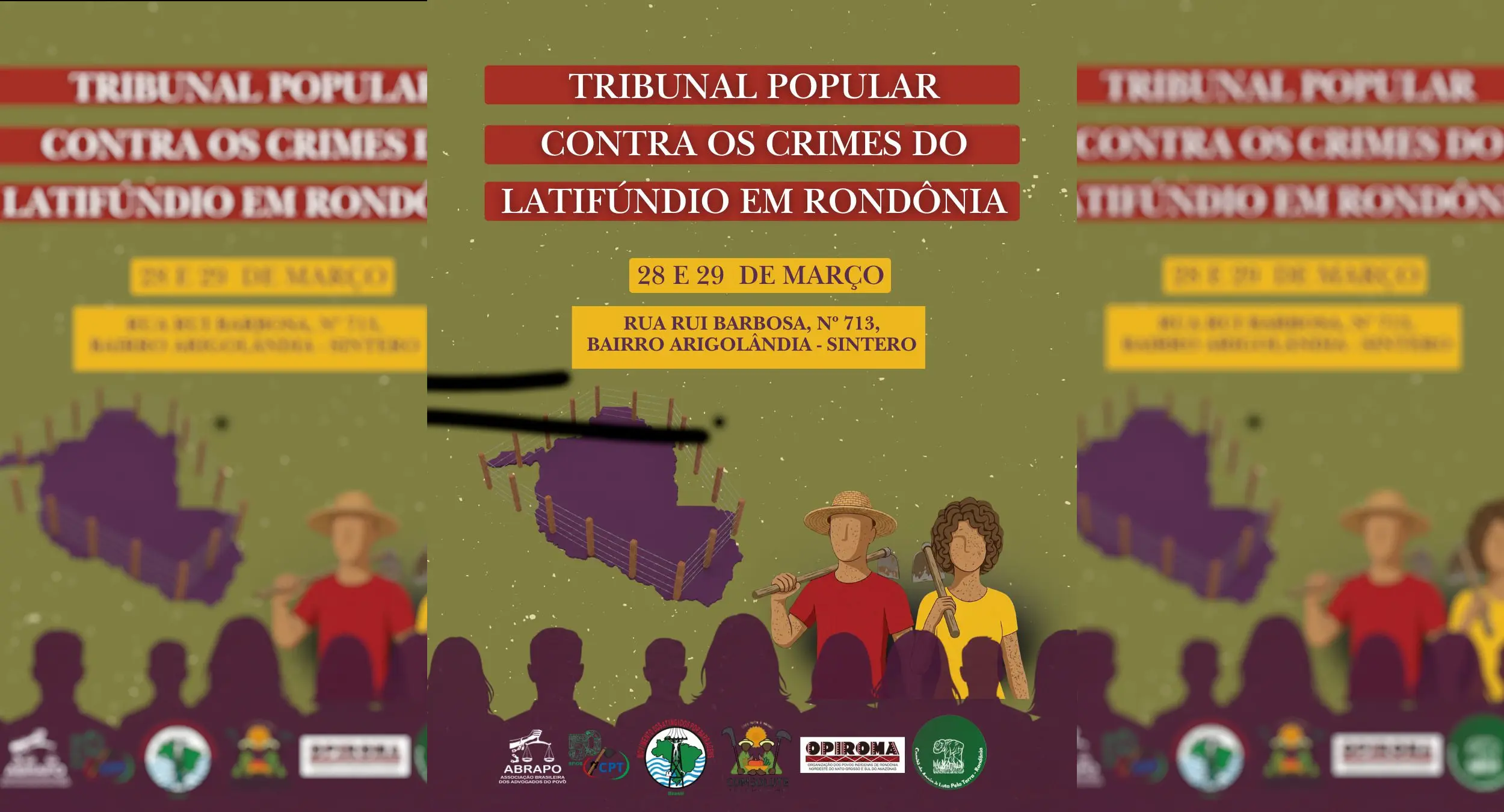
A Nova Democracia has reported on the People’s Court that will take place on March 28 and 29 in Porto Velho, Rondônia. This event is organized by the Brazilian Association of People’s Lawyers (ABRAPO), the Brazilian Center for Solidarity with the Peoples (CEBRASPO), and the Committee for Solidarity with the Struggle for Land (COMSOLUTE), with the objective of denouncing and judging the crimes committed against the people by the latifundium and the old State. Various organizations and democratic supporters will participate, including the Committee for Support of the Struggle for Land – Rondônia (CALT), the Organization of Indigenous Peoples of Rondônia, Northwest of Mato Grosso and South of Amazonas (OPIROMA), the Movement of People Affected by Dams (MAB), the Pastoral Land Commission (CPT), among others.
The People’s Court is a form of popular justice where the people themselves expose and judge historical violations committed against peasants, indigenous people, and Quilombolas by the latifundium and the old State. This type of court has already occurred in different regions of Brazil, such as Maranhão and Pernambuco, evidencing that the persecution against those who fight for the land is not an isolated case.
In Maranhão, the People’s Court carried out in March 2024 was a crucial moment of denunciation and organization of the peasant masses against the crimes of the latifundium. The court was called to judge the crimes of land grabbing in the region of Gleba Campina, which affect more than 10 peasant communities. During the event, testimonies were presented that exposed the actions of land grabbers, goons, and guaxebas in the service of the latifundium, attempting to expel the peasants from their lands. As a follow-up, the organizations present issued a joint statement calling for a day of mobilization against the so-called “Land Grabbing Law,” which legalizes the usurpation of public lands and increases violence in the countryside.
Another notable example is the People’s Court carried out in October 2025 in Engenho Barro Branco, in Jaqueira, Pernambuco. Organized by COMSOLUTE, the Committee for Support of the Struggle of the Occupiers of Barro Branco/Jaqueira and ABRAPO, the event judged crimes committed by the latifundium of the region. Companies such as Usina Frei Caneca and Agropecuária Mata Sul were convicted of crimes such as land grabbing, judicial fraud, environmental crimes, exploitation of workers, and violence against peasants. The sentences amounted to more than 100 years. Despite strong police pressure and attempts at intimidation, the court was victorious, strongly representing the peasants and denouncing the crimes committed against the popular masses.
In Rondônia, the need for a People’s Court is even more urgent given the attacks that peasants, indigenous people, and supporters of the struggle have been suffering. The link between the latifundium and the old State has transformed the countryside into a stage of violence and arbitrary actions against the people. Holding the People’s Court in Rondônia is a necessary response to denounce tortures in the countryside, arbitrary imprisonments, murders of peasants and leaders, the situation of indigenous peoples without the demarcation of their lands, processes of privatization of natural goods, such as the Madeira River, and the growing criminalization of the popular struggle.
Operation “Godos” is a clear example of this violence. Under the pretext of combating criminal organizations, the repressive apparatus of the State is used to attack and persecute peasants, arrest popular lawyers, and assassinate leaders. The imprisonment of the popular lawyer Dr. Lenir Correia and of peasants from Rondônia, without full access to the evidence that supported the accusations, constitutes a serious violation of the right to defense. Meanwhile, people denounced for their involvement in land grabbing, such as Antônio Martins dos Santos, known as “Galo Velho,” remain unpunished.
The actions of the Military Police in Rondônia have also been denounced. Reports point to the participation of agents in joint actions with goons, armed escort in violent evictions, and extrajudicial executions of peasants. The dismissal of the then general commander of the PM-RO, Régis Braguin, exposes the repressive apparatus of violence in the countryside. His management was marked by serious denunciations, including domestic violence and driving under the influence, while using social media to criminalize the struggle for land, classifying peasant organizations as “terrorists” and “criminals.”
During his command, there was an increase in police lethality, with a growth of approximately 400% in deaths resulting from interventions by the PM-RO, concentrated mainly in peasant areas. Under his command, violent actions against communities resulted, including executions of peasants and armed incursions in areas of agrarian conflict. This persecution of the League of the Poor Peasants (LCP) is not an isolated case, but part of an offensive against all organizations that fight for land. Violence against indigenous peoples is part of a broader scenario of agrarian conflicts, where indigenous people, peasants, and Quilombolas face big landlords, goons, and the action of the old State.