Criminalization of the Popular Struggle in Colombia
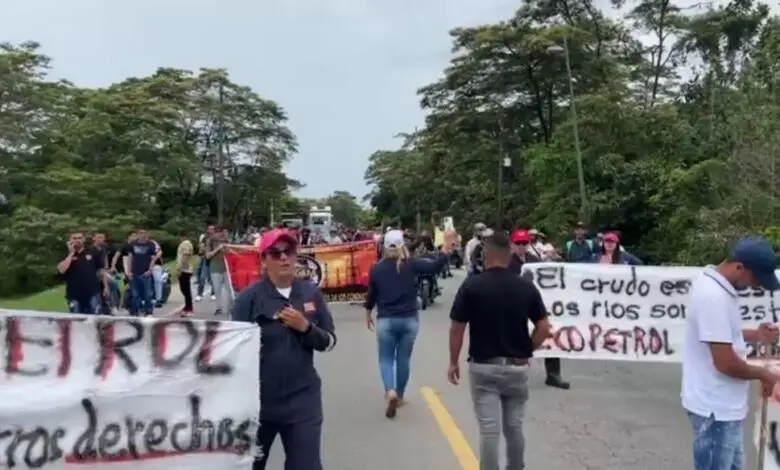
Featured image: Demonstration against Ecopetrol. Source: Nueva Democracia
After blockades carried out in 2017 against the oil company Ecopetrol by the Corporación Comunitaria Juntas de Acción Comunal Area de influencia Directa San Isidro de Chichimene (CJAID) at the Chichimene Station in Acacías, Colombia – the Council of State have now ordered the payment of damages caused to the company, Nueva Democracia (ND) reports.
The blockades of the CJAID were carried out in a struggle for more jobs in the region, for people both with and without formal education, among other demands. Since 2017, the struggle against the oil company has continued, with one such struggle taking place in April, 2025, where the committee “No More CT, No More Spinal X-Rays” organized a 10-day protest against obligatory medical exams for the employees of the company.
This attack on the popular struggle comes as an unprecedented decision by the Council of State, putting the bill of the losses of the oil company on the shoulders of the organizers of the mobilization. Concretely, the losses expected to be transferred to the CJAID are the costs of the suspension of contracts as well as the losses due to the delay in oil extraction between July 31, and August 15 of 2017, when the blockades were in effect.
ND reports that similar mobilizations as the CJAID blockade of 2017 have taken place all over rural Colombia, and the decision by the Council of State can lay the foundation for a dangerous precedent and opens the door for similar lawsuits against the popular struggle.
ND also writes that it is not only the rural struggle that is affected by this ruling, citing the Council of State’s ruling: “the right to protest was used in this case as a means of pressure that exceeded its constitutional and democratic function, in that it directly infringed upon the property rights and the normal conduct of economic activity of the plaintiff company.” ND goes on: “However, this is precisely how the oppressed classes – historically deprived of economic, political, and military power – have won rights in this society: by pressuring the ruling classes through blockades, strikes, occupations, etc., that affect their economy or threaten their political control. Therefore, this decision aims to limit popular protest in general, seeking to reduce the struggle to events with no economic impact on big capital, and thereby strip the working classes of their ability to exert pressure to secure measures in their favor.”