Netherlands – Revolutionary Action: The Police And the Judiciary Are Class-Based Justice
We hereby share an unofficial translation of an article by Revolutionary Action published by REBEL! Magazine.
From Utrecht to Rotterdam: when the State uses violence, that violence is being justified. When people resist that same State, they are prosecuted, imprisoned, and punished. The police present themselves as the protectors of society. But of whom? For the woman who was kicked by an officer under the Bollendak in Utrecht, the police offered no protection. For the family of Alfredo Goeloe, who died after a police arrest in Rotterdam, the police offered no protection. And yet the same message keeps coming back: trust the police. We have no reason to do so. A uniform does not make violence any less violent.
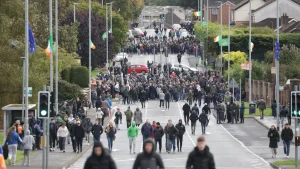
On January 26, 2026, a woman was kicked by an officer during a police operation at Utrecht Central Station. The footage spread across the country. It did not show an abstract story about “law enforcement,” but concrete police violence against a citizen. An independent commission within the police later concluded that the officer had gone too far with the kick. It was also determined that some of the use of the baton did not meet the standards set forth in the assessment framework. But there will be no criminal prosecution. In September, the Public Prosecution Service decided not to prosecute the officers involved. According to the Public Prosecution Service, the use of force was legally justified.
This once again reveals a familiar pattern. When someone without a uniform uses violence, we call it assault. When someone uses violence on behalf of the State, we call it “law enforcement.” When someone resists police violence, we ask whether that person behaved appropriately. When the police use violence, we ask whether the officer followed the rules. The question is always posed from the State’s perspective.
We’re turning that question on its head. Why does this society accept that people are kicked, beaten, restrained, and pinned to the ground, as long as the person doing it is wearing a uniform?
Alfredo Is Not Just a Statistic
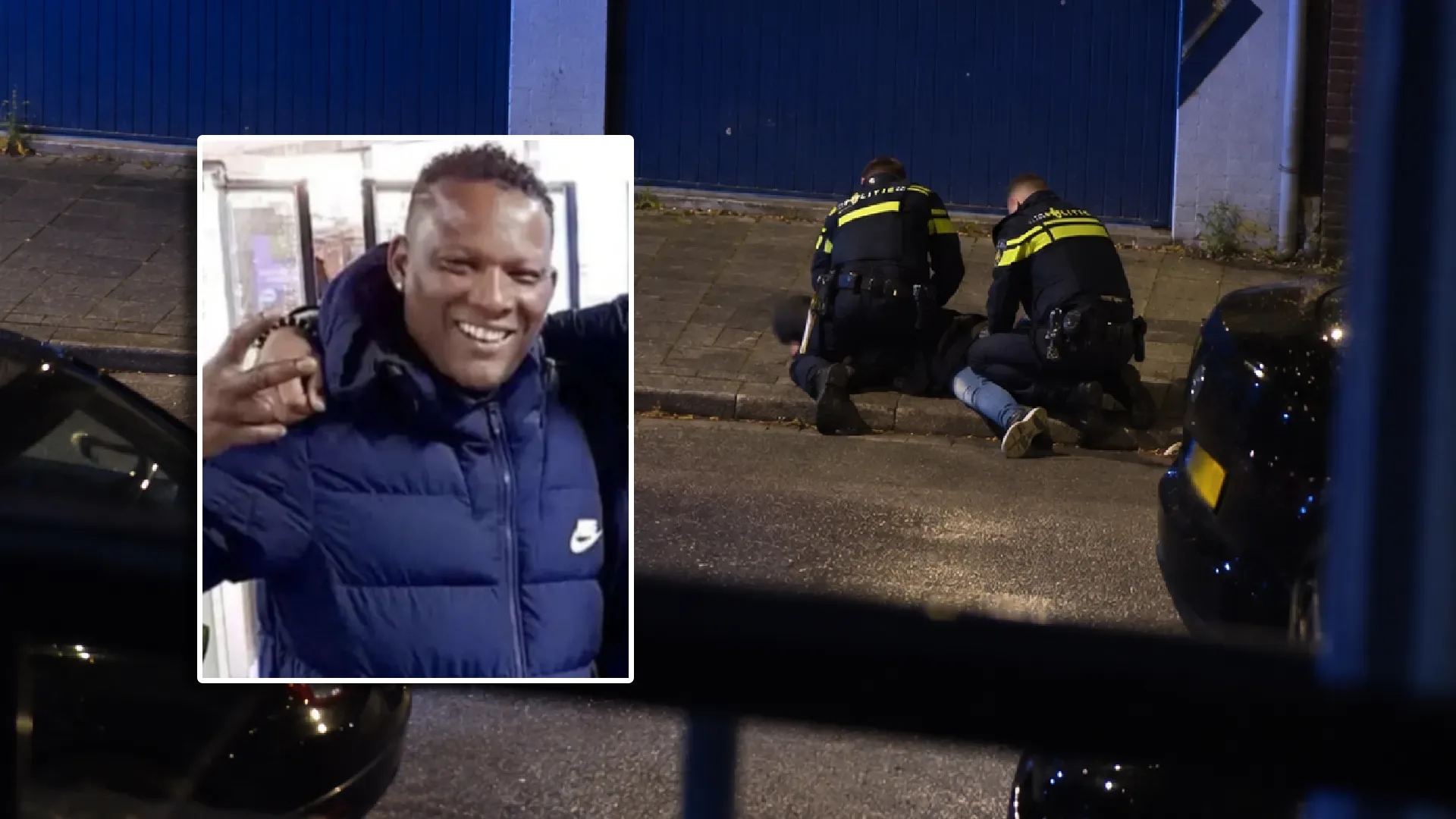
On September 13, 51-year-old Alfredo Goeloe died in Rotterdam following a police arrest. The police were searching for a stolen fatbike. Alfredo was riding a fatbike, but it was later confirmed that it was not the stolen bike. During the arrest, he was pinned to the ground. Shortly afterward, he became ill and died. The National Criminal Investigation Department is investigating the case. The next of kin have filed a complaint against the officers involved, accusing them of, among other things, manslaughter or aggravated assault resulting in death.
We will not comment on the question of criminal liability until the investigation is complete. But one thing is certain: Alfredo is dead. A man was arrested by the police while alive and subsequently died. His family is left behind with grief, questions, and the need to fight for full clarity on their own. And in the meantime, the State apparatus keeps turning.
The police are not a neutral force
This is precisely where the narrative of “the neutral police” falls short. The police are not an institution that stands above society. The police are part of the State. Their task is to uphold the existing legal order. And that legal order is not neutral. We live in a society where wealth and power are unevenly distributed. Where corporations can defend their interests with lawyers and lobbyists, while ordinary people find themselves up against a massive State apparatus. The police stand on the side of the existing order.
We see this when demonstrators are arrested for protesting. We see it when activists are prosecuted for political actions. We see it when poor people and people from marginalized communities are constantly subjected to police surveillance. And we see it when police violence is then described as necessary, proportionate, or lawful.
This does not mean that every individual officer is the same. It means that we must look beyond the individual. The problem is not just the officer who kicks someone; the problem is a State apparatus that grants him that power. The State investigates itself. Herein lies a fundamental contradiction. The police are granted a monopoly on legitimate force. When that force subsequently leads to serious injury or even death, it must be determined whether that force was lawful. That investigation is necessary. But for victims and their loved ones, the experience can be very different: the same State that carried out the violence also controls the institutions that determine what happens to the case afterward.
In Utrecht, we saw how a police officer is not being criminally prosecuted, despite video footage and an internal finding that the use of force went too far. In Rotterdam, Alfredo’s family is awaiting the outcome of an investigation into his death. These are not isolated incidents that we can simply dismiss as “a few bad apples.” The question that must be asked is much broader: Why does the State possess so much power to use force, and why is it so difficult to actually hold that power accountable?
Not Trust, but Oversight
We are expected to trust the police. We say: trust is not enough. Oversight. Accountability. Transparency. That is what is needed. Because every time police violence goes unpunished, the message is sent that a uniform offers protection from the same accountability that applies to ordinary people. And every time people who protest against State violence are prosecuted, the balance of power is reaffirmed.
The worker, the migrant, the activist, the protester, and the resident of a working-class neighborhood face an apparatus armed with force, detention, surveillance, and prosecution. That is not a level playing field. That is class power.
We Will Not Forget Alfredo
The name Alfredo Goeloe must not be lost in a police report. His death must not become a footnote. And the woman who was kicked in Utrecht must not be reduced to an incident that occurred during an arrest. Behind every act of police violence is a human being. A body. A family. A life. That is why we must refuse to accept police violence as a normal part of everyday life.
We do not have to trust an institution simply because it speaks on behalf of the State. We must hold it accountable. We must call it to account. And we must continue to organize against a society in which State violence is normalized while resistance to that same power is criminalized. The police and the justice system are not neutral arbiters above the class struggle. They are institutions of the existing social order.