Brazil – AIL: Plenary of the AIL and Call for Event on November 4
We hereby share an unofficial translation of an article published by A Nova Democracia (AND) on October 30.
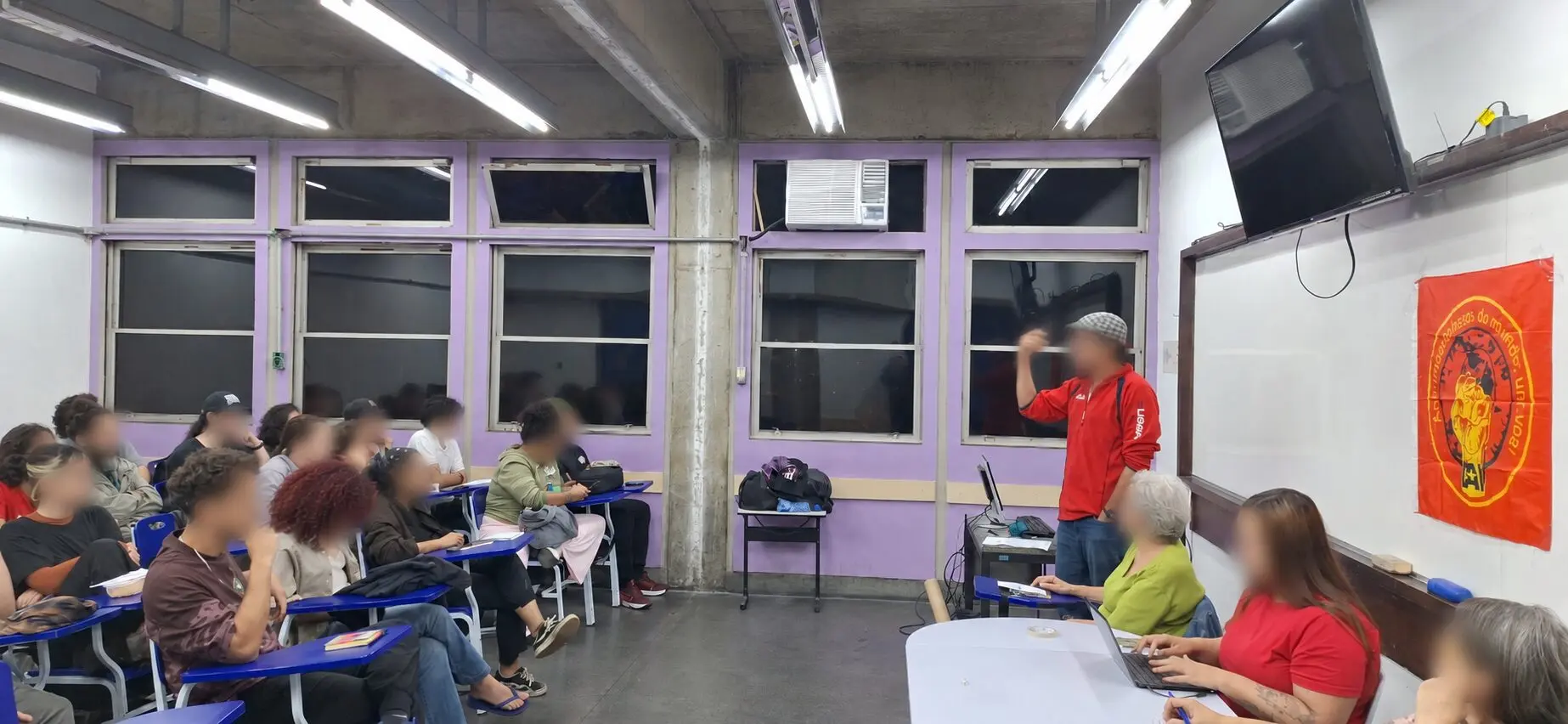
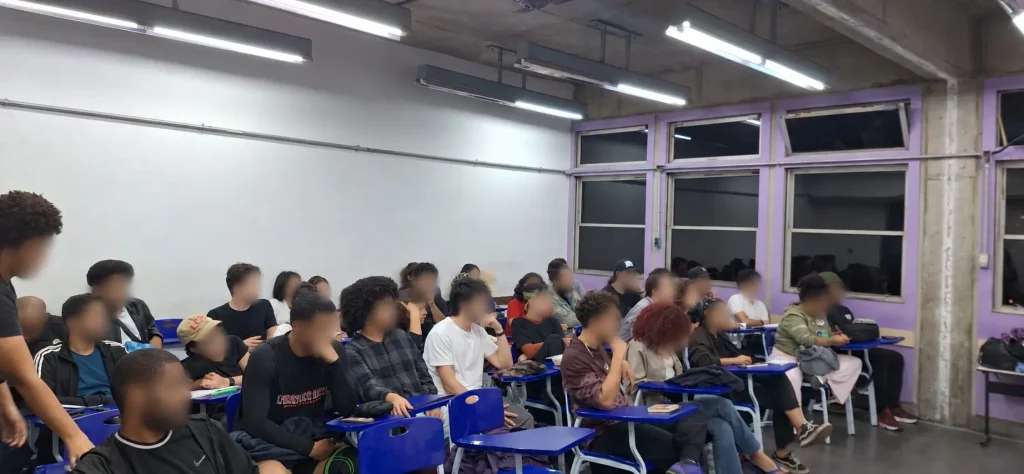
Dozens of activists gathered at the State University of Rio de Janeiro (UERJ) on October 26 to assess the anti-imperialist rally organized by the International Anti-Imperialist League (AIL) five days earlier and to discuss the next steps in the mobilization. At the end of the plenary session, they called for a new demonstration on November 4. In the speeches, the prevailing view was that the electoral defeat of Bolsonarism did not end the struggle against the extreme right and Yankee interference.
Participants included members of the AIL, the Brazilian Center for Solidarity with the Peoples (CEBRASPO), the National Executive of Education Students (ExNEPe), the People’s Revolutionary Students Movement (MEPR), the Arapuka Movement, Bonde do Mao – a youth fan club of Flamengo – the Class-Conscious Movement of Education Workers (MOCLATE), and Flamengo Antifascista, among other organizations and collectives. The plenary also paid tribute to peasant leader Cleomar Rodrigues de Almeida.
Assessment of the October 21 Rally
The first part of the meeting was dedicated to the demonstration that marched through Saens Peña Square, UERJ, and Andaraí, in Rio’s North Zone. According to the assessment presented by the participants, the rally brought together dozens of people, took banners and posters to the streets, and distributed more than 300 leaflets.
“It was a very significant event with a lot of agitation, lots of posters and banners against the intervention and against the extreme right,” said one of the organizers. Participants highlighted the engagement of those who joined the demonstration: “People were very active, enthusiastic, and the political content was much stronger.”
When discussing the presence of young people, an activist described the impact of participating in a collective action: “We grow up our whole lives hearing that it’s absurd to organize, that it’s a right-wing thing, that it’s about voting for Marcelo Freixo and dyeing your hair bright colors. When we see that we can do something that actually makes a difference, it’s a relief.”
Critique of the Electoral Illusion
The outcome of the runoff election shaped the ensuing discussion. For those present, Flávio Bolsonaro’s defeat at the polls did not represent a victory for the PT’s political project, nor did it eliminate the threat from the extreme right. “Elections don’t solve anything, they won’t guarantee national sovereignty,” stated one of the leaders.
A representative from CEBRASPO argued that the result did not change the character of the State either: “The State remains the same, composed of the reactionary big bourgeoisie and big landlords in the service of imperialism.” According to her, Luiz Inácio did not redefine either the election or the nature of this State.
A member of MEPR linked this criticism to the measures adopted by the government. “Luiz Inácio took the stage with Indigenous people and people with disabilities, yet what he approved was one measure after another that devastated these people: the time limit, the spending cap, cuts to the BPC, and cuts to the popular pharmacy program,” she stated. “Everything he pointed to, claiming that Flávio Bolsonaro was going to do, he had already done himself.”
For the activist, the pro-government left’s defense of institutions leaves room for the extreme right to present itself as opposition to the system. “The left defends institutions, defends the Supreme Court, and the extreme right says it’s against everything, against everyone. This pulls the masses toward the extreme right,” she said.
In the same speech, she linked the growth of fascism’s social base to the masses’ frustration with the PT’s promises and to the financing of agribusiness. “The PT, by promising, promising, and failing to deliver, created this resentment among the masses. And the latifundium, which finds expression in this ‘zero invasion’ movement, was also fostered by the PT. By directing billions and billions from the crop support programs to agribusiness, the PT created the social base for fascism in Brazil.” Speaking about the work of the organizations present, she added: “We don’t have an electoral fund; we don’t have a party backing us. Everything we do is through our own willpower and our unity in the struggle.”
Agrarian Revolution and Tribute to Cleomar Rodrigues
The defense of the Agrarian Revolution was a central theme of the speeches. Those present paid tribute to Cleomar Rodrigues de Almeida, a leader of the League of Poor Peasants (LCP) who was murdered on October 22, 2014. “Comrade Cleomar was a peasant leader of the LCP and a member of the League’s national coordinating committee. The people were organizing, taking land from the latifundium, and that was unacceptable,” recalled one participant.
“Without destroying the latifundium, there is no industry; without industry, there is no sovereignty,” stated another activist. During the plenary session, the struggle for land was defended as “the first step of the New Democratic Revolution,” and young people were called upon to “join the ranks of this revolution.”
A representative from CEBRASPO emphasized the connection between the struggle in the countryside and the work of movements in the cities. “The Agrarian Revolution is crucial for confronting imperialism. Our support for them in the city is part of our struggle,” she said. “We must stand with the masses and organize their class hatred.”
Youth Call for Continued Mobilization
Youth participation returned to the center of the discussion when the plenary session addressed next steps. “Being young and not being a revolutionary is a genetic contradiction,” stated a representative from ExNEPe. “We are the shock troops of the revolution,” said another participant. In the view of those present, youth mobilization played a decisive role in the electoral defeat of the far right and must continue in the streets. “The victory was the result of popular mobilization, and it is this mobilization that will continue,” summarized one of the organizers.
The CEBRASPO representative advocated for unity of action and independent organization: “We cannot speak on behalf of our organizations or parties, but we must speak about who we are: we are all anti-fascists; we are all anti-imperialists. That is our responsibility at this moment.” For her, “our place is in the streets; that is where the struggle takes place. We must elevate these demonstrations both politically and in terms of our fighting spirit.”
In the end, the participants approved the call for the November 4 rally and decided to distribute flyers to expand the mobilization. “The right wing is going to launch extremely violent attacks. We have to be prepared for whatever happens,” warned one of the organizers. The plenary session ended with the message that the struggle “has only just begun.”