Chile – Yankee Imperialism and the Yellow Press: When the Problem Is No Longer Forced Labor.
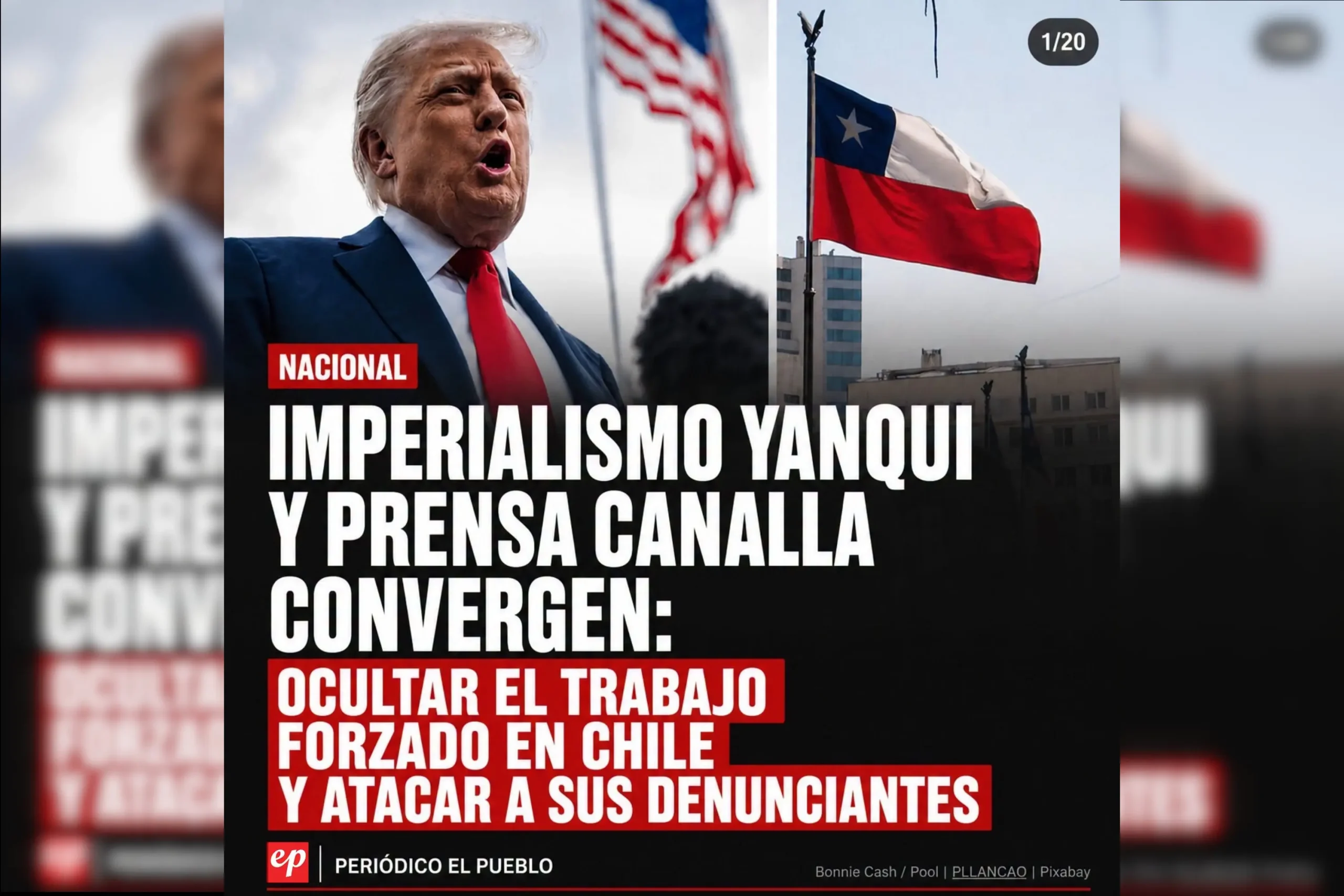
We hereby share an unofficial translation of a note published on the Facebook page of the El Pueblo Newspaper on the 28th of July.
The United States imposed new tariffs on Chilean products, arguing that Chile is not adequately combating forced labor.
But its own resolution makes it clear that the focus of its concern is not the workers, but rather that these conditions “impose a burden or restriction on US trade.”
In other words, the real problem ends up being used as a tool of Yankee imperialist trade policy.
What is most serious is that these allegations did not arise with the tariff dispute. For years, organizations such as Fundación LIBERA and Ecoceanos have documented cases of labor exploitation, forced labor, human trafficking, and abusive practices in sectors such as agriculture and salmon farming.
Even the Chilean government has officially recognized the existence of these crimes and the need to step up efforts to combat them.
However, part of Chile’s monopolistic press shifted the focus of the debate. Instead of investigating the allegations themselves, it focused on who made the allegations, attempting to hold Carolina Rudnick and Juan Carlos Cárdenas responsible for the commercial consequences.
The organizations themselves were clear: they never called for tariffs. They demanded stricter control, better working conditions, and legislative reforms to effectively protect workers.
The paradox is evident: while US imperialism uses these allegations to justify protectionist measures, part of the Chilean press portrays those who denounced the exploitation as the main culprits behind the conflict.
Thus, those who benefit most from labor exploitation disappear from the center of the debate.
Defending those who denounce exploitation does not mean defending imperialist tariffs. It means preventing the struggle against forced labor from being used to shift the burden of imperialism’s crisis onto oppressed nations and, at the same time, defending the people’s right to know the truth about the conditions that sustain our semi-colonial, semi-feudal reality under bureaucratic capitalism.