Norway – Kampkomiteen: Demonstration in Trondheim Against Police Violence
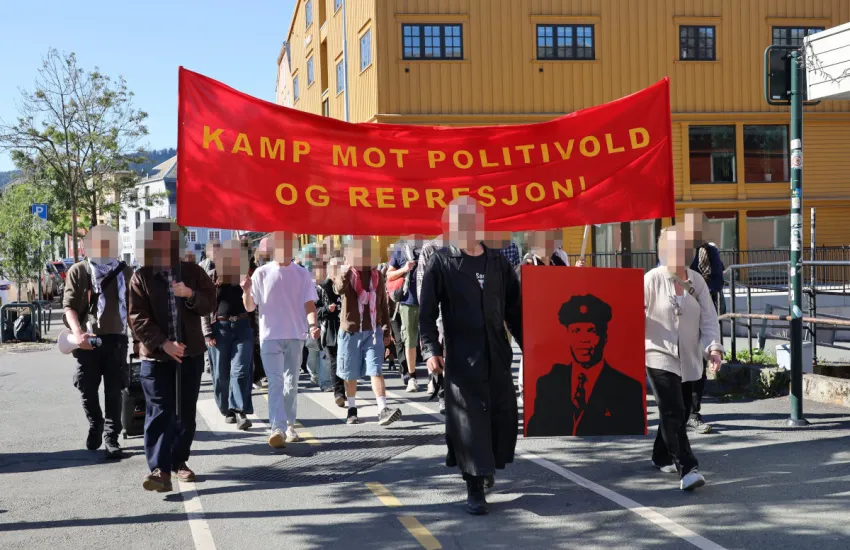
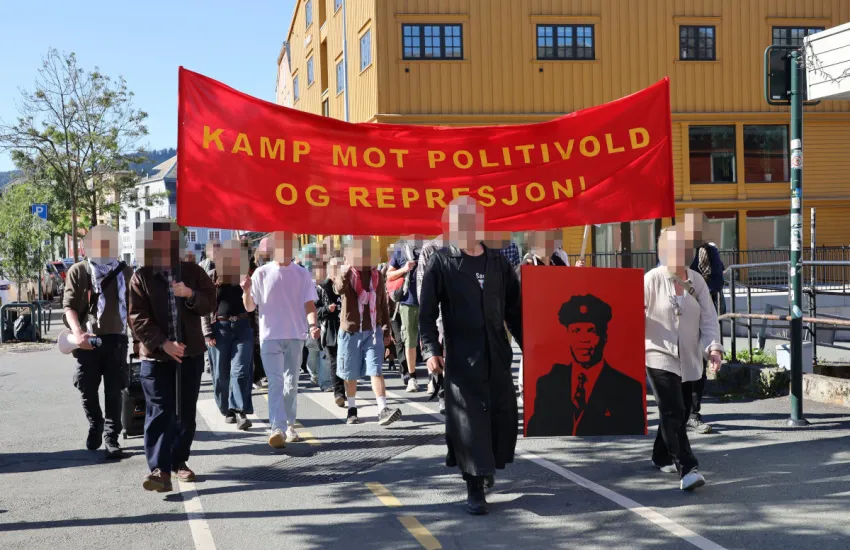
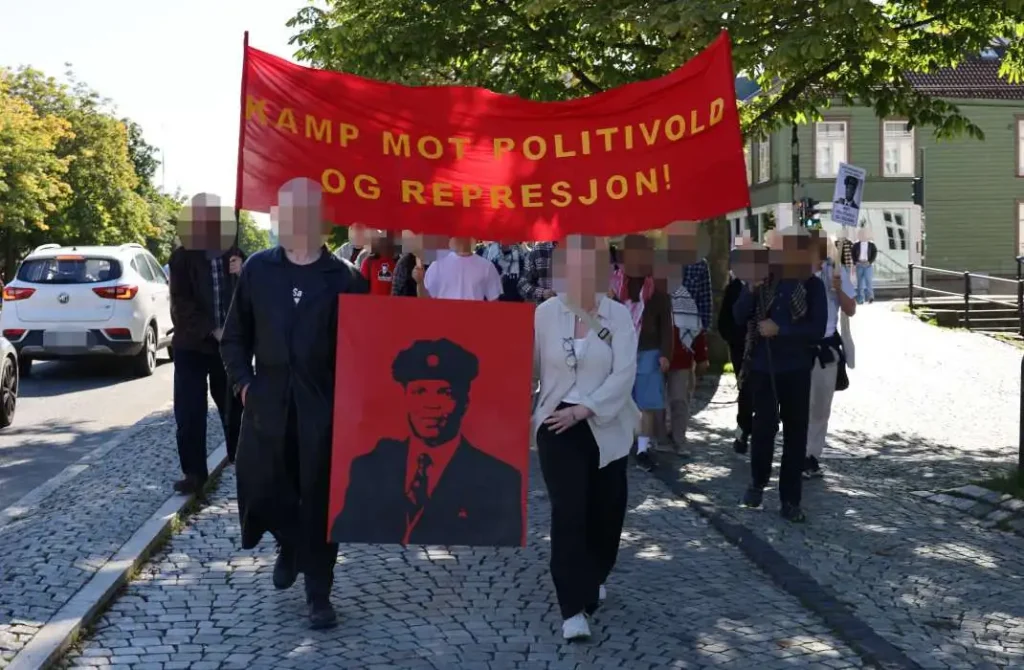
Featured image: Demonstration in Trondheim preceding the 20th anniversary of the murder of Eugene Obiora by the police. Source: Kampkomiteen
On September 5, in Trondheim, a demonstration was organized by Kampkomiteen against police violence, marking the 20th anniversary of the murder of Eugene Obiora by the police, Kampkomiteen reports. Several other organizations also participated.
Read our report on the call for the demonstration here for more information on the case of Eugene Obiora:
The demonstration started with speeches from the several participating organizations, including Kampkomiteen. The speech from Kampkomiteen highlighted the demand for justice for Eugene Obiora, and the importance of defending the democratic rights of the people. The speech also emphasized that the police are part of the imperialist State’s monopoly on violence and are never neutral.
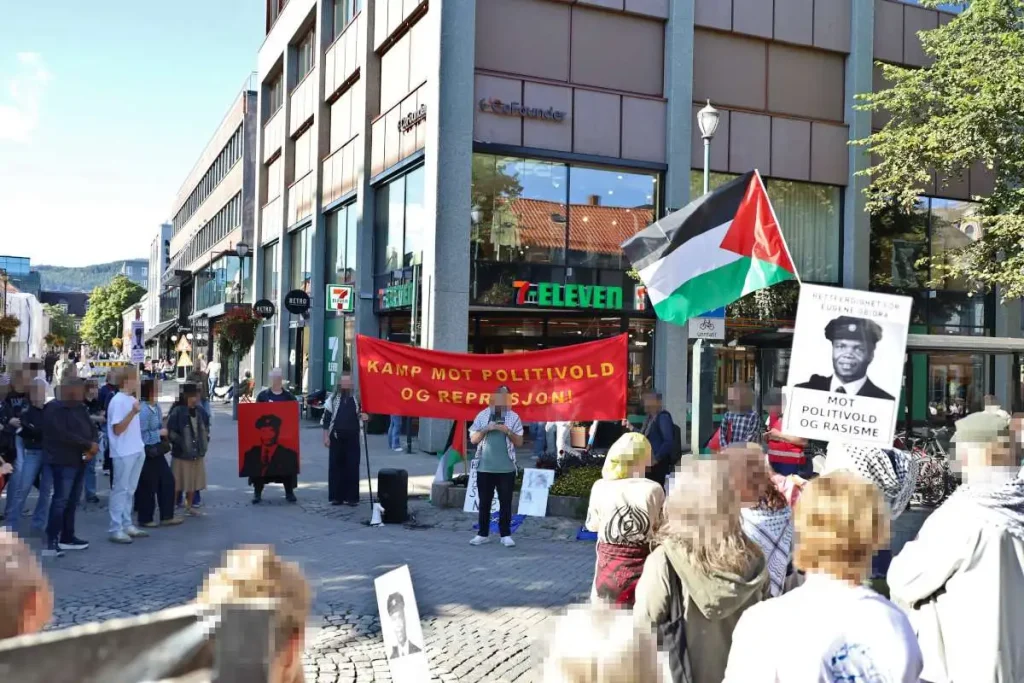
After the speeches, the demonstration carried on as a march to the police station, and slogans such as “Justice for Obiora,” “We’ll never forget Obiora,” “No racists on our streets,” and “The police and the military—capital’s mercenary army!” were chanted the whole way there.
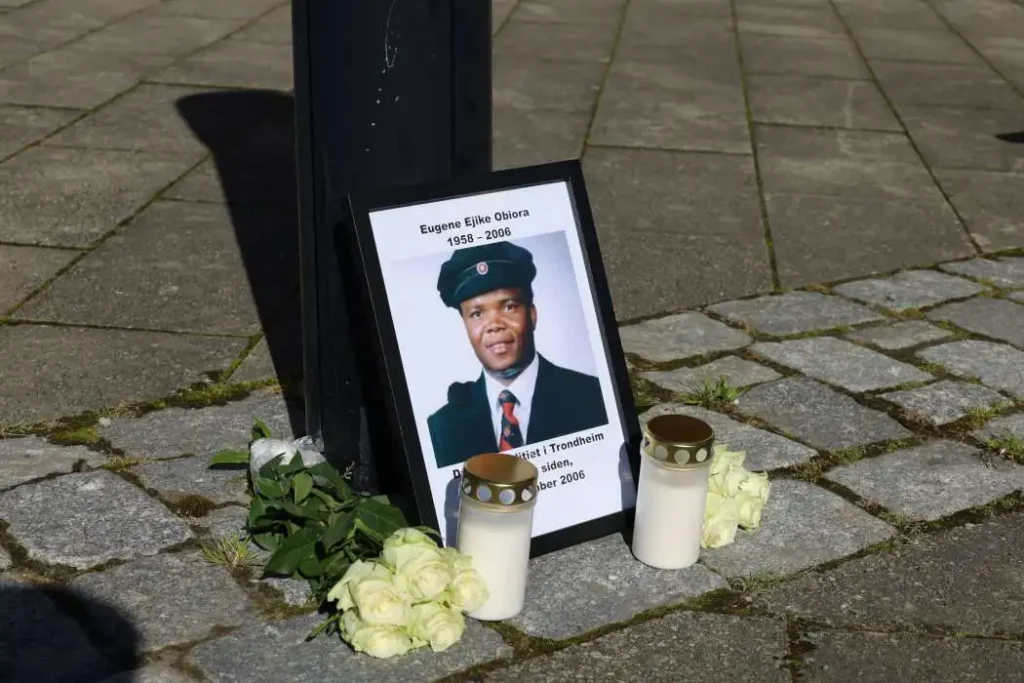
Outside the police station, a photo, candles, and flowers were placed in memory of Eugene Obiora, and a minute of silence was observed. Thereafter, slogans were shouted at the police station. It was pointed out that the four police officers were never punished, and that the officer who performed the chokehold is still working for the police and has even been promoted. It was also noted that police murders are becoming increasingly common, and that the racist murder of Obiora was not an isolated incident.
Kampkomiteen also cited examples of how the police have gained more power in recent years, including the introduction of the practice of Norwegian police officers carrying handguns on their belts while on regular duty, and the establishment of search zones where police can conduct body searches without suspicion—a measure that disproportionately affects neighborhoods with the highest concentrations of low-income residents and immigrants.