Brazil – AND Editorial: Yankee Interference in the Elections
We hereby share an unofficial translation of an editorial published by A Nova Democracia (AND) on October 9.
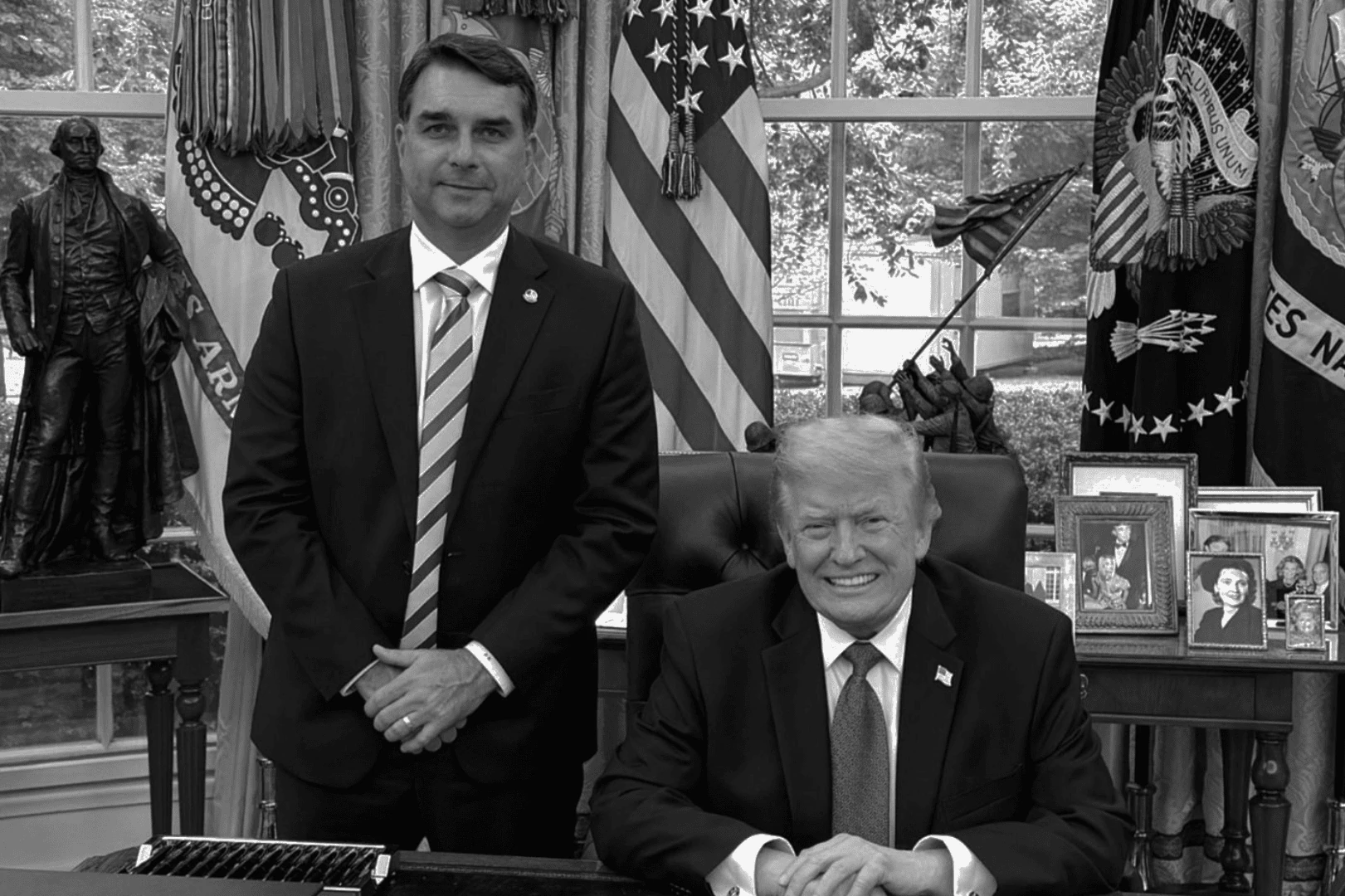
The preliminary results of the first round of the presidential election, with Flávio Bolsonaro leading Luiz Inácio (47.03% to 45.16%), must be understood in two ways. First: these are not regular elections, but rather elections subject to direct interference by Yankee imperialism, which engineered this result. And second: the line of “containing the extreme right” through a rigged and corrupt electoral process, and the defense of them as clean elections, has failed.
The events that marked the administration’s four years in office clearly explain the election results. Following the failure of the 2022 coup attempt and the January 8 attempt by Bolsonaro, the extreme right has remained in offensive, even with its leader and many followers in court. Meanwhile, the Luiz Inácio administration appeased the generals, as if they were the ones who had prevented the coup from succeeding, thereby demonstrating its submission to them. Further: it treated Bolsonaro’s conviction as his final defeat and, even as polls showed his son Flávio’s candidacy neck-and-neck in the presidential race, it did not take it seriously. It spent the four years of its administration resting on the laurels of the relentless hammer of the “bald guy” from the Supreme Court, as if he were, in fact, an irreproachable defender of the rule of law, while also hiding in the shadow of the slogan of “National Reconstruction.” Neither of these claims proved true: the “bald guy” spent freely, feeling shielded in his tyranny in the name the law, and the government did nothing to reverse most of the harm caused by Bolsonaro in health care, education, social security, and labor rights. It even eliminated the agrarian reform program and poured hundreds of billions of reais into “agribusiness” primary production for export. Thereby it deepened the de-industrialization and de-nationalization of the country’s economy. Even more: Luiz Inácio spent half his term pandering to imperialism, as evidenced by his attacks on Nicolás Maduro’s election, which contributed to Maduro’s isolation, and in the face of Trump’s attacks on the national economy, he did not go beyond empty rhetoric about sovereignty and posing as a “man of dialogue”. In recent months, he has devoted himself to taking electioneering measures, confident that he would win the election.
As the great Marx already warned us: bourgeois elections, under the regime of capitalist exploitation and oppression, are an event in which, every few years, the ruling classes delegate to the workers the “task” of choosing which members of those same ruling classes will dominate them in parliament and in government. Therefore, under these conditions, elections, in general, will always be a tragedy. In countries dominated by imperialism, such as ours, where the democratic republic is merely a mockery of one, such elections, in particular, are a farce. However, there is a difference between the most recent elections and elections in general. The last installment of the electoral farce that could be described as “normal elections,” so to speak (that is, in which all reactionary forces relatively respected the rules of their own game), took place in 2010. Since then, elections in Brazil have been doubly farcical: first, because they take place under a regime of exploitation in which the masses have no option within the system that corresponds to their genuine interests; and they are also a farce in the specific sense that the most powerful sectors of the ruling classes directly manipulate the old democracy, interfering and intervening to ensure that certain power groups prevail over others. The effort to make the electoral process something recognized as “impartial” has been thrown out the window. The electoral farce has, of course, become a process directly manipulated by reactionary forces that act as guardians of this system of exploitation, one more factor in the collapse of this old democracy.
In 2014, it was “Car Wash” [translator’s note: a selective corruption and money-laundering investigation, beginning with a car wash in Brasilia] that interfered in the elections, selectively exposing the corruption of politicians, particularly those linked to the old oligarchies and opportunism. In 2018, the commander-in-chief of the reactionary army, Eduardo Villas Bôas, prevented Luiz Inácio from running for office by threatening the Supreme Federal Court (STF) in the midst of a habeas corpus hearing and then grilled all the presidential candidates. In 2022, Bolsonaro’s military government interfered directly, and even still attempted to subvert it after the results were announced. Now, in 2026, things have reached a new level, and Yankee imperialism itself has dropped all pretense: scandalous interference involving military attacks on neighboring countries throughout the year, economic sanctions against the country under the pretext of “persecution of Bolsonaro” and casting doubt on the integrity of the electronic voting machines, followed by the closure of its embassy and consulates on the eve of the elections to create a sense of abnormality, all to manipulate public opinion into believing that the “lesser of two evils” is Flávio Bolsonaro. Therein lies the result of this flagrant and outrageous foreign interference, about which the opportunists say nothing, even in the face of the cowardly and utterly sycophantic act by the government’s Minister of Defense, José Múcio, who declared that if the USA were to invade Brazil, he would “open the gates”!!!
We are facing a scenario in which even those who might believe in the myth of bourgeois democracy are forced to acknowledge that this is not the case with the current regime in Brazil. The ongoing election has no power to change this situation: the old democracy has failed, and what remains of it has become a smokescreen used by the reactionaries to legitimize military interventions and imperialist interference. A radical process of intervention is underway in the country, carried out through the reactionary High Command of the Armed Forces (ACFA), centralized by Yankee imperialism and with its direct support. Anyone who intends to follow this path of the moribund old democracy to curb violations of national sovereignty, the extreme right, and fascism will objectively end up collaborating with the imperialist enemy and its extreme right lackeys.
Four years have passed since the PT and its coalition government with the traditional right took office with the promise, among others, to “stop Bolsonarism.” In those four years, as already summarized above, Jair Bolsonaro was tried, convicted, and imprisoned; he was barred from participating in the election campaign. Luiz Inácio, perhaps the leading figure in official politics today, is running against Bolsonaro’s son, a playboy. But the result, nonetheless, is what we are witnessing. The PL, the extreme right party of Bolsonaro, will now govern five states, whereas before it governed only one. Furthermore, that party now holds one-third of the Senate, not to mention the other Bolsonarists, Bolsonarophiles, or crypto-Bolsonarists who won as candidates for other parties, and already has enough votes to block decisions by its opponents that require a two-thirds majority. It needs only 19 senators to pass a Proposed Constitutional Amendment (PEC). If Luiz Inácio wins, what kind of government could that be? Meanwhile, Flávio Bolsonaro, with such a composition in the Senate, will have more political clout than his father ever had.
It is clear that the 2022 promise was not kept. Bolsonarism has grown stronger. Why? In part, due to Yankee interference. But this is the external impulse, the main factors in any phenomenon or situation are its internal aspects. Thus, even Yankee interference only achieved this result because the opportunism in government was unable to defeat Bolsonarism in the arena of struggle that are the masses. It was not able to do so because it compromised, on various fronts, with the reactionary forces. This has been empirically proven. In the January 2025 issue of “Quaest”, 65% said that
Luiz Inácio was not fulfilling his campaign promises (namely, “left-wing” promises, in short, to restore pre-2014 living conditions). In that same poll, disapproval surpassed approval for the first time, 49% to 47%. In March 2025, the situation worsened: 56% disapproved and 41% approved. 26% of Luiz Inácio’s own voters from 2022 already disapproved of his administration, that is, the poorest segments of the population. Then, in May/June 2025, the correlation became even clearer: 70% said that Luiz Inácio had not kept his promises, while 57% disapproved and only 40% approved. Finally, in September of that year, 67% still believed that the administration had not delivered on its promises, 50% said that the administration was performing worse than expected, 51% disapproved, and 46% approved. Now, if the government’s promises leaned to the “left,” and the masses concluded that it did not fulfill them, this is proof in and of itself that it was a government with a right-wing cabinet and a right-wing agenda, that is, a right-wing government.
Now, that is what led the masses to become frustrated with the opportunistic government, and the dynamics of this rotten old democracy mean that, enraged by the current administration, a segment of the masses, driven by the short-sighted ideology also propagated by the opportunists, find themselves compelled to vote for the seemingly most extreme official opponent. No wonder the election results have been: PT in 2014, Bolsonaro in 2018, PT in 2022, and for now we’re seeing Bolsonaro again in 2026 (though with each election, the boycott grows stronger, showing that, at the end of the day, the masses also see through this game). But it is the failure of the opportunistic politics of the fake left that demoralizes this so-called “left” as “part of the system,” which is being exploited by the extreme right by presenting itself as a critic of the “system”, leading it to deceive part of these masses. Let us recall: in the 2018 election, Datafolha spontaneously asked Jair Bolsonaro’s voters why they would vote for him; the desire for “renewal and change in power” was the most cited reason, at 30%; another 25% cited rejection of the PT. Opportunism is primarily responsible for the rise of fascism.
This confirms what the great Stalin said nearly 100 years ago: “Social democracy is the antechamber of fascism.” The failure of opportunism to manage the crisis of capitalism is the cause. Indeed, an inevitable failure, because what the masses want is, first and foremost, answers and solutions to their immediate basic problems, and second, a vision for the future, to continue improving their lives, and this is only possible through their mobilization, politicization, and the strengthening of their independent organization in the class struggle against the ruling classes – not, as the opportunists advocate, by doing whatever is possible within the legal order and treating the masses as mere supporters of their governments, without mobilization or class struggle, because this frightens the ruling classes, in the name of preventing the situation from worsening. Such a failure, indeed, creates the political conditions for the masses to momentarily accept fascism. “Therefore, it would be erroneous to believe that ‘pacifism’” – the policy of class conciliation and appeasement of reaction – “means the elimination of fascism.” No. “‘Pacifism,’ in the current situation, favors fascism.” The collaboration between opportunism and the ruling classes—in this sense, the “lesser evil” creates the conditions for the extreme right to grow and draw in a large portion of the masses, as an inevitable result independent of intentions.
This year, the number of people who boycotted the election increased. There were more than 51.8 million Brazilians, including those who abstained, cast invalid or blank ballots, and members of the voting-age population estimated by the IBGE who did not register to vote. This figure is equivalent to approximately 30.12% of the voting-age population. Compared to the last election, voter abstention increased by 9.5% from the first round of 2022. To put this into perspective, in this election, Flávio Bolsonaro received 56.1 million votes, and Luiz Inácio, 53.8 million. And even if we consider only abstentions (registered voters who did not cast a ballot), they have been rising since 2006, increasing from 16.8% to 21.1% this year.
What does this number represent? First, it represents the complete failure of the political system and of its opportunist and extreme right protagonists. It represents the fact that one-third of the country’s eligible voters do not endorse either side. It is, potentially, an exceptional contingent of the masses, a large portion of whom demand a radical transformation of the country: the revolutionary proletariat must present itself to these masses, both to provide ideological and political leadership for their discontent. channeling it toward the democratic and revolutionary path, as well as to prevent fascism from co-opting them, because fascism also presents itself as a break with this old order, even though that is merely its rhetoric; in reality, it is only its fiercest guardian.
The defense of national sovereignty, independence, and democratic rights can only be carried forward if revolutionaries lead the masses’ struggle against the old democracy and, simultaneously, against the extreme right. Otherwise, revolutionaries will hand the far right a monopoly on criticism of the rotten system that the masses themselves have identified as part of their enemy and will contribute to the rise of fascism.
The task of revolutionaries, democrats, and anti-imperialists, in general, is above all to win over this sector of the masses. To show them that the path forward is not through those rotten institutions of the old democracy, tainted by dollars and the debauchery of the likes of Vorcaro, nor through the opportunism of the false left, and even less so through the path of the fascist military regime or imperialist intervention in the country, which are murderers and parasites and the greatest enemies of the working classes. The path is the Democratic, Agrarian, and Anti-Imperialist Revolution, which finds its main force in the peasant masses and their armed self-defense units in the struggle for land and for New Democracy. It is the Agrarian Revolution, as the catalyst for the democratic revolution, that stands as the antithesis to this entire repugnant official political world where everyone from the extreme right to the false left conspires. Carrying out a boycott campaign that simultaneously denounces military and foreign interference and explicitly and broadly defends the struggle for land and for the democratic revolution, New Democracy, is the task at hand until the end of this farcical process.