Protests in Italy for Cost of Living, Wages and Education
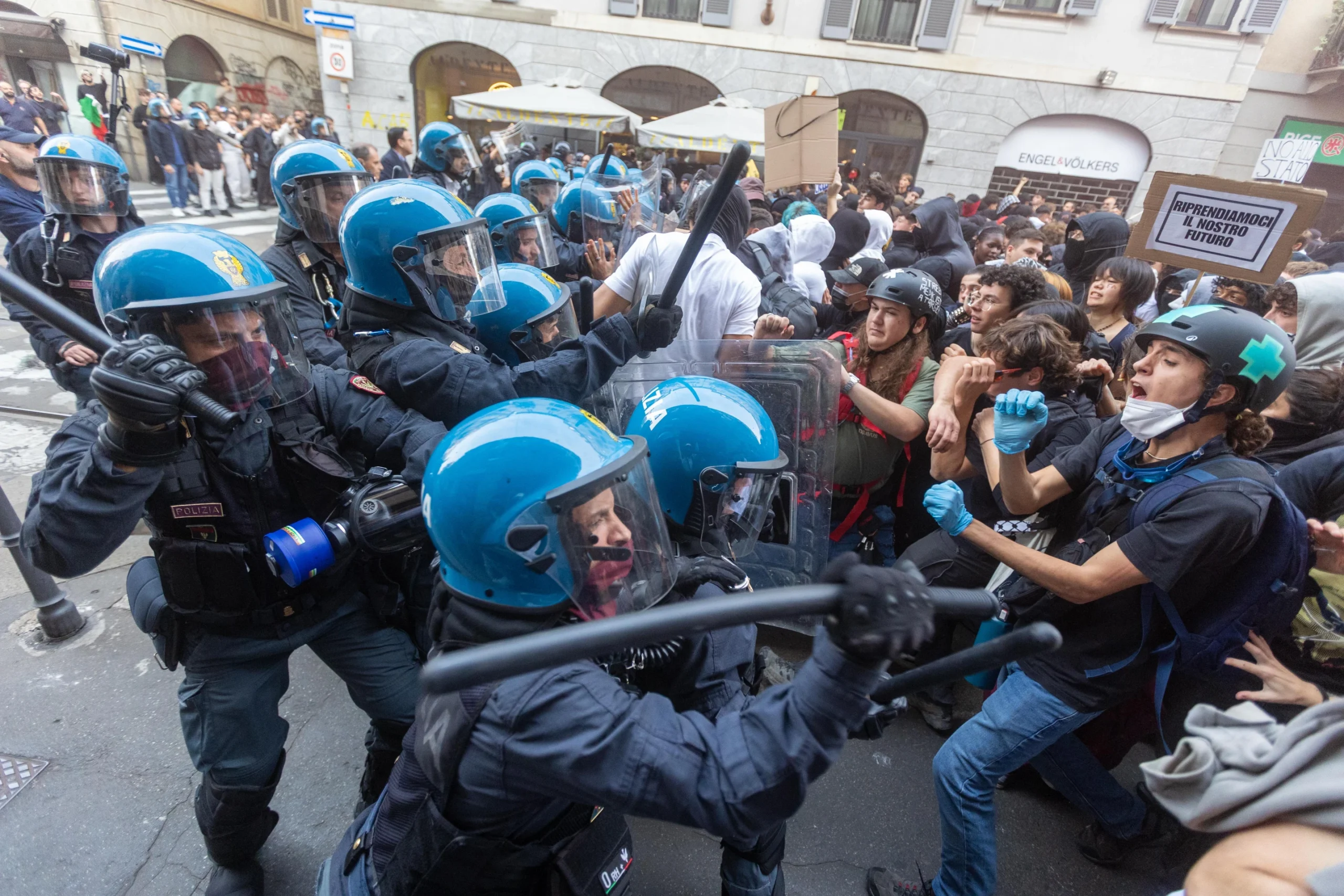
Featured Image: Police repression in Milan, Italy, on Saturday, October 17, 2026. Protests in Italy. Source: Stefano Porta/LaPresse via AP
Students and workers took to Italy’s streets in October to challenge the rising cost of living, low wages, and cuts to public services. Their protests also turned attention to schools, housing and the government’s spending priorities.
Tjen Folket Media reports that demonstrators marked October 16 with “No Meloni Day,” calling for greater investment in education and opposing militarization. It also describes school occupations and protests in several cities, including Rome, Milan, Bologna and Turin. A Nova Democracia (AND) reports that students occupied Florence’s Gramsci Scientific High School on October 19 and planned further occupations, citing deteriorating school conditions and opposition to education cuts.
The protests extended beyond student demands – demonstrators denounce high prices, lagging real wages and the shortage of affordable housing in major cities. In Rome, thousands joined a march organized by the Italian General Confederation of Labour, whose leader called a general strike for November 20.
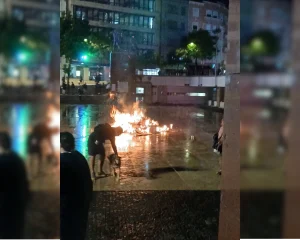
On October 16, during the “No Meloni Day” student march in Rome, demonstrators reached the Ministry of Education and set off fireworks outside the building, while chanting for Education Minister Giuseppe Valditara to come out. Bottles and fireworks were also thrown at police on Via Marmorata later in the march.
On October 17, clashes erupted in Milan, Turin, Bologna and Bergamo. In Milan, protesters built barricades near Piazza Duomo, and police used tear gas to clear the square. During the weekend the protests in Milan gathered around 5,000 participants. 32 were arrested, majority of them minors.
The October 17 Movement also called for weekly demonstrations in eight cities and demanded Meloni’s resignation. AND quotes a post attributed to the movement: “You are the violent ones,” “You, who denied us a future. Now, we are claiming that future ourselves.”
Meloni condemned the clashes and backed the police repression, and the Italian State plans to deploy 500 additional soldiers to the city, following a security meeting chaired by Prime Minister Giorgia Meloni. The protesters continue to pressure the government to answer for the rising costs, low wages, and public-service problems, which the masses in Italy face in their daily life.
At the same time, transport workers have also protested the soaring diesel costs, and the end of a temporary fuel-tax discount. Farmers joined truckers’ roadblocks and picket lines, while hauliers also blocked and slowed access to distribution centers, motorway junctions and ports. The protests have delayed deliveries of fuel and produce, leaving some petrol stations without fuel.