Brazil: Pernambuco Court of Justice Approves Eviction of Peasants from Barro Branco
We hereby share an unofficial translation of an article by A Nova Democracia published on May 20.
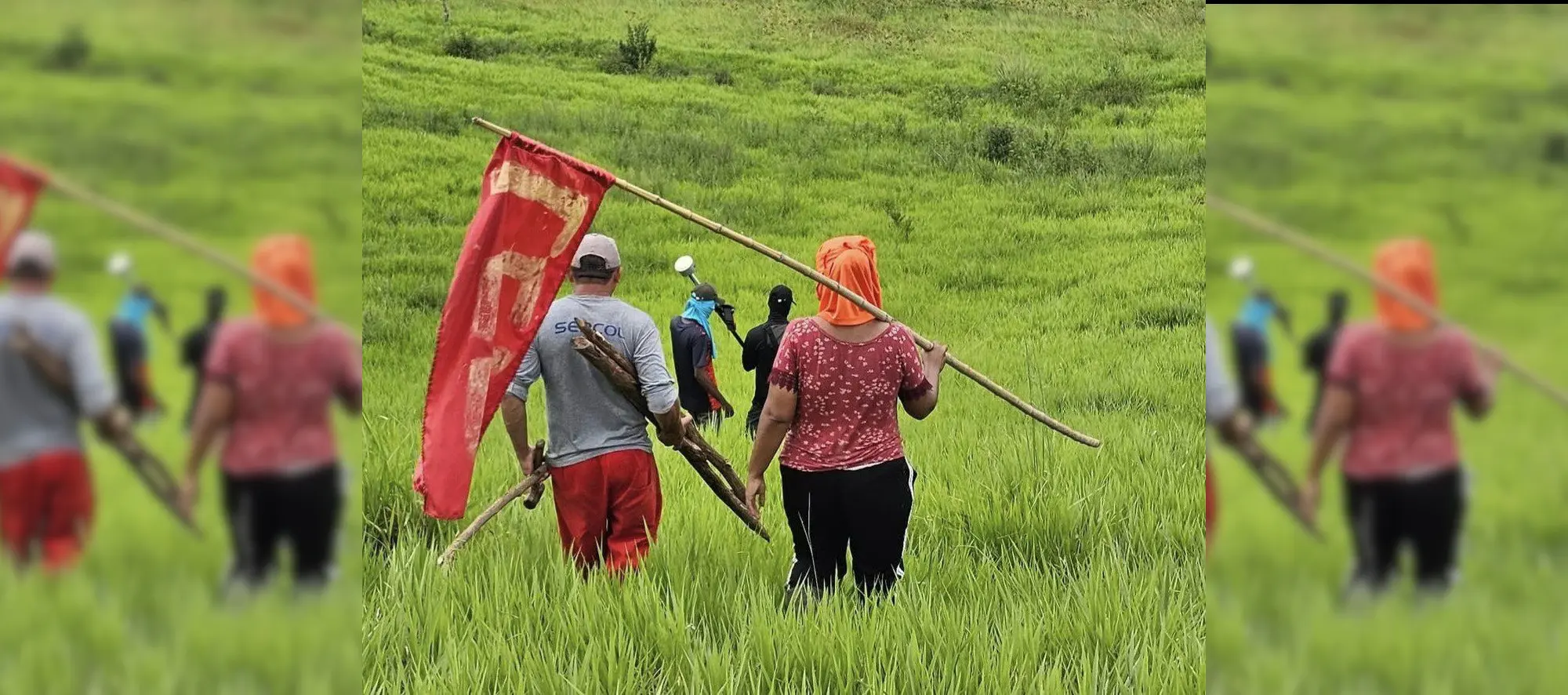
On May 11, the Pernambuco Court of “Justice” unanimously approved the eviction of the occupiers of Barro Branco who live in the so-called “forest settlements” in Jaqueira, in Pernambuco’s Zona da Mata Sul region. The decision responds to a request by the company Agropecuária Mata Sul S/A, controlled by the big landlord Guilherme Maranhão, and affects the estates Furnas, Cabugi, Monteiro, Caixa D’água, Rampa, Morcego, and parts of the Tenório Forest.
According to a complaint published by the Committee in Support of the Struggle of the Barro Branco Land Occupiers and by the Committee for the Struggle of Those Affected by the Frei Caneca Plant and Agropecuária Mata Sul (Coluati), the decision is part of a new offensive by the big landlords and the old justice system against the land occupiers in the region. In a post on Instagram, the committees stated that “after the auction farce was defeated by popular mobilization earlier this year and their failure to approve the eviction in March […], the big landlords and the old justice system are once again attempting to attack the people of Barro Branco and their land.”
The occupiers claim that the measure aims to remove from the land the families of former workers at the old Frei Caneca Mill, who have been living and working in the area for decades. “We demand what is rightfully ours: ALL THE LAND IN BARRO BRANCO FOR THE OCCUPIERS AND FORMER WORKERS OF THE FREI CANECA MILL, and we will not give up this sacred struggle until this is achieved!” declared the committees.
History of the struggle for land in Barro Branco
The struggle for land in Barro Branco, in the municipality of Jaqueira, in the Zona da Mata Sul region of Pernambuco, has its origins in disputes over the lands of the former Frei Caneca Mill, which went bankrupt in the late 1990s. Some of the workers received land titles as payment for labor rights that the mill had never settled. Even so, decades later, the lands became the target of successive lawsuits, auctions, and maneuvers denounced by the peasants as fraudulent, favoring groups linked to the regional big landlords.
The peasant struggle in the region became one of the main examples of resistance against latifundium in the region following the fierce battle fought on September 28, 2024. On that occasion, dozens of land occupiers organized by the League of the Poor Peasants (LCP), along with supporters and students, faced an offensive by more than 50 goons linked to the paramilitary group “Zero Invasion” and to Agropecuária Mata Sul Ltda., a company associated with the big landlord Guilherme Maranhão.
In October 2025, hundreds of peasants, supporters, students, public interest lawyers, and democratic organizations held the Barro Branco People’s Court, an initiative that symbolically tried the crimes attributed to the Frei Caneca Mill, Agropecuária Mata Sul, and agents of the latifundium in Pernambuco’s Mata Sul region. The tribunal denounced land grabbing, fraudulent auctions, armed violence by hired goons, illegal evictions, and environmental crimes committed over decades against the region’s land occupiers.
The convening of the People’s Court represented a significant political defeat for the local big landlords, as it brought the peasants’ denouncements to national attention and amplified the impact of the Barro Branco struggle. Shortly thereafter, however, the Pernambuco judiciary once again acted in favor of the big landlords by putting the area up for auction again as part of a tax foreclosure linked to the bankruptcy estate of the Frei Caneca Mill.
According to reports from the peasants and the Support Committee for the Struggle in Barro Branco, the auction followed the same pattern previously used in other areas of the plantation: undervaluation of the land, massive discounts, and direct favoritism toward groups associated with the sugarcane plantation. The land occupiers described the maneuver as yet another attempt to legally legitimize the theft of lands historically occupied by rural workers.
Even in the face of judicial, police, and paramilitary offensives, the peasants continue to resist in Barro Branco, reaffirming their determination to defend the lands won through struggle and blood against the successive attacks by the latifundium and the old State.