AND Editorial – The Failure of Imperialism’s General Counterrevolutionary Offensive
We hereby share an unofficial translation of an editorial published by A Nova Democracia (AND) on the 26th of June.
“What we are experiencing is no longer a test of the post-Cold War order: it is the end of it.” This assessment – made by Antony Blinken in mid-2023, when he was still the Yankee imperialist Secretary of State – is an admission of failure by the Yankees and of the imperialist counterrevolutionary offensive they spearheaded with the collapse of the social-imperialist USSR and the first Persian Gulf War (against Iraq). At the time, Blinken demonstrated, as proof of this assessment, that the central assumptions that guided US foreign policy after 1990 “no longer hold.” Josep Borrell, then head of European Union diplomacy in 2024, also declared: “The era of Western domination is definitively over” (referring to the United States’ sole hegemony, which until then had been unquestioned) and that “Europe’s future will be bleak.” The UN Secretary-General, in 2024, was even more emphatic: “We are entering the ‘era of chaos,’” marked by wars between nations, civil wars, coups d’état, and a period of crisis “deeper and more dangerous than the Cold War itself.” For this reason, NATO Secretary General Mark Rutte declared in 2024 that the alliance should “shift to a wartime mindset” and that it is still “not ready” for what is to come in 2028–29.
The perception of the leaders of imperialist institutions and organizations reflects objective reality. They acknowledge, in their own way and using their inverted language, that the general counterrevolutionary offensive unleashed by Yankee imperialism in the late 1980s and early 1990s has failed completely. Their decline in recent years could not be halted even by the machinations surrounding the Twin Towers, which were used as justifications for new and larger invasions of countries in Central Asia, such as Afghanistan, and in the West, in the Greater Middle East; on the contrary, these events accelerated that decline, as is evident today in their failure.
This offensive was unleashed in the wake of the capitalist restoration in the People’s Republic of China (1976) following the defeat of the Great Proletarian Cultural Revolution, which had arisen to advance socialist construction and prevent a capitalist restoration along the lines of what had occurred in the USSR in 1953, successfully holding it off for ten years (1966–1976). The offensive converged with the nefarious role played by Gorbachev’s revisionism and his “perestroika,” which put an end to the “socialist” facade that had survived in the USSR, leading it to collapse. Against this backdrop—and with the decades-long implementation of the “Washington Consensus” and its ideological arsenal of “globalization” and “neoliberalism”—US imperialism laid the groundwork for its future general counterrevolutionary offensive. Turning its sights on the Middle East and demonizing regimes resistant to its dominance in the region, as well as Islamic movements classified as “terrorists”—following the first war against Iraq and the capitulation of the social-imperialist USSR—it defined its new general strategy as the “War on Terror.” Using this slogan as a pretext for its war of plunder and against national liberation struggles, Yankee imperialism sought to impose its unquestionable, sole global supremacy in the economic and military spheres, in an attempt, on the one hand, to remove the imperialist economic base from the context of its deepening general crisis; on the other hand, on the ideological-political front, it sought to “prove” the obsolescence of Marxism and communism, propagating the idea that it was possible to mitigate the ills of capitalism through technological innovations. Thus, it sought, at the same time, to establish itself as the world’s sole hegemonic superpower, subjugate Second World imperialist powers, advance to dominate the countries within the former USSR’s sphere of influence, and establish the Pax Americana, as well as to solidify capitalism as the “best of all possible worlds,” the “end of history,” the end of class struggle, the end of armed struggle, the end of anti-imperialist struggle, and the complete victory of “democracy as a universal value.” Thus, in the 1990s, with the end of the “Potsdam System”—the political geography of Europe established by the major Allied agreement at the end of World War II (WWII)—and with the dissolution of the Warsaw Pact, imperialism instigated dozens of bloody and fratricidal ethnic wars aimed at the balkanization of Eastern Europe and the domination of the former Soviet republics, in order to encircle Russia and subjugate it completely, as well as to reunify Germany.
***
More than 30 years later, the world has turned out to be a slippery slope leading to more and more wars and major unrest. In 2024, the world saw the highest number of armed conflicts since the end of World War II (1946, when historical records began), with 61 armed conflicts affecting more than 36 countries and exposing one-sixth of humanity to war, demonstrating the failure of the Pax Americana. For the 11th consecutive year, global military spending in 2025 rose, reaching $2.8 trillion, or 2.5% of global GDP—the highest level since 2009. This includes a 14% increase in Europe and an additional 51% of the global total among the three largest spenders: the US, China, and Russia, while the nuclear arms race has also reignited, with all nuclear-armed nations modernizing their arsenals, developing new types of weapons, and increasing the number of warheads a hundredfold.
While it is true, on the one hand, that the great powers and superpowers are preparing for a new major conflict—World War III—on the other hand, given the experience of the first two, they all fear repeating it, for they know that some of them will be utterly destroyed and that it will almost certainly lead to nuclear war; after all, those possessing nuclear arsenals will form coalitions on opposing sides, and a humanitarian catastrophe cannot be ruled out. Furthermore, a world war has severe side effects that exacerbate their fears: at the end of World War I, the Russian Revolution and the USSR emerged, and from World War II, a vast socialist bloc arose. What will come of a Third World War? Objectively speaking, the imperialists lack a solid social and political foundation to justify a Third World War to the people of their own countries, much less to win their support. After all, the masses are increasingly rejecting the political system that the reactionaries offer them—bourgeois democracy or fascism—with 59% of respondents in 24 different countries dissatisfied with democracy in their country, including a 17% drop in approval of bourgeois democracy in France between 2022 and 2023, 13% in the United Kingdom, and 10% in Germany, according to a survey by the Pew Research Center. In the sole hegemonic superpower, the US, in 2025 only 17% of adults said they trusted the government in Washington to do what is right “always” or “most of the time”—one of the lowest levels in nearly 70 years; furthermore, 62% of Americans were dissatisfied with how democracy was functioning in the country. In fact, according to the same survey, the global crisis of bourgeois democracy is not limited to governments but extends to the other electoral options of the old order, as 64% do not view the opposition to their respective governments favorably; hence the rise in electoral boycotts, despair, and the conviction that some other system must eventually replace the current one (namely, the only possible one: the dictatorship of the proletariat, although this positive conclusion depends on the very existence and action of revolutionary Parties and organizations). In any case, the masses say they no longer accept living as they have until now: in 2025, there were more than 148,000 major protests against governments in 197 different countries and territories, marking an increase for the third consecutive year. Today, Bolivia, on the brink of civil war, stands as the most striking example of this.
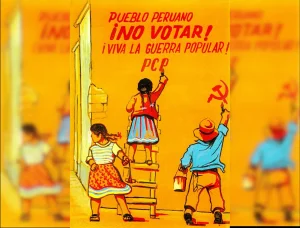
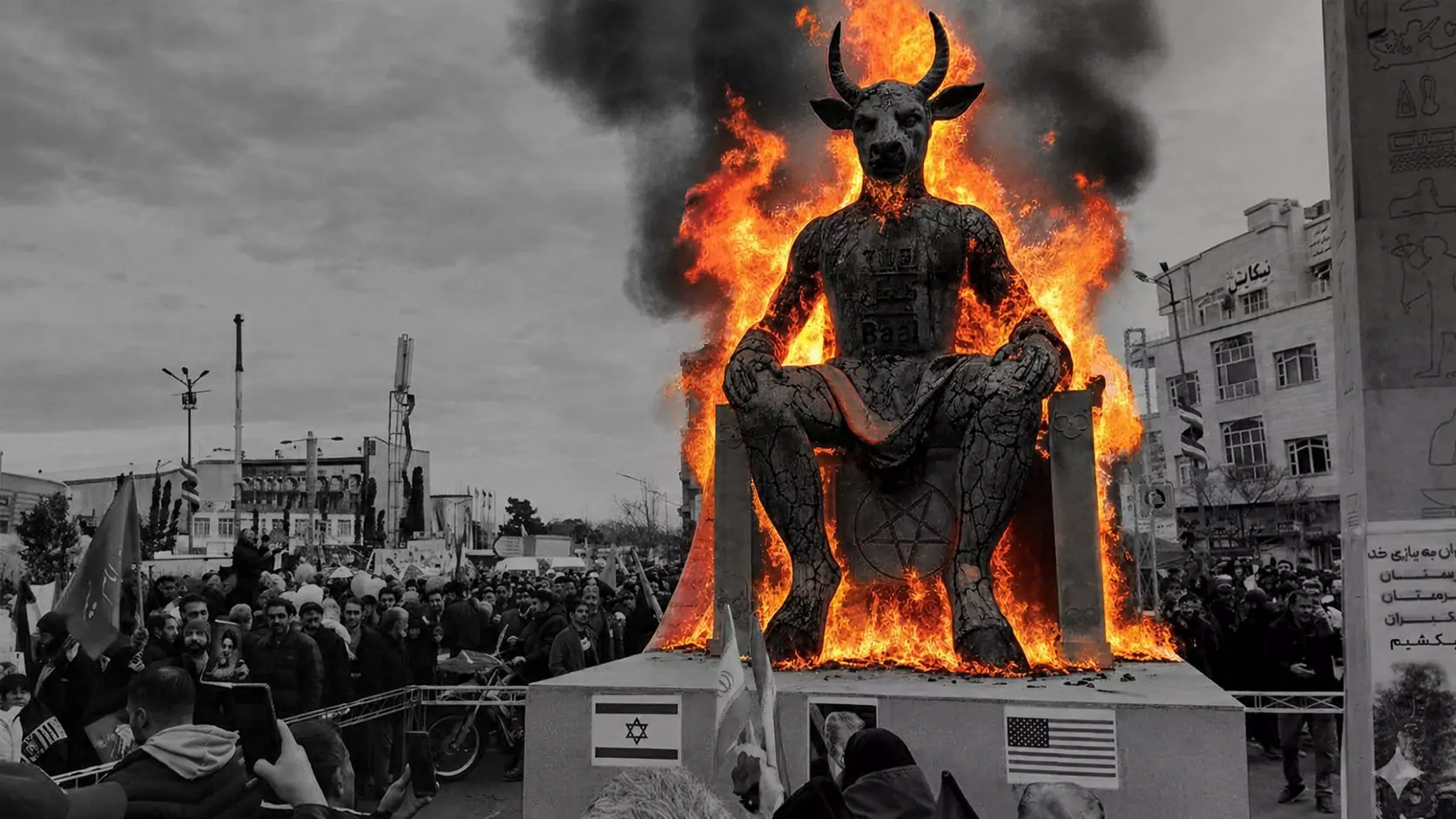
In short, the entire global situation is grounded in a great truth of our time: the period of counterrevolution that began with the temporary defeat of the dictatorship of the proletariat has essentially run its course; a new period of revolutions in world history, overcoming that setback, is beginning, propelled by three major political and military victories achieved by the anti-imperialist resistance movements of nations attacked by imperialism: the victory in Afghanistan (2001–2021), in Palestine (Al-Aqsa Flood, 2023), and the Resistance in Iran (2026)—all of which demonstrate that US hegemony, though still in force worldwide, is no longer capable of subjugating oppressed peoples when those peoples persist in waging war in the manner of the proletariat—through guerrilla warfare and protracted war. These are great victories of the World Revolution, particularly of its foundation—the national liberation movement and the new-democratic revolutions—which are the main force, while the international proletarian movement resumes its counteroffensive, guiding the national liberation movement, as in the People’s Wars in India, Peru, the Philippines, and Turkey—which persist heroically—and others that are just getting underway, all led by Marxist-Leninist-Maoist communist Parties. This is part of the New Great Wave of this World Revolution, which on a global scale is in its Strategic Offensive stage, even though, in each particular revolution, most are currently developing in the Strategic Defensive stage.
“Countries want independence, nations want liberation, and peoples want revolution”: this is the maxim of the current situation. Nations will not allow themselves to be dominated; peoples no longer accept the exploitation of bureaucratic capitalism, imperialist plunder, wage slavery, and the deceptions of bourgeois ideology in the supreme form of its “democracy”; there are growing fissures in the imperialist front, and the rival powers—once “allies” of the US—no longer accept a subordinate position; they strive to take “independent flights,” seeking to occupy a greater and better place in the sun for themselves; war, repression, reaction, fascism, and violence are the prevailing trend across the entire spectrum of imperialism—phenomena that are and will inevitably be confronted by the revolutionary struggle, the war of national liberation, new democracy, and the dictatorship of the proletariat as the main trend. Revolution is the main political trend in history and will increasingly become the daily bread of the peoples of the world. The situation, as can be seen, demands the utmost skill and resolve from the revolutionary and anti-imperialist movement: the situation is very challenging and dangerous, and, as never before, extremely favorable for transforming universal history and the entire world.