Brazil: 55 Years After the Assassination of Paulo de Tarso the Old State “Apologizes”
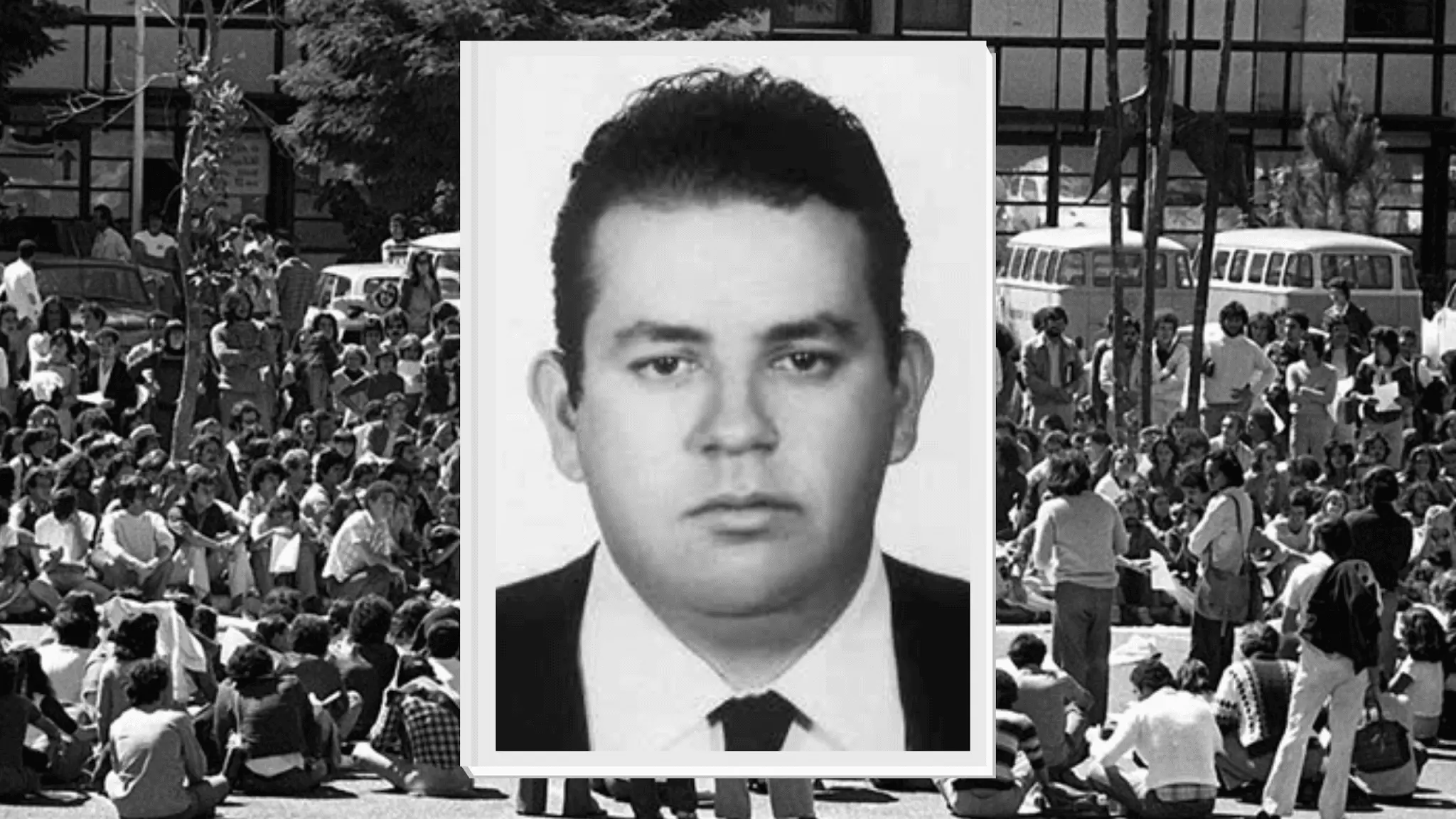
Featured Image: In the foreground, Paulo de Tarso. In the background, students gathered in assembly on the UnB campus in June 1977. Source: Collage: AND, Photo: Museum of Resistance/Reproduction.
2026 marks 55 years since the murder of lawyer and guerrilla combatant Paulo de Tarso Celestino da Silva, part of the National Liberation Action (ALN) who stood in resistance against the Brazilian military dictatorship. In a purely ceremonial act carried out at the Faculty of Law of the University of Brasília (UnB), where Paulo graduated, the old Brazilian State made a public “apology” for his forced disappearance, striving to cover up a history marked by decades of silence and impunity, a Nova Democracia writes. This “apology” was denounced by his family and colleagues.
Paulo de Tarso Celestino da Silva, was born in Morrinhos, Goiás, son of Pedro Celestino da Silva, the ousted federal deputy. Paulo distinguished himself early as president of the University of Brasília’s student federation, a group branded “subversive” by the military regime. His commitment led him to the National Liberation Alliance (ALN), where he actively participated in the armed resistance against the civil-military dictatorship becoming its leading figure.
He was captured on July 12th, 1971 by the reactionary Detachment of Information Operations – Center of Internal Defense Operations (DOI-CODI) agents, tortured, and murdered in the Petrópolis clandestine center, the infamous “House of Death”. Even after intense searches by his family and complaints by human rights organizations, his body has not been found, showing the brutality and concealed nature of the repression.
The event at UnB exposes the limitations of these ceremonial gestures faced with the old State that guaranteed the protection and impunity of the agents responsible for the atrocities committed in the name of the big landlord and bourgeois order. Reporting crimes committed against political dissidents during the 1960s and 1970s remains crucial for understanding the continuity of State terror. The State terror orchestrated by the military regime bears fundamental similarities to the repression currently being unleashed on the combative peasant movement, particularly against the League of Poor Peasants (LCP). In the Federal Senate, legislative proposals are progressing that seek to legitimize and further intensify military interventions against the people.