AND: Amid a Strong Yankee Presence and Increased Militarization, an Attack Attributed to the EPP Destroys a Police Outpost in Paraguay
We hereby share an unofficial translation of an article published by A Nova Democracia (AND) on the 23rd of July.
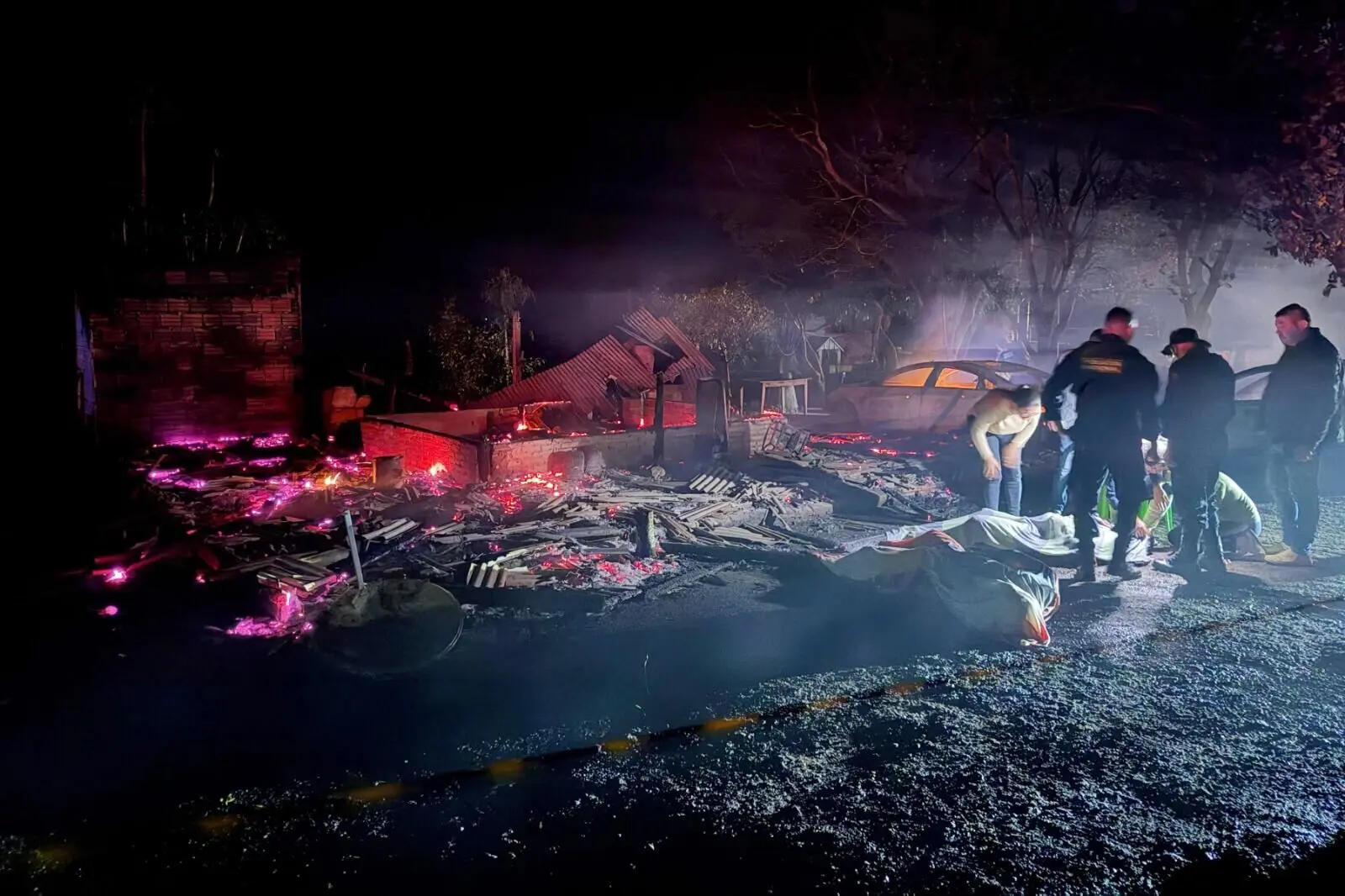
On the night of July 21st, during a severe storm, a large-scale attack completely destroyed Police Outpost No. 4 in the Naranjito settlement, Ybyrarobaná district, Canindeyú department, and left three people dead—two police officers and a local resident. The armed assault, by a group estimated to number between 20 and 30 people, took place around 22:30 on a rural property along the PY03 highway, leaving the outpost, a patrol car, and other police vehicles in flames. This prompted an immediate mobilization of police and military forces and generated a media frenzy in the reactionary Paraguayan press. After initially considering both the Paraguayan People’s Army (EPP)—which is waging an armed revolutionary struggle in the country—and criminal organizations linked to so-called “organized crime,” the government, led by the lackey Santiago Peña, attributed the attack to the guerrilla group based on a ballistic comparison with another incident that occurred in May 2025.
As a direct result of the attack, non-commissioned Senior Officer Atilio Martínez Barrios, 40, and non-commissioned Inspector Officer Herminio Ojeda González, 33, were eliminated, along with an employee identified as Josemar Escobar Piris, 37, who was present at the time of the attack on the police unit. non-commissioned Senior Officer Víctor Raúl Gavilán, 47, was grazed by three bullets but is out of danger; non-commissioned Inspector Officer Édgar Adalberto Núñez Vázquez, 36, managed to escape unharmed.
In response to the attack, Interior Minister Enrique Riera publicly stated to reporters: “This is an attack on the state that will be met with equal force, with the full weight of the state and the law, because this will not go unpunished.” The high-ranking government official announced the intensification of joint operations carried out by law enforcement agencies in the department of Canindeyú, with the participation of criminal investigation teams and forensic experts, and stated that the perpetrators of the attack would be located, investigated, and brought to justice. At that time, Riera stated that it was not yet possible to determine who was responsible for the attack.
Meanwhile, Brigadier General Alberto Gaona, commander of the Internal Defense Operations Command (CODI), stated in an interview with ABC Cardinal that the tactical operations of that military force were based on information provided by the Military Intelligence Battalion (BIMI). The officer explained that troops were focusing their sweeps on areas with large indigenous reserves such as Mbaracayú, Morombí, and Guaraní, but noted that the searches faced logistical constraints due to torrential rains, which made it difficult to locate traces in rural areas. In addition, the senior officer questioned whether the EPP was responsible, arguing that the guerrilla organization did not typically use rifles on a large scale and that, according to CODI data, it had fewer than 15 active combatants.
However, hours after stating that it was not yet possible to determine who was responsible, Minister Enrique Riera declared that the latest report submitted to President Santiago Peña attributed the attack to the EPP. According to Riera, the ballistics analysis concluded that one of the weapons used in the attack was the same one used on May 3rd, 2025, against the 10th police outpost in Ybyrarobaná, Canindeyú, when approximately 35 shots were fired and leaflets attributed to the group were found. “The attack is attributed to the EPP. The latest ballistics report confirms that the weapon used is the same one used in the May 3rd attack on the Ybyrarobaná police outpost,” he stated.
Canindeyú is a hotbed of agrarian conflicts and military operations
While sectors of the old State sought to downplay the EPP’s military capabilities—claiming that the group had fewer than 15 active members and did not use rifles on a large scale—Paraguayan media monopolies were already attributing the action to the organization and reporting dozens of civilian deaths over the years. Hours later, the government itself began attributing the attack—carried out by a group estimated to number between 20 and 30 people—to the EPP. However, such coverage masks the root of the agrarian conflict and the violent land disputes pitting peasants and indigenous peoples against agro-export latifundium in the eastern region of the country.
Historically, actions attributed to the EPP have dealt devastating blows to the repressive forces of the puppet government, resulting in dozens of casualties among police officers and military personnel. According to a survey by ABC Color itself, 20 National Police officers and 14 military personnel have died in attacks attributed to the group since 2004, in confrontations and ambushes that took place in rural areas of strategic departments such as San Pedro, Amambay, and Canindeyú. The records highlight the tactical capability and persistence of the armed resistance in the face of the systematic violence of the old State. Notable incidents include the killing of three police officers at the Yaguareté Forest settlement in 2015 and the attack using an explosive device made from a propane tank against a CODI military convoy in San Pedro in 2021.
The current military offensive intensified starting in February, following the kidnapping of Almir de Brum da Silva, son of Brazilian big landlord Valmir de Brum, in the Curuguaty region. The government used this incident as a pretext to expand its military operations into Paraguayan territory. At an extraordinary meeting, the National Defense Council authorized the flexible deployment of Armed Forces personnel beyond the departmental boundaries of the Joint Task Force, allowing for the mobilization of the so-called “state’s firepower” in accordance with the identified threat.
At the site of the kidnapping attributed to the guerrillas, leaflets and notes addressed to the large-scale soybean farmer were found, stating that the violent eviction of poor peasants constitutes a “blood debt to the people,” for which “there is no deadline,” and demanding the withdrawal of the forces of repression. The State’s mobilization contrasts with its own claims that the EPP has been reduced to just a few members: the government has deployed special forces and expanded CODI’s operations, transforming the border region into a military theater of operations.
Minister Enrique Riera describes the Canindeyú region as a veritable “explosive cocktail” in the eastern region. The puppet administration lumps together guerrilla activity, organizations linked to drug trafficking, alleged marijuana plantations, and land conflicts under the same umbrella. Following the United States’ playbook of linking revolutionary movements to drug trafficking, the old State uses this framework as an ideological smokescreen to expand its military presence in peasant and indigenous regions and to legitimize repression against the masses who resist the attacks of the agro-exporting latifundium.
Yankee Interference Against the Revolutionary Movement
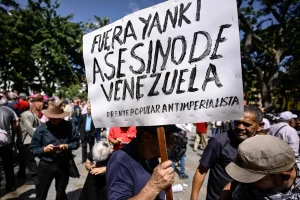
Internal militarization is advancing alongside the Yankee military presence in Paraguay. In January, a US Air Force C-17 Globemaster III aircraft delivered weapons and ammunition intended for the training of the Paraguayan Joint Special Forces Battalion. Days later, Washington announced an 11 million USD grant to expand the capabilities of these troops.
In March, the Paraguayan Congress ratified the Agreement on the Status of Forces, signed in Washington on December 15th, 2025. The agreement establishes the legal framework for the temporary presence of military personnel, civilian employees, and contractors from the US Department of Defense during training, exercises, and other activities agreed upon by the two governments.
This military advance is part of the growing surrender of Paraguayan sovereignty to Yankee imperialism and submission to the interests of the local big landlords—one of the structural causes of guerrilla activity and popular revolt in the country. The foreign military presence reinforces US domination over the Triple Frontier region and the use of low-intensity warfare tactics against popular and revolutionary movements.
On the program A Propósito #369, AND Director-General Victor Bellizia, in analyzing the “Dornroe Doctrine,” characterized it as a “preventive counterrevolutionary policy” aimed at containing the destabilization of the semicolonial order in Latin America. Bellizia also pointed out that Yankee imperialism’s concern has a concrete basis: “In Paraguay, there is also an armed struggle. Therefore, there is an anti-imperialist struggle on the subcontinent.”