Brazil: 1,000 People Attended the 43rd National Meeting of Pedagogy Students
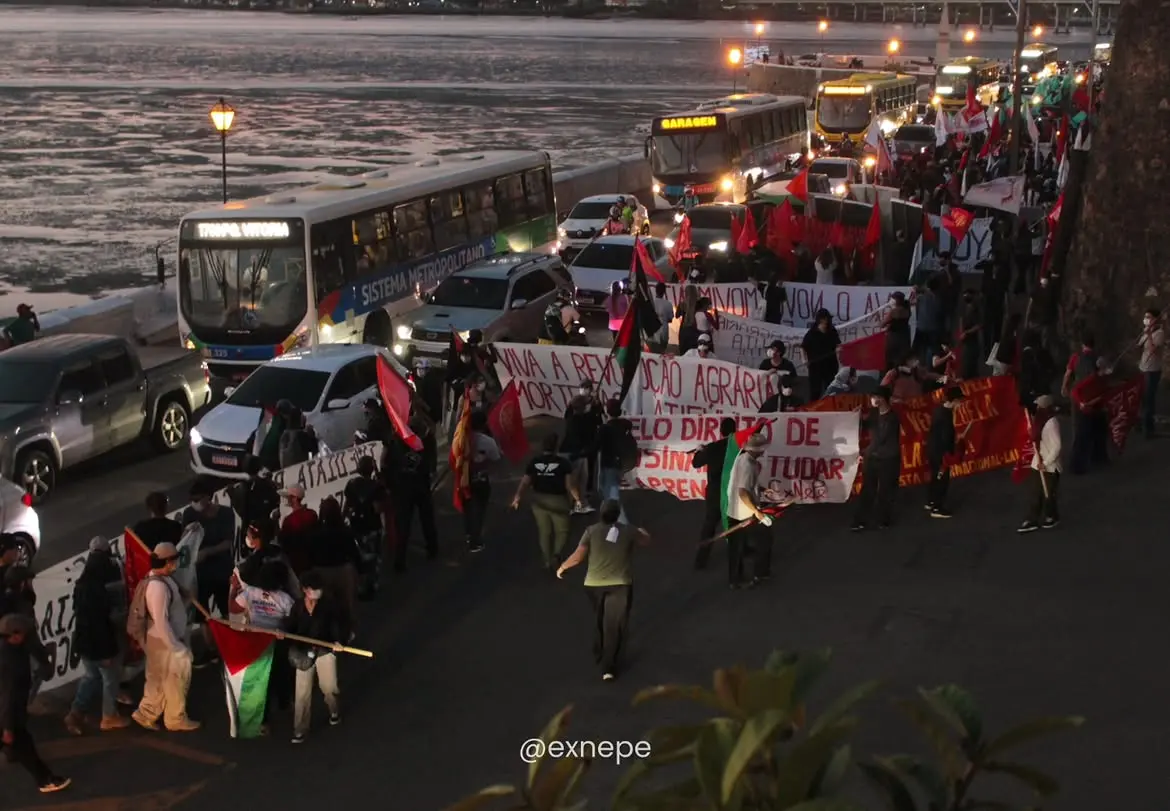
Featured image: 500 students participated in a demonstration on the third day of the meeting. Source: A Nova Democracia.
Between July 20th and 24th, students of Pedagogy and other degrees from different regions of the country gathered at the Federal University of Maranhão (UFMA), in São Luís, for the 43rd National Meeting of Pedagogy Students (ENEPe), A Nova Democracia (AND) reports. For five days, panel discussions, academic presentations, discussion groups, cultural activities, and a large demonstration took over the campus and the streets of the capital of Maranhão.
Organized by the National Executive of Pedagogy Students (ExNEPe), the meeting’s theme was “Yankee imperialist aggression in Latin America and the World Bank’s intervention in Brazilian education”.
More than 500 people participated in the demonstration held on the third day of the meeting (22nd of July) the largest ever organized by ExNEPe. It is estimated that around a thousand people attended the event over the five days, including students, teachers, researchers, peasants, indigenous people, Quilombola people, and representatives of popular organizations.
Dozens of flags from the ExNEPe, the League of Poor Peasants (LCP), the Union of Communities in Struggle (UCL), and the International Anti-Imperialist League (AIL) were present in the demonstration.
Mobilizations preceded the event with several victories of the students in Rio de Janeiro, Pernambuco, Pará, Paraná, Paraíba, Santa Catarina, Rondônia, Bahia, the Federal District, etc. We reported on some of these preparatory events and mobilizations:
The connection between the student struggle, the struggle for land and the combat against imperialism was presented in the official opening of the 43rd ENEPe, with a panel discussion that brought together representatives of the UCL, the Brazilian Association of People’s Lawyers (ABRAPO), the Committee of Solidarity with the Struggle for Land (COMSOLUTE), and representatives/leaders of the peasantry and indigenous peoples.
On the second day the panel took place: “Yankee imperialist aggression in Latin America and the struggle for land” which brought together Victor Bellizia, general director of AND, Wender, representative of the AIL – Brazil Section; and Jorge Moreno, popular lawyer, retired judge and general secretary of COMSOLUTE. In the afternoon of the same day there was a presentation titled “The Role of Youth in the Anti-Imperialist Struggle”, with an Iranian delegation attending. The representatives from Iran spoke about the resistance of their people against the Yankee imperialist aggression.
On the morning of the third day, before the demonstration that shook São Luís, a panel discussion about the World Bank’s intervention in Brazilian education took place. It was mentioned how the dictates of imperialism, mainly Yankee imperialism, order the the development of counter-reforms, the expansion of distance education, standardized assessments, and the scientific emptying of teacher training. The speakers defended the need of a training that guarantees future teachers scientific mastery, an understanding of the Brazilian reality, and the conditions to work with the children of the people in schools, universities, and other educational spaces.
On the morning of the fourth day, another panel discussed “The role of Pedagogy, Teacher Training Programs, students and teachers in the struggle to defend public, free, and scientific education.” The debate addressed the need to defend a broad, scientific teacher training program linked to the concrete problems of the Brazilian people.
AND reports that the meeting “honored the heroes of the international anti-imperialist struggle who fell in combat”, and also “fighters (…) who dedicated their lives” struggling for “the proletariat, peasantry and the youth” in Brazil. Homages were made to Sandra Lima, Gabriel Pimenta, Zé Bentão, Francisco Julião, Alípio de Freitas, Renato Nathan, Armando Oliveira da Silva, Remís Carla, Comrade Flecha and Comrade Raimundo Nonato, among others.
There were cultural activities during the entire program. On the first day, the meeting opened with a traditional festival: dances, and a carimbó performance by Quilombola people. Students and peasants chanted slogans in homage to combatants murdered by the latifundium and repressive forces. On the evening of the second day, the Popular Art Collective organized a soirée featuring Ameaça Vermelha, Sagaz do Povo, Dina MC, Batalha do Hita, and presentations by students from the delegations. The event included songs, poems, and a rap battle with anti-imperialist themes. On the third day, Mestre Roxa presented popular rhythms such as carimbó and coco. On the fourth night, the delegations shared dances, music, poems, and cultural expressions from their regions, celebrating the history of struggle and the traditions of the Brazilian people. During the afternoon of the fourth day, the participants visited historical and cultural sites in São Luís.