Indigenous Peasants in Brazil Face Increased Murders Amid Struggle for Land
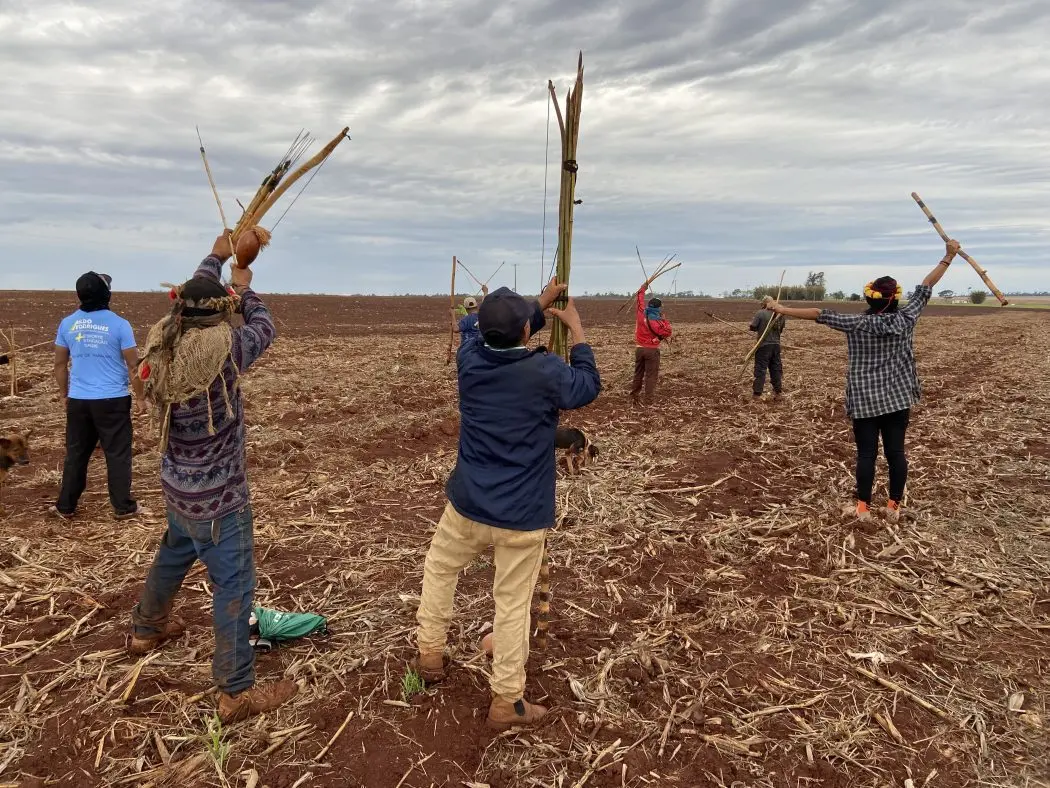
Featured image: Guarani and Kaiowá during the reoccupation of part of the Ipuitã Farm, overlapping the Guyraroka Indigenous Territory, in Caarapó (MS), in September 2025. The community faced weeks of attacks from paramilitary groups and police forces. Source: Renato Santana/CIMI
The struggle for land sharpened in Brazil in 2025, manifesting in more murders and other attacks by the latifundium. August 13, 2026, the Indigenist Missionary Council (CIMI) released the 2025 edition of the Report on Violence Against Indigenous Peoples, an annual publication that compiles 19 categories of violations. The report documents rising violence, recording 258 murders (up 22.3% from the previous year), with most victims being under 30. It also recorded 38 attempted murders, 18 death threats, 27 other threats, 33 cases of bodily harm, 46 cases of racism and ethnic-cultural discrimination, and 25 cases of sexual violence, alongside 19 reports of abuse of power and ten negligent homicides—totaling 474 incidents of violence against individuals, about 12% more than in 2024.
The report further documents 169 attacks on the Indigenous land rights affecting 143 territories in 23 states, as well as 210 land invasions and violence against property affecting at least 151 Indigenous lands in 20 states. It notes that many lands are traditionally occupied but long unmarked, and that two-thirds of affected territories face regularization problems. Economic pressures tied to mining and large-scale projects have intensified, including conditional demarcations based on agreements with big landlords, showing the increase land-grabbing by them.
The report points to the expansion of “export agribusiness”– supported by tax benefits, state credit, and major infrastructure projects, linked to logging, gas and oil exploitation, large-scale illegal mining, and attempts to enter in protected Indigenous peasants lands for exploitation.
In Mato Grosso do Sul, the Guyraroka Indigenous Territory shows violence in the sharpening of the struggle for land in Brazil: most Guarani and Kaiowá land remains occupied by the latifundium, while the people have long denounced pesticide poisonings. In September 2025, Indigenous peasants reclaimed part of the Ipuitã Farm to prevent another poisoning, then faced attacks from the repressive forces and paramilitary groups hired by the big landlords. The report also records 1,024 deaths of Indigenous children under age 5–more than half attributed to preventable conditions linked to structural neglect in healthcare access and basic services.
AND states the situation sharpened further into 2026, with goons attacking reclaimed lands and eviction orders issued. It cites Kaiowá and Guarani families reclaiming land in Mato Grosso do Sul and facing violent attacks and arrests, the Avá-Guarani reclaiming territory in Guaíra and facing eviction orders, and police operations in Rondônia leading to arrests and destroyed homes. Overall, from 2025 onward, the struggle for land has escalated, with significant attacks against Indigenous peasants.
The unity among Indigenous peoples, peasants, and Quilombola people appears in the declarations of organizations that struggle for land, AND writes. The League of the Poor Peasants (LCP) states that the path is that “the indigenous and peasant recoveries of lands assume its democratic content: recover, defend and produce in the land grabbed by the latifundium, instead of waiting for concessions from the old State.”