Brazil: 20 Years of the Worker-Peasant Alliance Bridge Celebrated
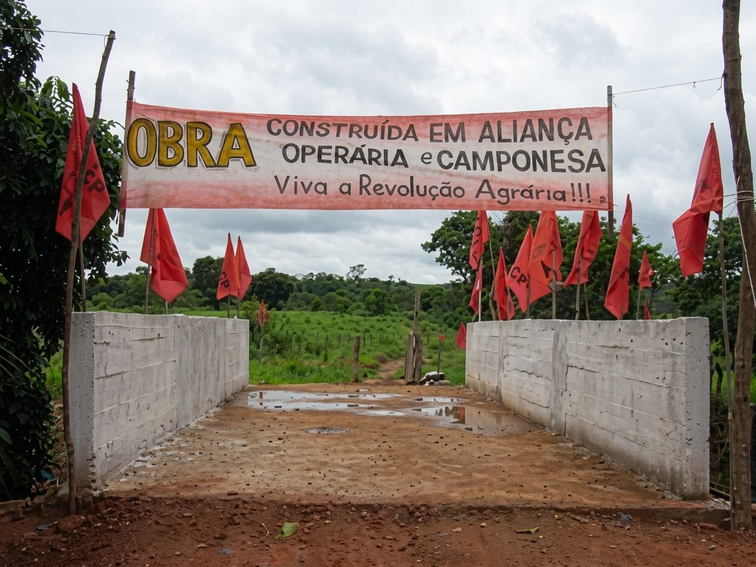
Featured image: Worker-Peasant Alliance Bridge, built by peasants and workers from Northern Minas Gerais and inaugurated in 2006. Source: AND
Between September 18 and 20, workers, peasants and Quilombolas of Northern Minas Gerais celebrated, as part of the 6th Production Festival, the 20th anniversary of the construction of the Worker-Peasant Alliance Bridge, which was built collectively by the masses, A Nova Democracia (AND) reports.
In a joint statement signed by Marreta Union, the Workers’ League (LO), the League of the Poor Peasants (LCP) of Northern Minas Gerais and Southern Bahia as well as peasant and Quilombola communities in the region, it is affirmed that “the bridge is not large in size, but in significance.”
Before the construction of the bridge, families had to cross the Arapuim stream on a tiny wooden walkway, which posed significant risk to both people and animals during the rainy season, and the construction of a bridge served as a reoccurring empty promise in the campaigns of electioneering politicians, but nothing materialized.
In 2006, workers took matters into their own hands and built it. Over one thousand people from 12 communities participated in the project, working collectively and voluntarily. The workers provided technical knowledge, tools, and materials, the communities organized food, lodging and transportation. The statement also highlights the role of the peasant women, who organized the food and supplies for the workers and worked directly on the construction: “for a week they did everything, they were bricklayers, laborers, carpenters… And everything was done collectively.”
AND writes: “The People’s Assembly, the body exercising the political authority of the masses and the embryo of what would later become the governing body of the Agrarian Revolution, decided to name it in honor of the alliance between the proletariat and the peasantry, the basis of the Revolutionary United Front, and the popular combatants of Northern Minas Gerais; it also made the decisions and directed the entire process.”
Concluding, AND summarizes the statement, reminding us that workers and peasants “‘can build and govern, collectively, without asking for ‘blessings’ or ‘bowing’ their heads to anyone.’ Built through the independent initiative of the workers and led by the People’s Assembly, the bridge resolved a concrete need of the communities and materialized the New Power of the masses, who collectively organize work, production, and common life, in struggle against latifundium and the old State. It is on this path that the Agrarian Revolution asserts itself as the spearhead and first stage of the New Democratic Revolution.”