Déodat-de-Séverac: Proletarian Youth Shakes Toulouse
We hereby share a translation that we have received per e-mail of an article published by La Cause du Peuple, on October 4.
On October 1and 2, high school students at Déodat-de-Séverac mobilized for another day of blockades as part of the ongoing national high school student movement. Very quickly, the inability to block the school due to the excessive police presence led to nearly four hours of particularly fierce revolts in the surrounding area—possibly the most intense high school student mobilization the city has seen in several decades.
As early as 7:30 a.m., preparations for the blockade were underway in a tense atmosphere. Even before the high school students began to gather, there were already about ten CRS vans parked on the outskirts of the school, along with the usual “Robocops” eager to beat up teenagers. It must be said that over the previous two days of protests, the police had been very busy. When the high school students rose up to denounce overcrowded classrooms and the shortage of teachers, the deplorable condition of the school—which lacks proper insulation in both summer and winter—as well as the administration’s constant surveillance, the old state responded with repression and had already arrested two students.
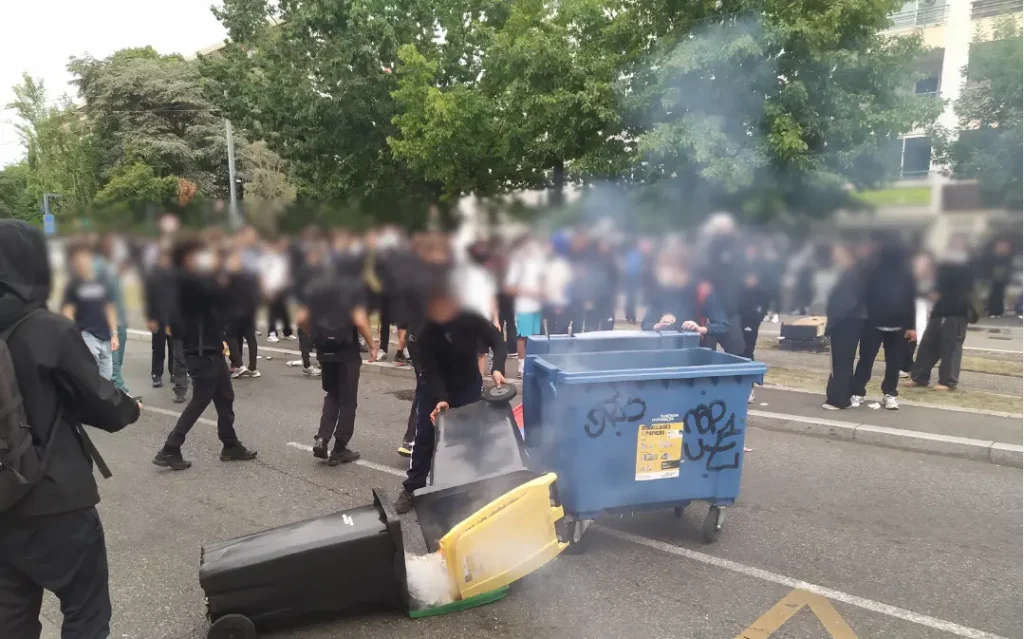
This morning, as students began gathering in front of the school entrance, the police intervened immediately and attempted to deter them by threatening to use force. These threats did not deter the students, who immediately retaliated by setting trash cans on fire and firing fireworks at the riot police. Unfortunately, the students were forcibly evicted with heavy tear gas fire, which pushed them back all the way to the tram stop.
After being pushed back into a side street, the group of students finally regrouped and was able to retake the main avenue leading to the high school. To slow the CRS’s advance, barricades were erected and set ablaze. Faced with relentless tear gas fire, projectiles were thrown continuously and without letup throughout the entire morning of the uprising. The coming hours would be marked by a merciless struggle against repression to regain ground. Little by little, the rebelling students grew less and less afraid of the tear gas canisters and became increasingly bold in their retaliation. Some continuously erected new barricades, others attempted to attack the police from behind by throwing stones, while fires were lit all over the place to slow down the police.
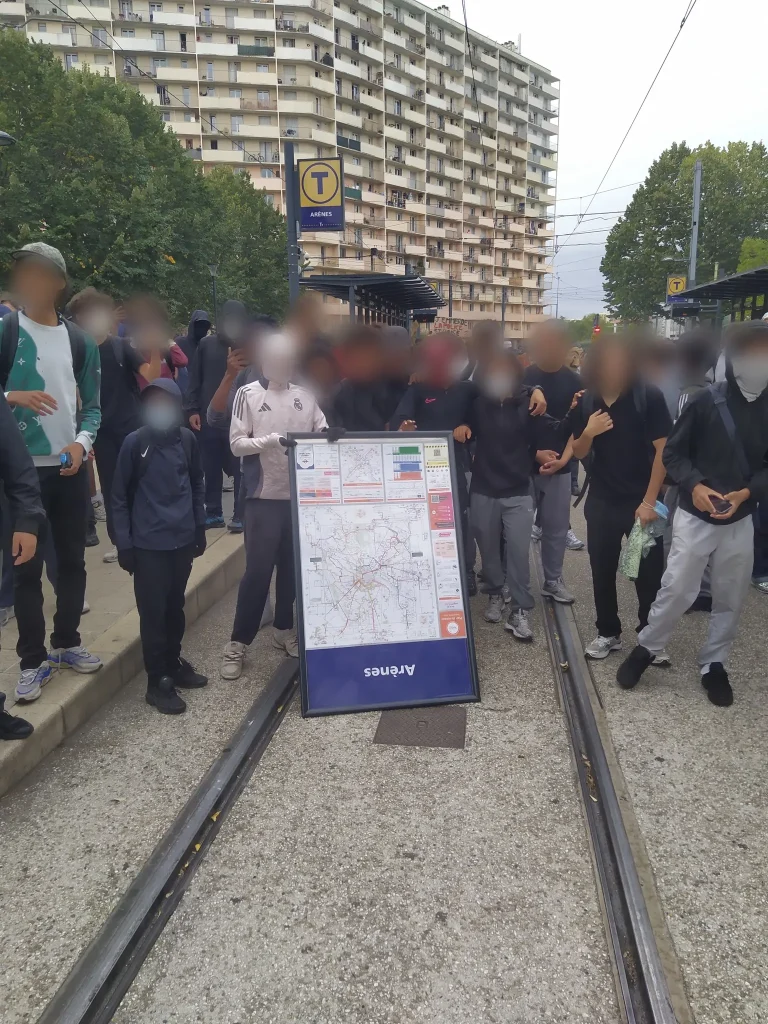
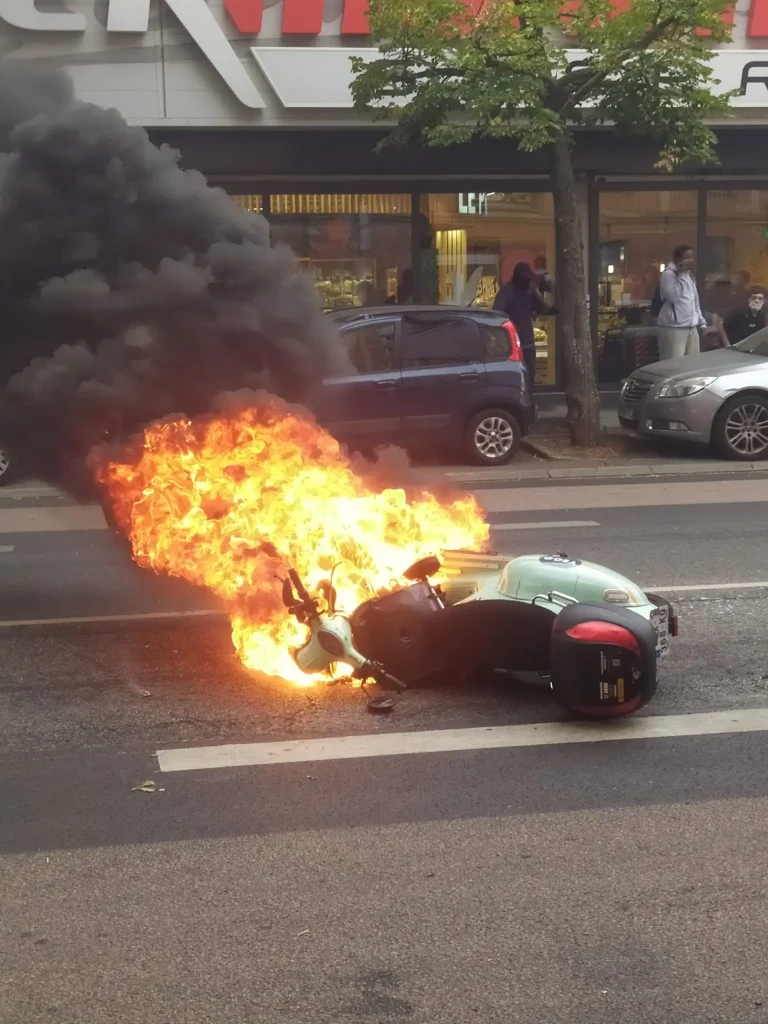
The group was initially pushed back toward the Arènes, where the local high school was also blockaded. However, rather than joining the rest of the pacific blockade, the militant youth chose to continue the struggle against the police and kept fighting to regain ground, refusing to stand passively still after two hours of fighting without flinching. Their determination paid off, since after twenty minutes, the police realized they would not be able to disperse the mass of high school students; they withdrew, leaving the way clear for the students to advance. Without a moment’s hesitation, the high school students returned to the fray and once again took the path along the boulevard. Along the way, a Carrefour City store was duly targeted, amid chants of support for the Palestinian cause due to the company’s collaboration with the ongoing genocide in Gaza.
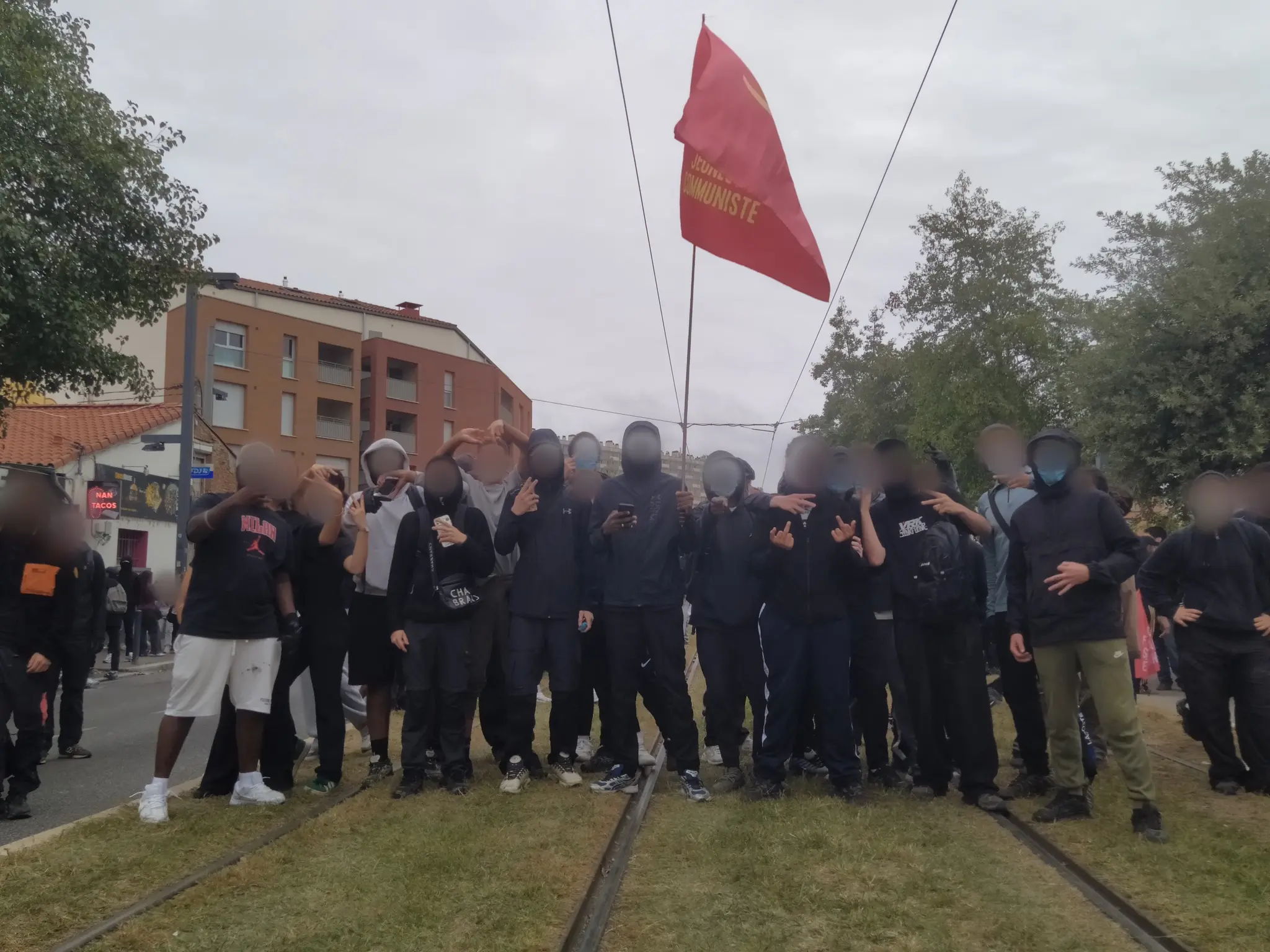
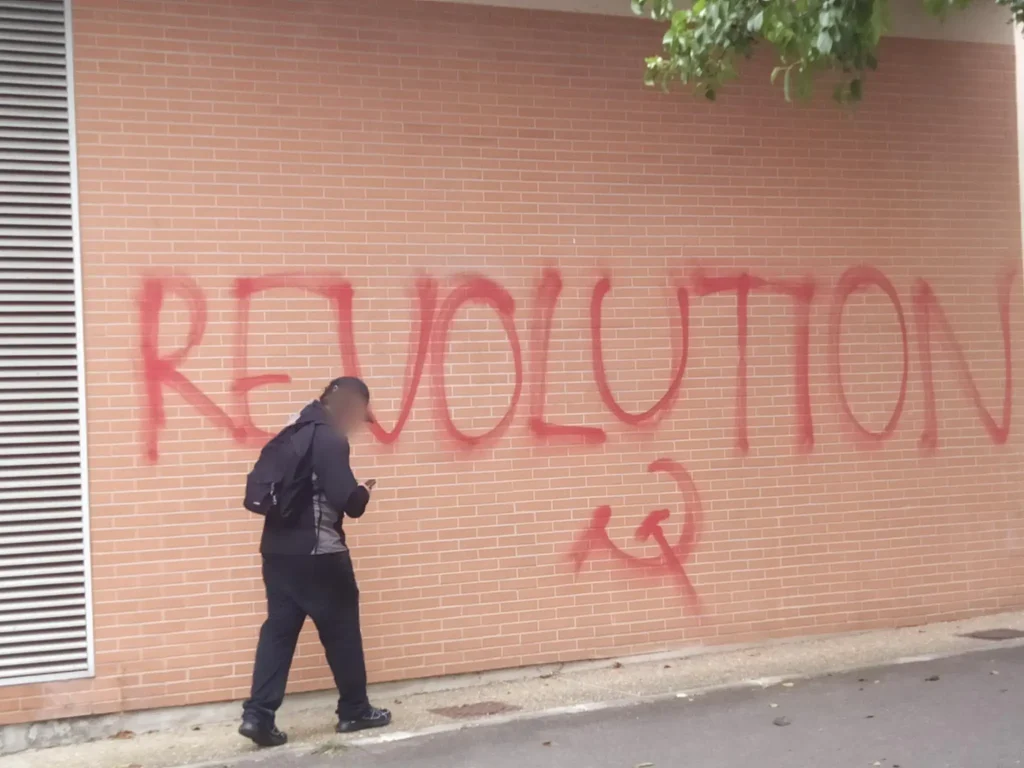
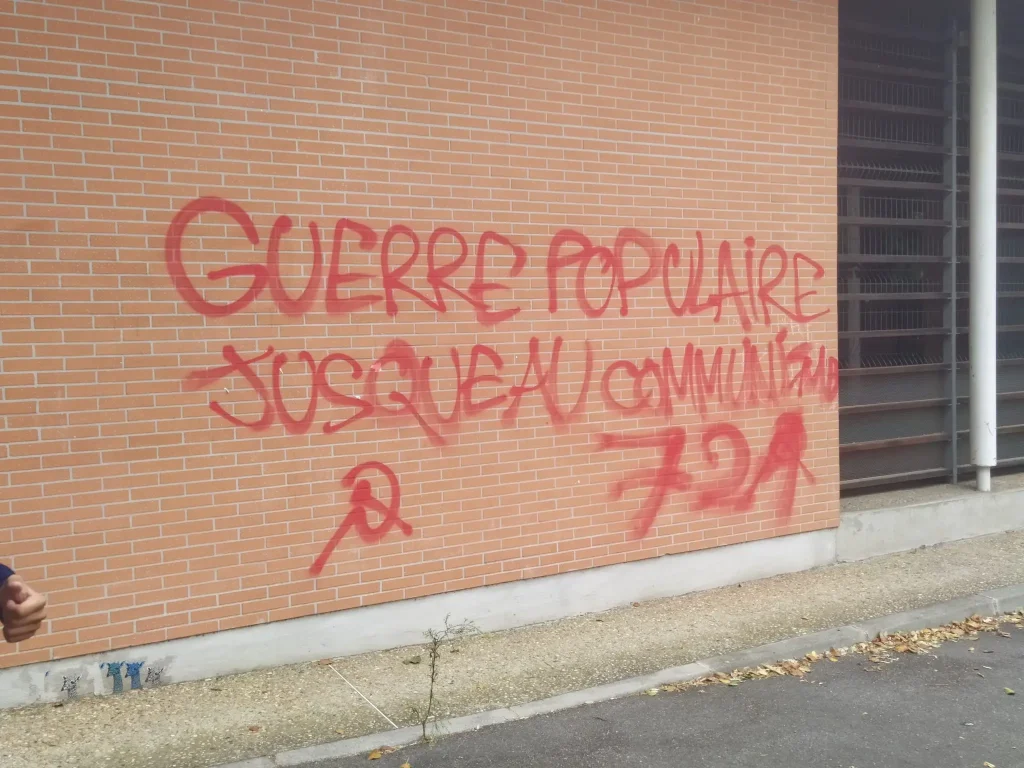
Later, at the call of young communists who had been present throughout the uprising, a group photo was taken with the proletarian youth gathered around a banner paying tribute to Comrade Basavaraj, a member of the Central Committee of the Communist Party of India (Maoist) who was assassinated in 2024 by the old Indian state. Chanting “People’s War until communism,” the high school students expressed their enthusiasm, then charged back in an attempt to return to the site of Déodat-de-Séverac.
The flag bearing the hammer and sickle was visible throughout the entire uprising on the 1st, hailed by some young people as “the flag of Liberation,” who did not hesitate to wave it and carry it on the front lines despite the CRS’s assaults.
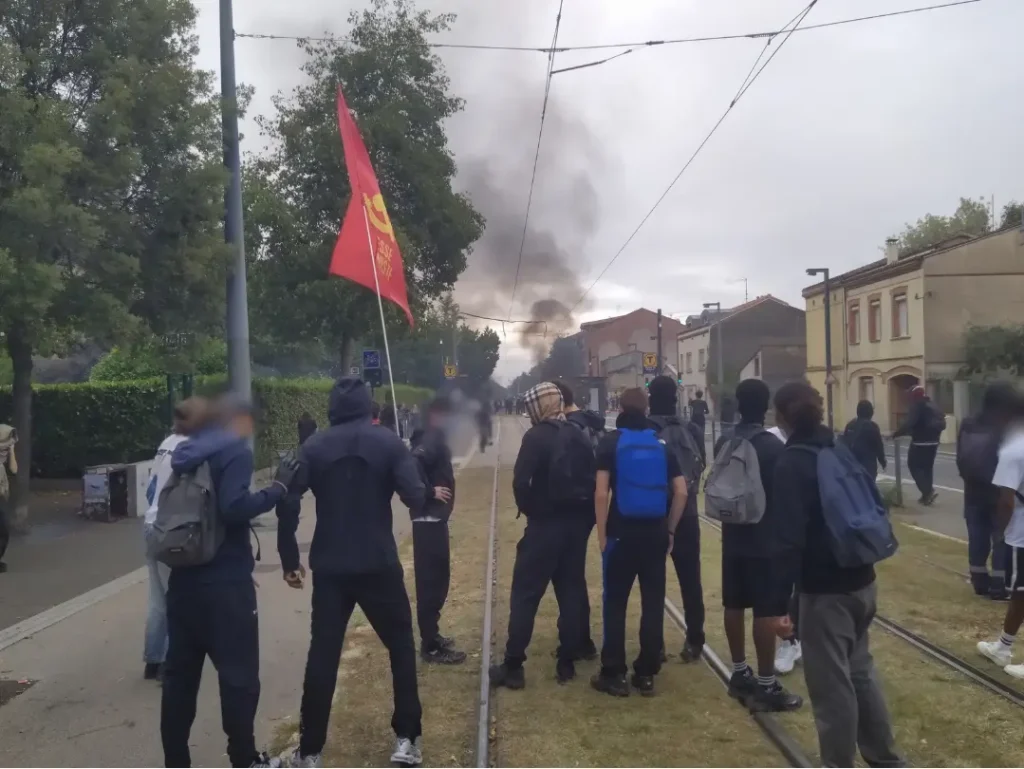
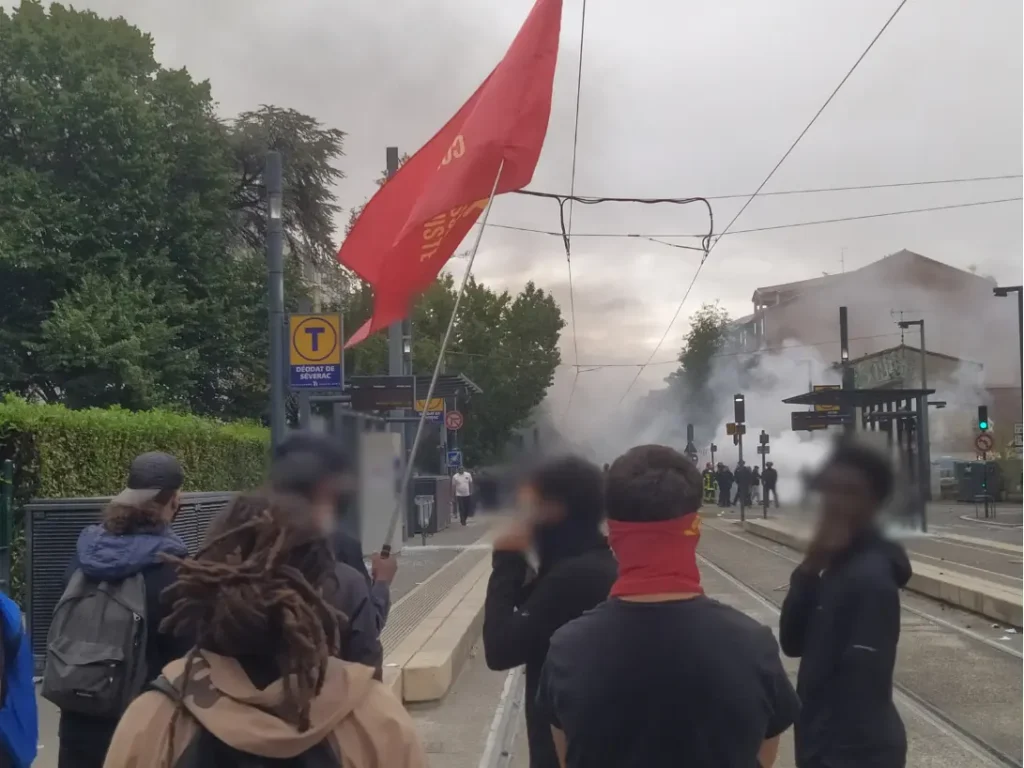
Back on the boulevard, the working-class youth continued the confrontation. During several charges, the CRS did not hesitate to fire flashball rounds at high school students, injuring several. Numerous young people were also struck on the head with batons for no reason before being pushed back without being arrested.
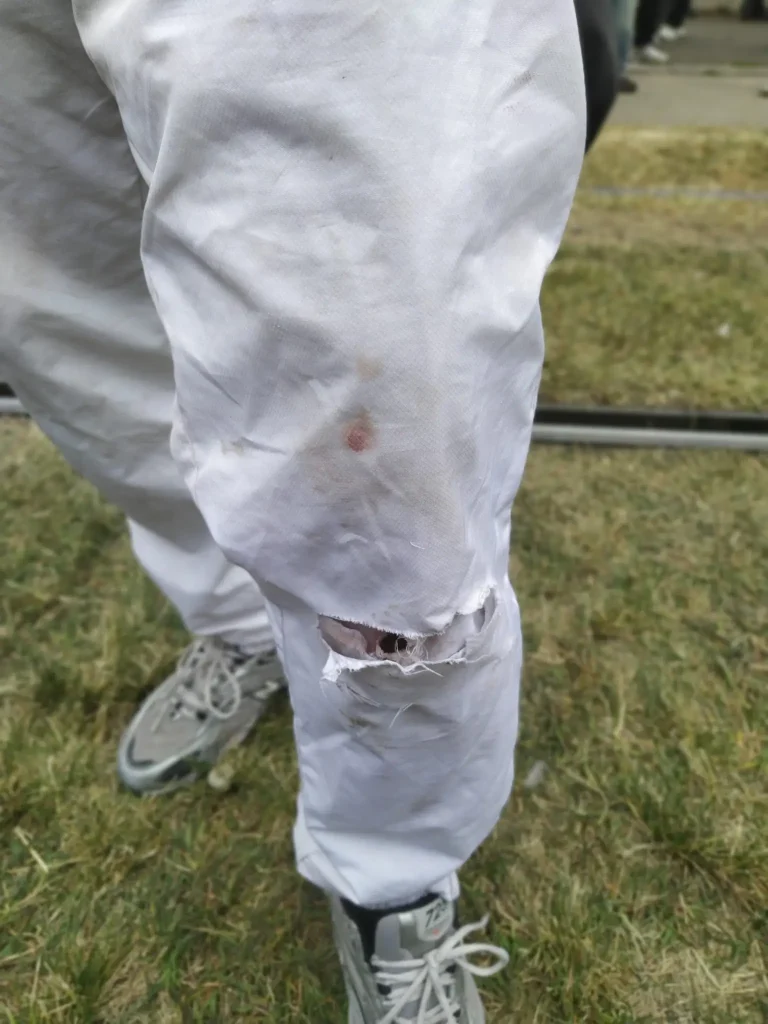
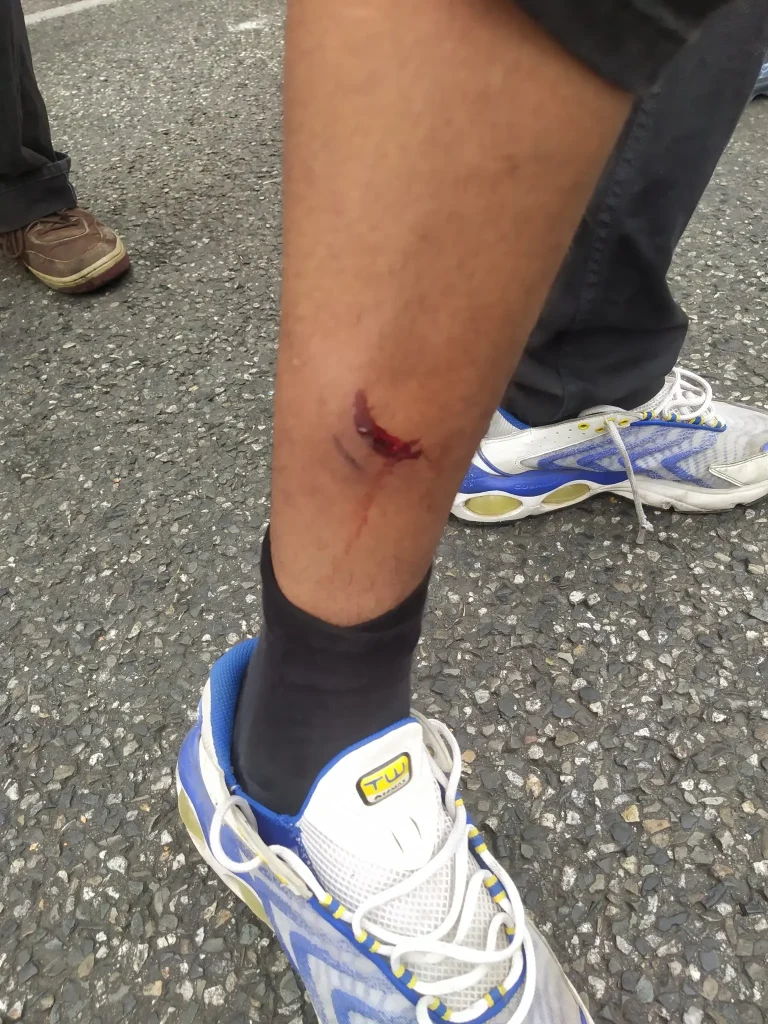
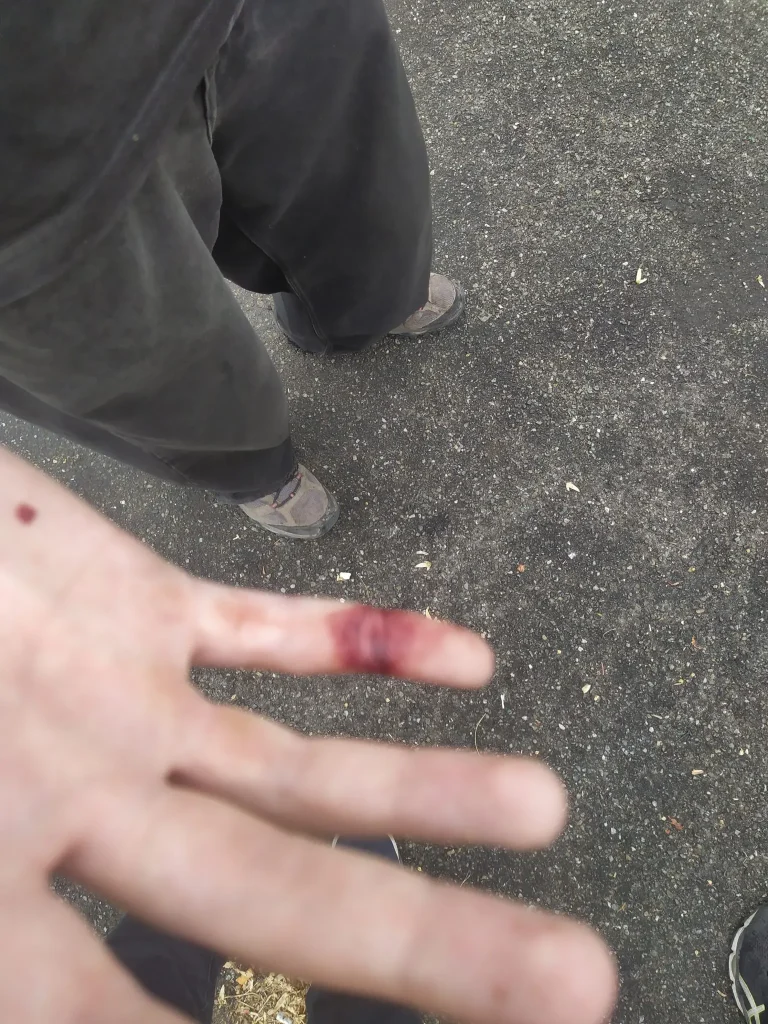
That wasn’t enough and actually fueled the anger of the high school students, who immediately headed back toward the school. After another hour of clashes—during which a female student was struck in the head by a baton and several LBD rounds were fired—the students evaded an attempt to box them in on the boulevard and eventually retreated. Driven back by the heavy police presence, the struggling working-class youth eventually dispersed on the outskirts of the Grand Mirail.
Contrary to what Sophie Ménard may claim in *La Dépêche*, the fighting spirit of the working-class youth is not the result of “rioters” who have “tagged along” with the movement, but is indeed an organic surge arising from the rebellious youth of Déodat-de-Séverac and Gallieni itself, exasperated by the brutality of the repression and galvanized by the realization that their numbers and unity were their strength in the face of a police force that viewed them as animals to be subdued.
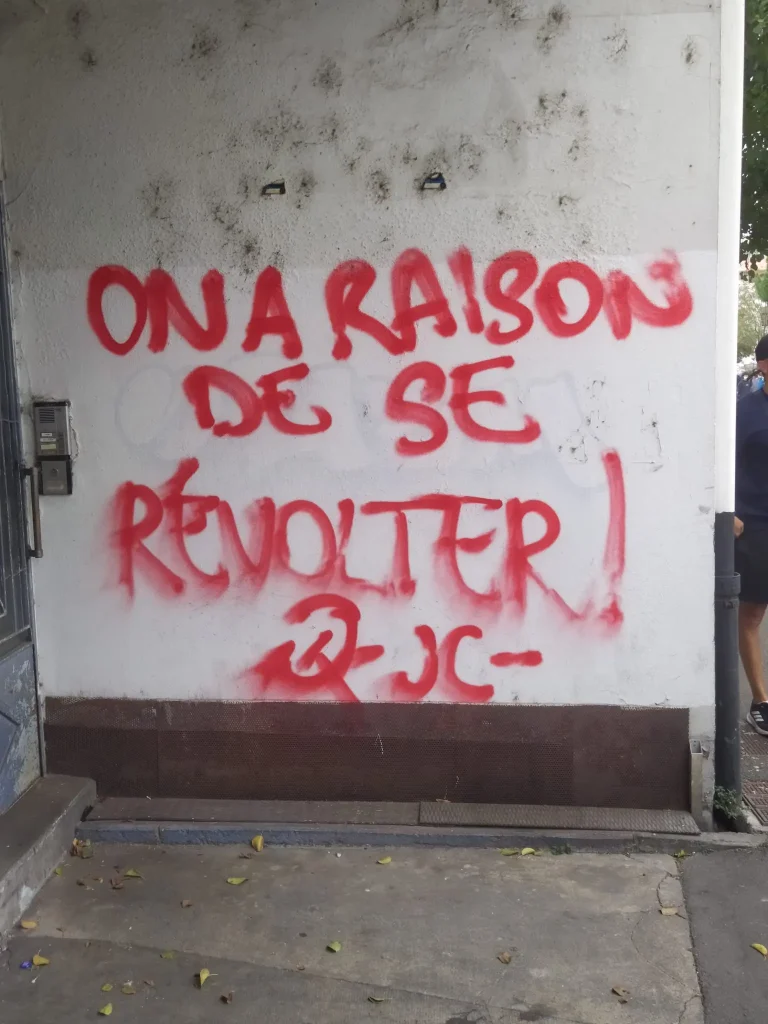
At the end of the day, a rally in support of those repressed was held in front of the Canal du Midi police station. Throughout the day on October 1st across the city, 57 people were arrested, 56 of whom were subsequently placed in police custody. These staggering figures are reminiscent of the Great Uprisings of June.
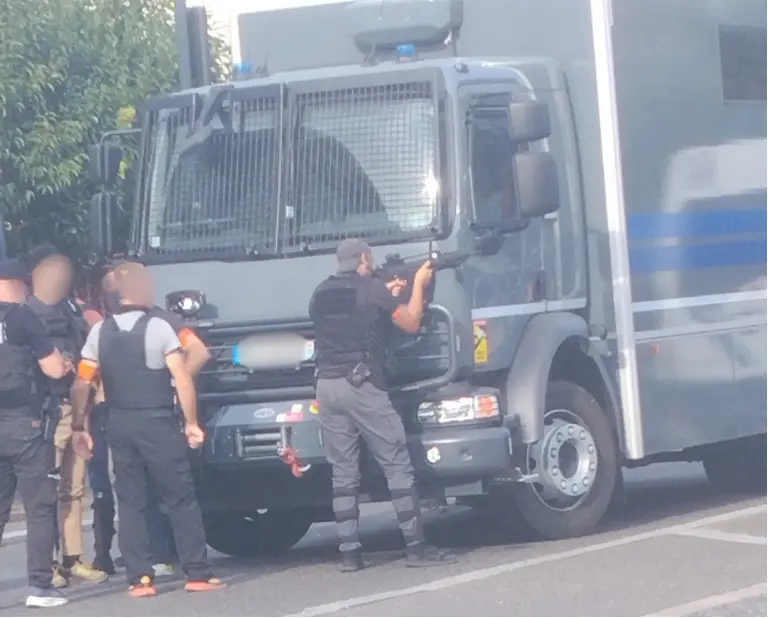
The next day, the state pulled out all the stops to drive this message home to the masses. As the only school in Toulouse not affected by the emergency closure measures, the high school students legitimately decided to continue the struggle. In the side streets as well as around the high school, this time it was not only the CRS but also the BAC and the CSI who were deployed. Near the high school, hooded BAC officers and heavily armed CRS faced off against a compact group of 200 rebellious youths, staring each other down like stone dogs. On both sides, identity checks and searches followed one after another, very often based on racial profiling. The high school students reported humiliating arrests.
In some places, the BAC was even seen armed with HK-G36 assault rifles—which are classified as military weapons—pointed at the high school students, while a police helicopter continuously flew overhead. Despite denials from the prefecture, the presence of these rifles is not unrelated to the mobilization of the Déodat high school students. The prefecture claims that the deployment of trucks carrying these assault rifles was linked to the presence of a deranged individual who had brandished a weapon from the window of his CROUS dorm room. According to eyewitness accounts from people on the scene, while the high school students were not the intended target, the person who displayed a weapon at his window (which later turned out to be a fake) had been drawn outside by the commotion caused by the police crackdown, which had cornered a small group of high school students below. The police’s provocations toward the protesting youth only added fuel to the fire, ramped up the tension, and directly led to this situation. It should also be noted that the speed with which these weapons were produced indicates that they were already present well before this
incident.
The deployment of a helicopter was reported by media outlets around the world and shocked the general public throughout the country. This helicopter flew not only over the high school but also over the entire surrounding area, including the Mirail neighborhood, for several hours. As a point of reference, one hour of flight time for a gendarmerie helicopter costs between 5,000 and 7,000 euros, depending on the model. To terrorize young people and further police the Mirail neighborhood—which is already subject to intense police presence—the state does not hesitate to waste tens of thousands of euros in public funds. Moreover, this helicopter was not only used for surveillance but also played a direct role in the crackdown, notably by using extremely loud sirens to disperse the protesters and by flying at very low altitude to blind the high school students with the dust kicked up by the rotors.
The police brutality, however, has not dampened the high school students’ resolve; they are determined to resume the movement once the weekend is over. The youth have seen before them a state that does not hesitate to deploy massive, quasi-military force to repress them rather than listen to their demands. They have seen its watchdogs take pride in blinding young people and take pleasure in inflicting suffering upon them. In Déodat-de-Séverac, the dividing line is now clearly drawn between the people and their enemies, but the high school students have also learned a great deal; day by day, they are seeing the true nature of the bourgeois state, and above all, they are realizing their own strength and the necessity of organizing themselves.