Latest News in the Struggle for Land in Brazil
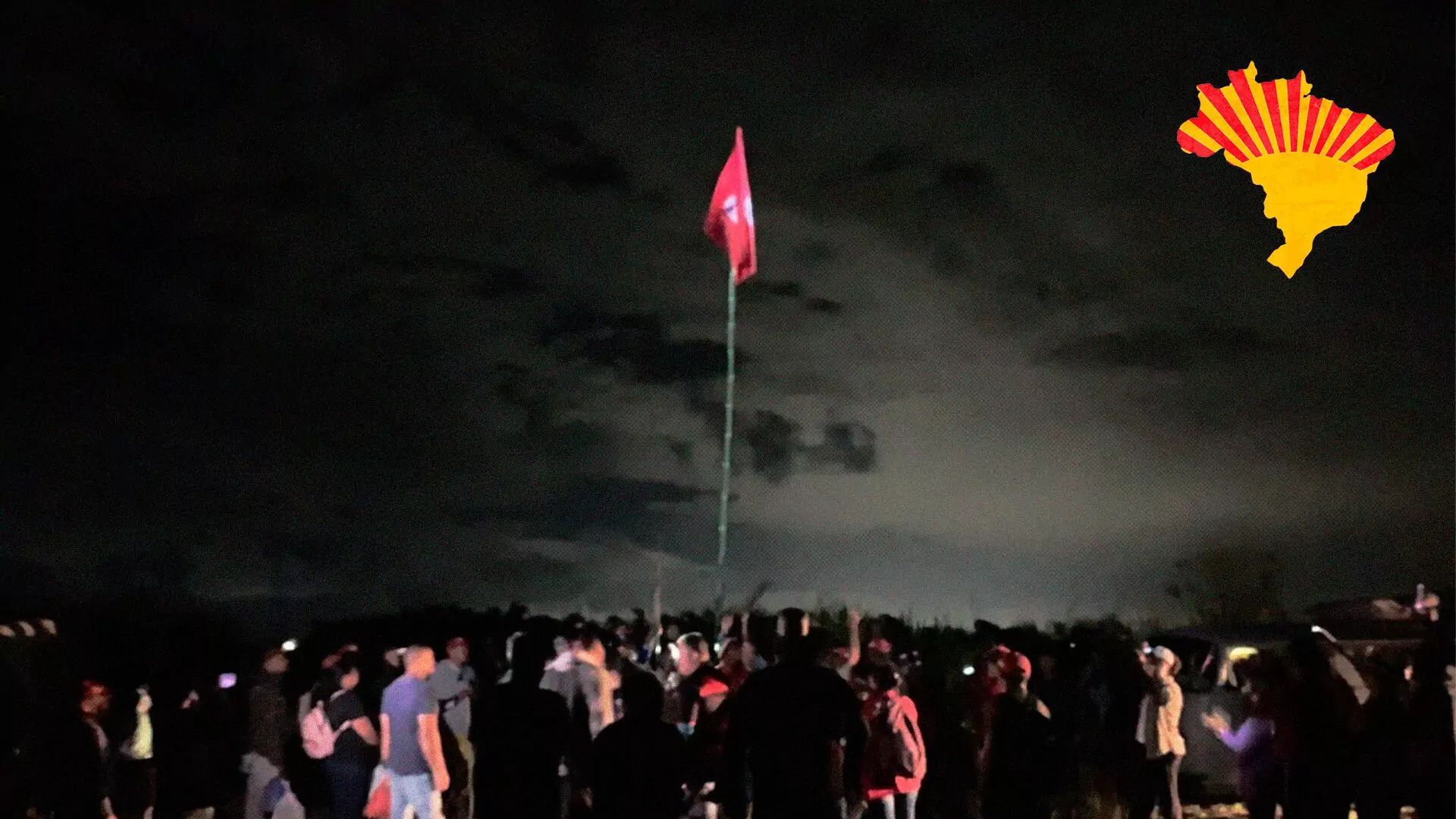
Featured image: Peasants mobilized during the struggle that resulted in the allocation of land from the João Santos Group to nearly 6,000 families in Maranhão and Paraíba. Source: A Nova Democracia
In its latest New Brazil Bulletin published on the 21st of July, covering the week of July 13th-19th, A Nova Democracia (AND) reports on the most recent struggles in the struggle for land in Brazil.
Maranhão and Paraíba: Allocation of land from the João Santos Group to nearly 6000 families
Due to growing tax-debts, an agreement of payment in the form of 28 properties have been agreed with the João Santos Group. The João Santos Group has concentrated land in the Lower Paraíba region as well as the Cerrado of Maranhão, and according to a leader of the Landless Workers’ Movement (MST), its actions in the region has caused deforestation, impoverishment and degradation of the areas.
The areas in question span a total area of 72,505 hectares, and will form 33 settlements – 31 in Maranhão and two in Paraíba. The areas are expected to benefit 5,792 peasant families.
At this point the peasant families are still waiting for the formalization of the land titles and for the bureaucratic process to run its course. The leader of the MST states that the allocation of the land represents a “great achievement for the history of the peasant struggle in the region, marked by long disputes over land.”
Amazonas: Indigenous people resist handing over the Madeira River to monopolies.
Local organizations have discovered 14 points planned for dredging on the Madeira River, double the number previously reported. Riverine settlements and indigenous people have denounced the program that intends to hand over the management of the Madeira, Tapajós, and Tocantins river waterways to private capital.
“The expansion of the waterways benefit mainly the transportation of soybeans produced in northern Mato Grosso and Rondônia,” AND reports. The dredging threatens to harm the people using the waters for fishing, drinking, production and transportation. Organizations monitoring the project state that “Our rivers are not commodities, they are life, culture, and future.”
Minas Gerais: Action denounces collapse imposed on the Tikmũ’ũn-Maxakali people
AND reports that the Federal Public Prosecutor’s Office has filed a lawsuit demanding structural changes in services provided to the Tikmũ’ũn-Maxakali people in Minas Gerais.
According to reports, prolonged contact with Brazilian society “did not produce integration; it produced structural dependence, systematic exploitation, and the progressive collapse of protection mechanisms.”
The lawsuit demands action to address the living conditions imposed on the Tikmũ’ũn-Maxakali people and acknowledges that the destruction of their means of protection is the result of decades of territorial expropriation, abandonment, and intervention by the agencies of the old State.