Turkey – Yeni Demokrasi: 95 Child Laborers Lost their Lives in Workplace Accidents in One Year
We hereby share an unofficial translation of an article published by Yeni Demokrasi on September 22.
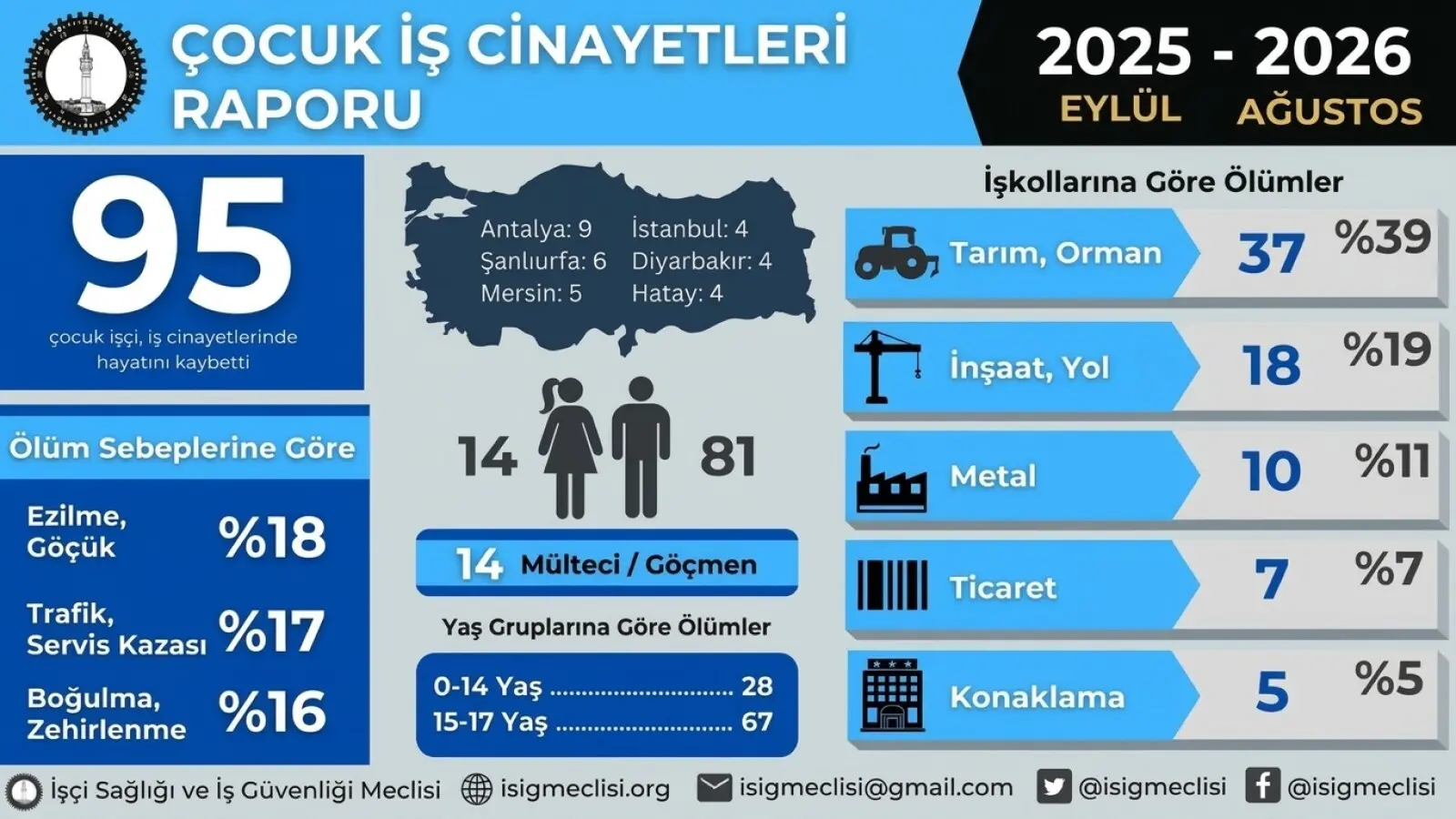
On the day of the school attack in Manisa, the Council for Occupational Health and Safety published its report on child labor fatalities for the 2025–2026 school year. According to the Council’s report, at least 95 children lost their lives while working during the 2025–2026 school year. This means that child labor deaths increased by 32 percent during this academic year compared to the previous one. During the 2023–2024 academic year, 66 child workers lost their lives, while 72 child workers lost their lives during the 2024–2025 academic year.
Over the past year, 37 children (25 workers and 12 farmers) lost their lives in workplace fatalities in the agricultural sector, 27 in the industrial sector, 18 in the construction sector, and 13 in the service sector. In relative terms, 39 percent of all child laborer deaths occurred in agriculture. Compared to the previous period (28 percent), the proportion of child laborer deaths in agriculture has increased. However, in the latest report on child labor fatalities covering the past 13 years, released in June, this rate averaged 52 percent. In other words, while the rate of child labor deaths in agriculture—which stood at around 65 percent during the period when the first reports were prepared (2013–2014)—remains the highest today, it has declined to 39 percent.
Of the children who lost their lives in workplace accidents:
- 28 were between the ages of 5 and 14, and 67 were between the ages of 15 and 17…
- 14 were girls (young women) and 81 were boys (young men)…
- 14 were refugees/migrants (11 from Syria, 2 from Afghanistan, and 1 from Iraq)…
- 9 deaths in Antalya; 6 deaths in Urfa; 5 deaths in Mersin; 4 deaths each in Diyarbakır, Hatay, Istanbul, Izmir, Maraş, and Kocaeli; 3 deaths each in Ağrı, Ankara, Bursa, Antep, and Manisa, among other cities…
- 37 children working in agriculture; 18 in construction; 10 in metalworking; 7 in retail; 5 in hospitality; and 3 each in food, chemicals, and cement, among other sectors, lost their lives while working.
All child workers aged 5–14 are unregistered; their numbers run into the hundreds of thousands, and the vast majority work in seasonal agriculture, on the streets, in textile, food, chemical, and metal workshops, and on construction sites. For the 15–17 age group, the primary workplace is no longer seasonal agriculture but cities (manufacturing, construction, and services). The Occupational Safety and Health Council (İSİG) points out that the main reason for this is the process of turning young people into workers, primarily through the MESEM program.