Colombia: Peasants from Aguas Blancas Share their Experiences of Struggle with Students from the University of Antioquia
We hereby share an unofficial translation of an article published by Nueva Democracia on the 5th of June.
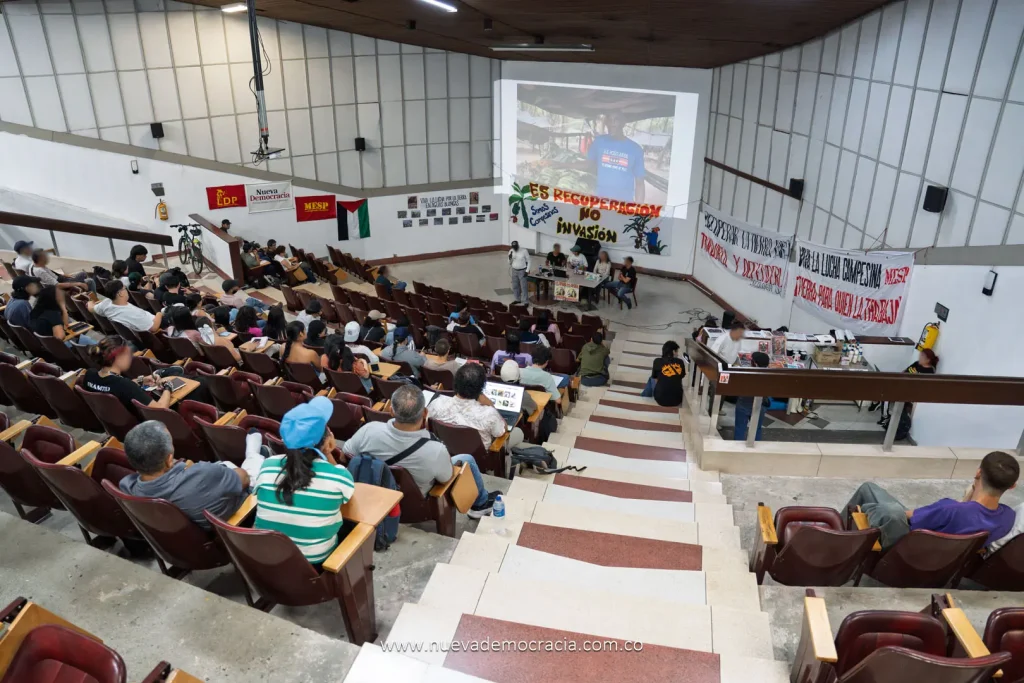
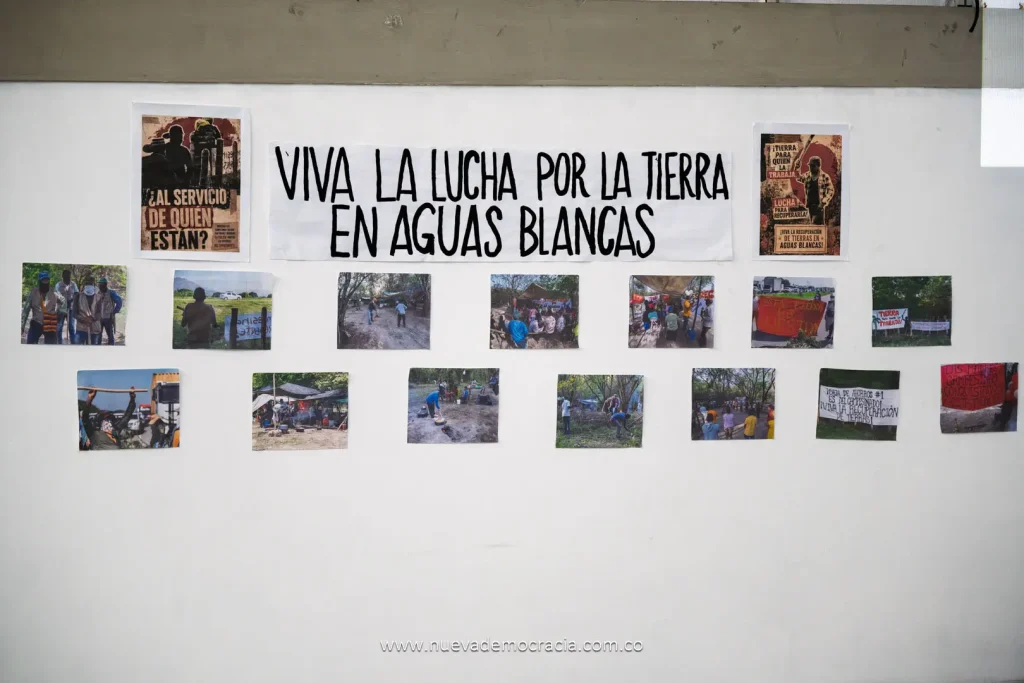
On June 4, an event was held at the University of Antioquia to raise awareness about the struggle for land in Aguas Blancas, Cesar.
We reported weeks ago that in the village of Valledupar, the “Caja de ahorros #1” property was recovered. The property had been owned by the convicted paramilitary Hugues Rodríguez and has been subject for decades to a slow and painstaking process of asset forfeiture aimed at providing inefficient reparations to the victims.
The event began with a brief introduction of the context, during which statistics on the land issue in the department of Cesar were presented. The comrades explained that in this district, a great amount of land is concentrated in the hands of just a few people. 10% of big landlords control more than 80% of the land, and the Gini index stands at 0,74 [Translators note: The Gini index is a measure of income inequality, with 0 indicating perfect equality (everyone has the same income) and 1 indicating perfect inequality (one person has all the income).]. The violence of the latifundium and paramilitaries against the peasants throughout the history of the region was also presented: massacres, displacement and all the forms of violations and insults against the peasant masses.
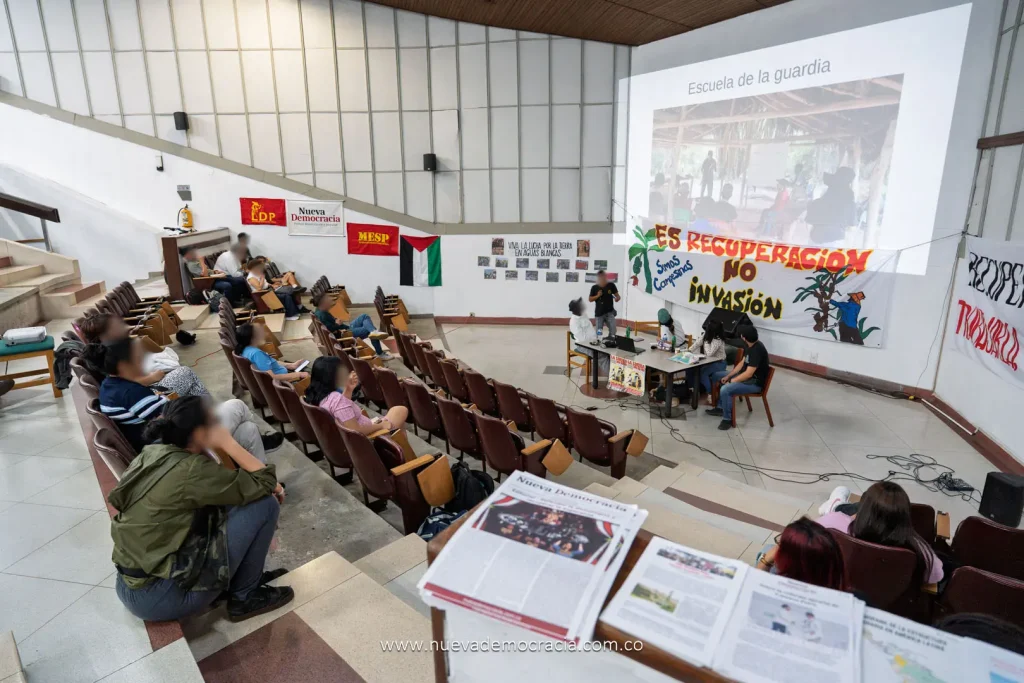
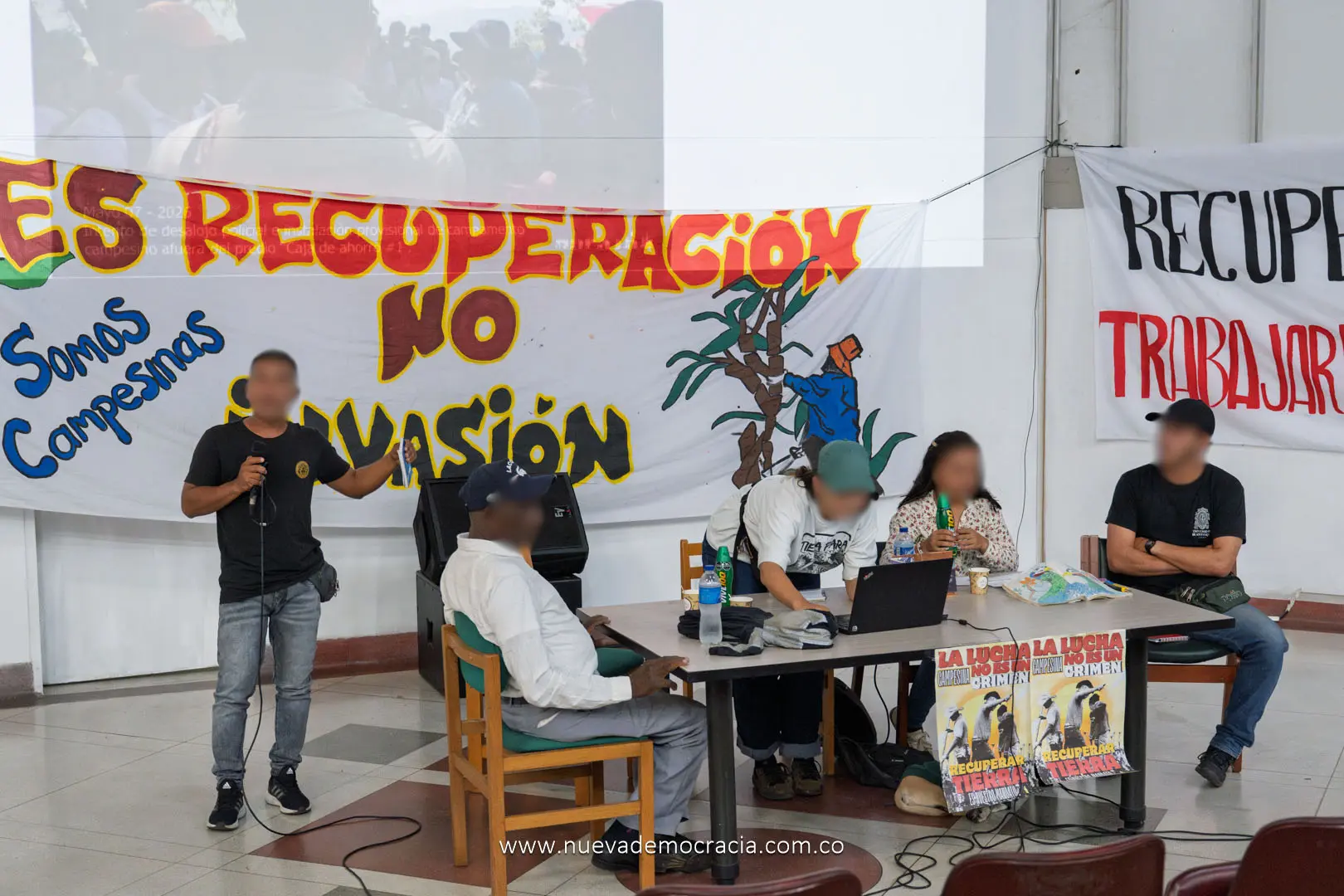
Three peasants were present at the event: A woman, a young man and an older man. All three recounted a bit of their life stories, testimonies which reveal in the past decades a reality of forced displacement, loss of their land and their families’ livelihoods.
For example, the young peasant explained that he and his family had been displaced as a child by paramilitary groups. “I’m now part of the Aguas Blancas peasant guard. The peasant guard exists to protect and defend the peasants. Our tools are slingshots, sticks, and machetes. […] Why is a guard necessary? If we don’t have a guard, when we occupy a piece of land, if we don’t look organized and prepared, then the police and the landlords will drive us out immediately.”
The peasant woman explained, with much emotion, the importance of the women and the struggle of the peasant women. “This isn’t a feeling of sadness; it’s a feeling of joy. My parents were peasants. The struggle of peasant women is very tough—we’re the first to get up and the last to go to bed. That means we work twice as hard: cooking, taking care of the children—I have two—and taking care of our husbands. That gives us strength.” […] “You have to cook for 100 people; that’s where machismo comes into play—they tell you that’s your job. But we also stand guard, we use the machete; we’re strong and brave. As women, nothing is too difficult for us, nothing is impossible; as peasant women, we can do anything.”
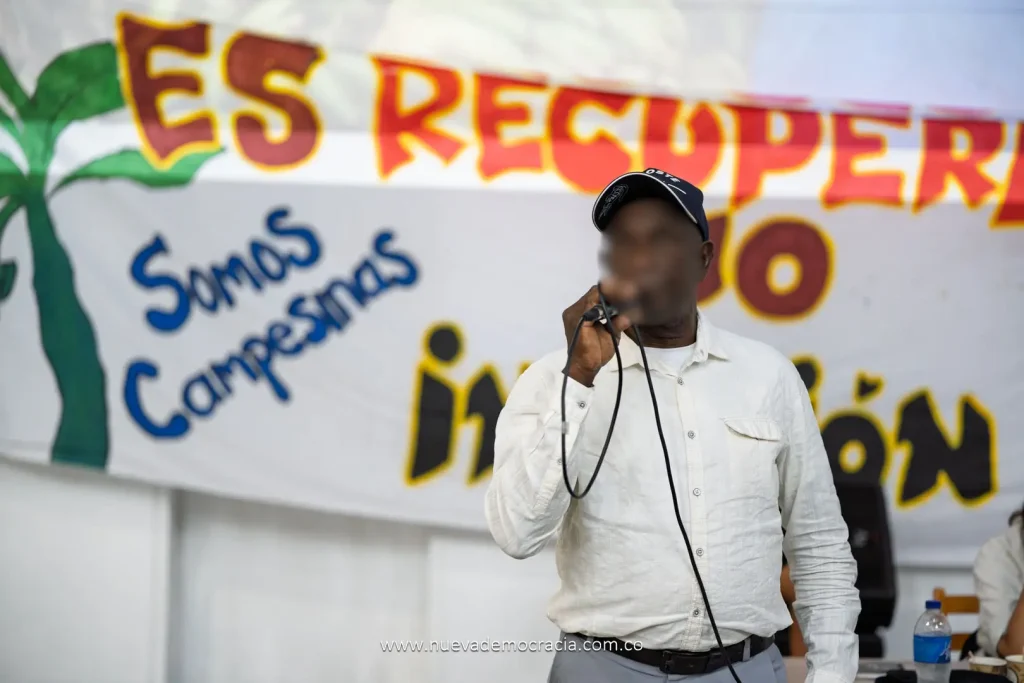
The older peasant invited the young people attending to support the struggle of the peasants, particularly the struggle in Aguas Blancas. He said that the land was distributed two days ago, and now every peasant family has its own plot of land. He however stated that “The struggle isn’t over. I say to everyone here: put your hand to your heart. We’re happy and grateful, but I repeat, please help us. […] Because what good is a piece of land if it isn’t sowed? What are we going to eat—dirt?” The comrade pointed out that, from now on, the struggle continues to put the reclaimed lands into production and establish farming practices there that will provide for families. Because, unlike the big landlords, who have land to hoard, what the peasants really want is to plant crops. “The land belongs to those who work it; if we don’t have anywhere to plant a crop, we have to go to the city to suffer and live in poverty,” said the peasant.
At the event, the farmers sold cookies and coastal-style whey to fund their trip. There was also a strong sense of solidarity among the audience, who enthusiastically chanted slogans and applauded the peasants’ efforts.