MPP: AGAINST THE REACTIONARY ELECTORAL FARCE (JUNE 7, 2026)
We hereby share an unofficial translation of a statement by Peru’s People’s Movement (MPP) published by the Association of New Democracy – Germany (Nuevo Peru) on the 5th of June.
Proletarians of all countries, unite!
AGAINST THE REACTIONARY ELECTION FARCE
JUNE 7, 2026
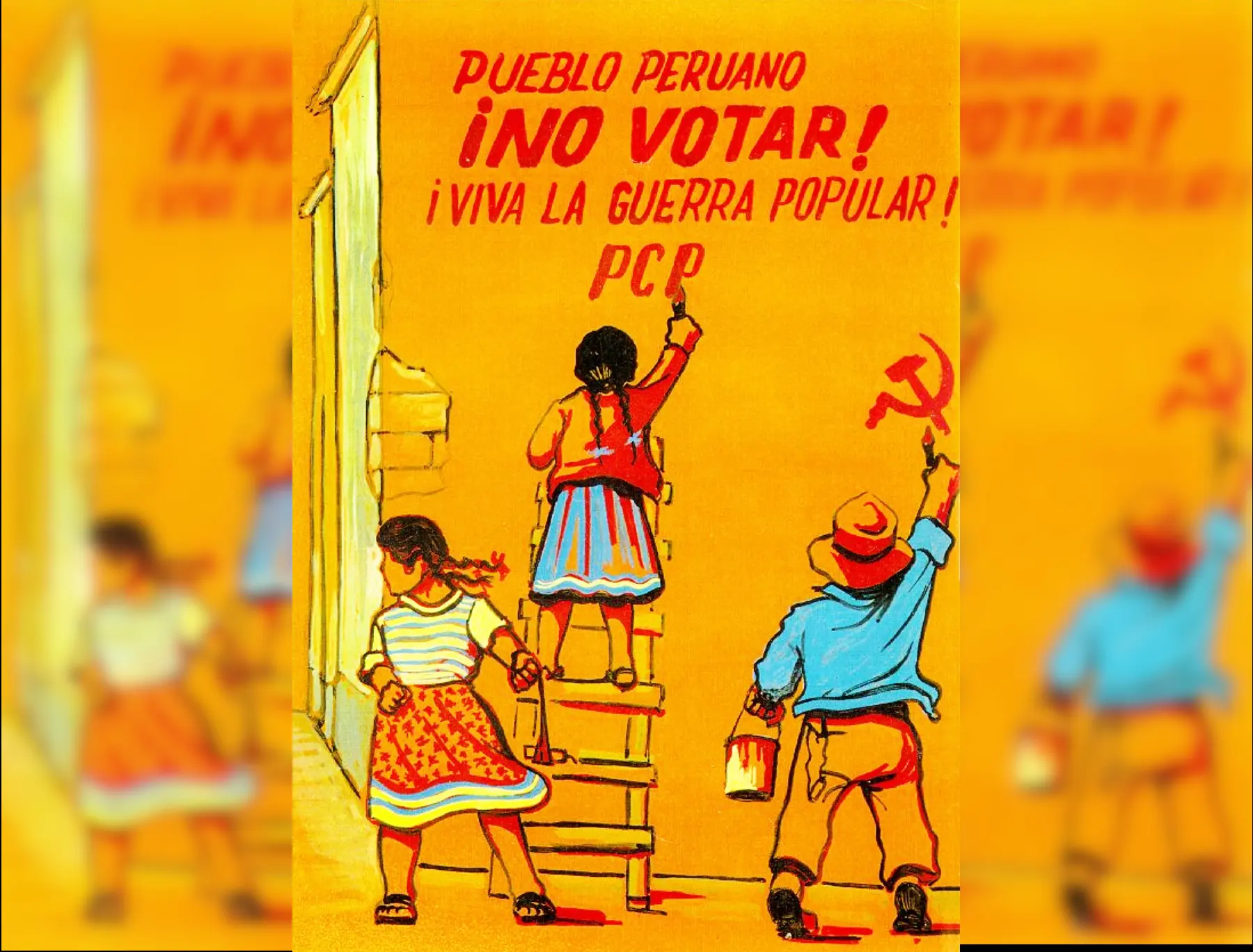
NO TO ELECTIONS! YES TO PEOPLE’S WAR!
I
Voting means endorsing the social system and electing yet another government that is even more oppressive, genocidal, and treasonous than the last.
Marx pointed out: “The oppressed are allowed to decide once every few years which members of the oppressor class are to represent them and crush them in Parliament!”
In Peru, elections are an instrument of domination for the big landlords and the big bourgeoisie to replace reactionary authorities, serving to preserve or develop the Peruvian state—a landlord-bureaucratic state, a formal republic, and the dictatorship of big landlords and the big bourgeoisie in the service of imperialism.
Elections have been, as could not be otherwise within the prevailing social order, an instrument in the hands of the comprador bourgeoisie and the bureaucratic bourgeoisie. This is the main feature of the electoral processes of the Peruvian State in the previous century and so far in the 21st century, and it is what has determined the class character of elections in the country.
The people can expect nothing good from Peru’s old semicolonial and semifeudal society, in which a bureaucratic capitalism operates in the service of imperialism—primarily U.S. imperialism—and the old State that represents and defends it.
The old society of exploitation and oppression, one of the most unequal in the world, cannot offer any real solution, much less one capable of satisfying the growing basic needs of the masses who are increasingly marginalized; it offers only more unemployment, longer working hours just to survive, lower wages and salaries, fewer rights, and greater cuts to hard-won gains and benefits. This will continue to worsen with the bleak economic outlook of Peru’s outdated society and greater exploitation and oppression for the people. It bears repeating: the economic base of the old society is semi-feudal and semi-colonial, upon which imperialism develops bureaucratic capitalism in its service.
On that economic foundation stand outdated and reactionary institutions that survive only by the force of inertia and the weapons that sustain them, spilling ever more of the incendiary blood of the unarmed, viciously oppressed people—people who, since May 17, 1980, have begun to cry out, “Enough!”—and who, with each passing day, believe less in the old State and expect less from the government. In conclusion, discredit, disorder, chaos, along with corruption and the most shameless cynicism, are eroding the landlord-bureaucratic State, for whose government two demagogues—K. Fujimori and R. Sánchez—are once again competing frivolously and gleefully, with verbal skirmishes and perhaps the occasional clash, their poorly concealed interests and unbridled ambitions laid bare.
Therefore, one must ask: what do the elections entail? Does the people need to go to the polls? Is it in the people’s interest to vote? Looking at Peru’s own experience, what revolutionary transformation has the people achieved through electoral votes or parliamentary activities? Every conquest has been wrested in practice by popular struggle, and it is on the basis of these results that laws recognizing them were enacted—only to be curtailed from the outset or subsequently subjected to a process of reduction or annulment; the development of labor legislation is sufficient proof. And the conquest of political rights has been the same. Clearly, all of this is separate from the conquest of power, for a revolutionary, power is conquered only through revolutionary violence, which in Peru is simply people’s war from the countryside to the city.
But let us also ask ourselves what benefits the people have actually gained from their participation in the Constituent Assembly and in general elections from 1980 to the present; as for the former, they served merely to restructure the reactionary Peruvian State; as for the latter, the rise of successive reactionary governments from Belaunde to Castillo, each more starvation-inducing, genocidal, and treasonous than its predecessor.
And what can the people, the masses, expect from participating in the 2026 general elections, now in their second round? Well, simply put: Voting means endorsing the social system and electing yet another government that starves the people, commits genocide, and betrays the nation! For this is dictated by the old State’s need to defend its outdated society against the development of the popular struggle and, above all, against the people’s war, which, despite the difficulties, must continue its invincible march to seize power throughout the country, bring the democratic revolution to a successful conclusion, and proceed uninterrupted with the socialist revolution.
The people cannot serve their exploiters and oppressors; they cannot help them solve their problems; they cannot endorse their social system, much less help elect another government worse than its predecessors; for that is not their path nor does it serve their own interests. The only thing to do today is NOT TO VOTE!; it is the only truly popular response to the elections of the reactionary State and its current fascist, genocidal, and traitorous regime, now headed by the reactionary puppet Balcazar.
Boycotting reactionary elections is a just and correct tactic that serves the people and the revolution!
II
THE REACTIONARY CAMP IS FACING SERIOUS PROBLEMS DUE TO THE FAILURE OF ITS REACTIONARY CANDIDATES IN THE FIRST ROUND; THAT IS WHY THE TRUE POPULAR RESPONSE TO THE SECOND ROUND OF THIS REACTIONARY FARCE IS:
DON’T VOTE!
Let’s look at the official data showing the failure of this reactionary farce:
According to the report on the results of the general elections held on April 12–13, 2026, issued by the National Office of Electoral Processes (ONPE) itself, the results are as follows:
Eligible voters: 27,325,432 (100%)
Total voters: 20,167,745 (73.806%)
Total abstentions: 7,157,687 (26.194%)
* Valid votes: 16,738,039 (56.8%)
** Votes cast: 20,167,745 73.806%
Blank votes: 2,372,895 11.766%
Invalid votes: 1,056,811 5.240%
*Total valid votes = Sum of votes received by political organizations.
** Total votes cast = Sum of votes received by political organizations + blank votes + invalid votes.
THE VOTE TOTALS FOR THE “WINNING” CANDIDATES
KEIKO SOFIA FUJIMORI HIGUCHI
FUERZA POPULAR
Number of votes: 2,877,678
17.192% of valid votes
14.269% of total votes cast
10.528% of the total registered electorate
ROBERTO HELBERT SANCHEZ PALOMINO
TOGETHER FOR PERU
Number of votes: 2,015,114
12.039% of valid votes
9.992% of votes cast
7.374% of the total registered voters
Total percentage of both candidates out of the 100% of the electoral roll = 17.902% (Keiko Fujimori’s votes + Roberto Sanchez’s votes)
The total number of votes obtained by all 36 candidates (ultimately 35 due to one death), in absolute and relative terms, was:
16,738,039 (56.8%) out of 27,325,432 eligible voters (100%)
The bare figures reveal the results of the electoral farce of April 12–13, 2026, intended to legitimize the turnover of officials in the old Peruvian State. The failure of the reactionary farce of the 2026 general elections marks the greatest crisis of the old and rotten Peruvian State and of the current fascist, genocidal, and traitorous regime established on April 5, 1992, with Fujimori’s so-called self-coup directed by the US CIA.
III
OUR ANALYSIS OF THE ELECTION RESULTS
1. The extremely low vote totals for the top two candidates stand out: neither Keiko Fujimori, the candidate of Fuerza Popular—founded by the fascist, genocidal, and traitorous Fujimori—nor Roberto Sánchez, the candidate of the Juntos por el Perú coalition—founded by former APRA Prime Minister Jehude Simons—even reached 15% of the votes cast; far, then, from the 50% plus one vote required by the constitution to assume the presidency.
2. As in the 2011, 2016, and 2021 elections, there will be a runoff presented as a choice between Fujimorism and anti-Fujimorism; but in reality, it is between Keiko Fujimori of FP, who represents the comprador faction of the big bourgeoisie in this new electoral farce, on the one hand, and Roberto Sánchez, who represents the bureaucratic faction of the big bourgeoisie, on the other.
3. It is also very clear that voter abstention, in both absolute and relative terms, was very similar to that of the 2021 elections, reflecting a spontaneous rejection of the reactionary elections and the institutions and representatives of the old State. The number of abstentions was 7,157,687, or 26.194% of eligible voters; the candidate who received the most votes in April, K. Fujimori, received 2,877,678 votes, approximately 10.528% of the total electorate; there lies the much-celebrated victory of Keiko or, even worse, of Roberto Sánchez, who came in second place among the losers of this reactionary electoral contest. Sánchez, who champions the program of the bureaucratic faction, has borrowed Pedro Castillo’s campaign hat and presents himself as the political heir to “Castillism”—that is, to the opportunistic, counterrevolutionary vigilante Pedro Castillo.
4. In this second round of the reactionary farce, Sánchez is presenting himself as “the lesser evil” in an attempt to weather the widespread rejection of the old State—its civil, military, and ecclesiastical institutions, as well as its parties and representatives—which is reflected in the cold but eloquent election results.
5. We must make it clear that we reject, condemn, and brand the rats of the revisionist and capitulationist right-wing opportunist line (LOD), who in the first round called for “spoiled ballots” and “voting against the electoral farce” in an attempt to legitimize the reactionary elections through higher voter turnout; while, on the other hand, it fielded candidates on some electoral slates of the various reactionary parties. Now, the LOD is trying to make a comeback with a few little “Don’t Vote!” signs, while negotiating its support for Sánchez’s JPP.
6. If we add up all the opportunists, revisionists, and reactionaries who champion the program of the bureaucratic faction of the big bourgeoisie, they together do not even account for 15% of the valid votes. In other words, all of these groups—who, in collusion and rivalry, are championing the bureaucratic faction’s platform in the 2026 General Elections—have been crushed by the very ballot boxes they so adore; now, even when added together, they do not reach the percentage of non-voters—what a great triumph they can boast of. For their part, the representatives of the comprador faction have suffered one of their worst electoral defeats; with Keiko, López Aliaga, and others, together they are far from reaching Keiko’s 39% in the first round of 2016.
7. The role of Juntos por el Perú (JPP), as the leader of the bureaucratic faction in the presidential and legislative elections through its propaganda, electoral disguise, candidate quotas, and offer of perks, serves parliamentary cretinism, revisionism, opportunism, and the betrayal of the working class and the people. That is why it tends to drag along all the opportunists, revisionists, and sellouts, starting with the rats of the LOD.
8. The fragmentation of the vote and a lack of clarity characterize the April 2026 general election; the runoff election presents itself as the most sinister farce to manipulate the masses, both by representatives of the comprador faction and the bureaucratic faction of the big bourgeoisie, serving the same goal of trying to drag the masses into designating a new President “anointed by a majority of votes” (“legitimized”). Both candidates and the mainstream media, aware of the masses’ rejection of the elections, reactionary politicians, and parties demonstrated in the first round, resort to instilling fear by agitating the threat of the “worst of evils” that the opponent’s victory would cause, in order to call for a vote for their candidacy as the “lesser evil.”
9. The reactionary forces and imperialism need “legitimate” authorities as they face further collapse in order to continue carrying out their genocide against the people’s struggle and their “low-intensity war” aimed at annihilating the PCP and the people’s war, and to thwart the Party’s general reorganization in and for the people’s war.
10. Furthermore, whoever is elected in the second round will not have a majority in parliament—neither in the Senate nor in the Chamber of Deputies—and, given the fragmentation of seats, there will be even more intense collusion and strife among groups and factions of exploiters vying for circumstantial or “ad hoc” majorities. The rot that is eating away at that entire old State will worsen; its bicameral parliament will consist not of party caucuses but of individuals, each of whom represents only themselves in the vast majority of cases.
11. The conflict between the new president of the landlord-bureaucratic State—which serves imperialism, primarily U.S. imperialism—and the legislature is thus inevitable and will be resolved through a filibuster in the Senate, which cannot be dissolved.
12. The Senate is constitutionally the key institution in determining the president’s fate; the April results give Fuerza Popular a majority, making it the leading force in the Senate with 22 seats. But it does not have an absolute majority, which will require constant negotiations with other caucuses. Juntos por el Perú is the second-largest force, “while groups such as Renovación Popular and the Partido del Buen Gobierno position themselves as key players in governance.” “With 60 senators and multiple forces vying for influence, the real challenge will be building consensus.” (The quotes are from journalistic commentary.)
That is why imperialism and reaction require the restructuring of the old State, and that is why the struggle between new “reforms” and a “new” constitution will continue. The rats of the LOD, as servants of the old State, raise their slogan of a “new constitution” in an attempt to save the old State, crush the struggle of the masses, and prevent their new incorporation into the people’s war.
In conclusion, everything indicates that the Peruvian state has become increasingly weakened at its foundations and will have to rely more and more on its armed and repressive forces; and it will become clearer to the people that the armed forces are the backbone of the state, that this state is nothing more than organized violence designed to perpetuate the enslavement of the Peruvian people, and that it deserves nothing less than to be swept away.
No to elections! Yes to people’s war!
Boycotting reactionary elections is a just and correct tactic that serves the people and the revolution!
Peru People’s Movement
June 2026