Political Instability Rules Manipur
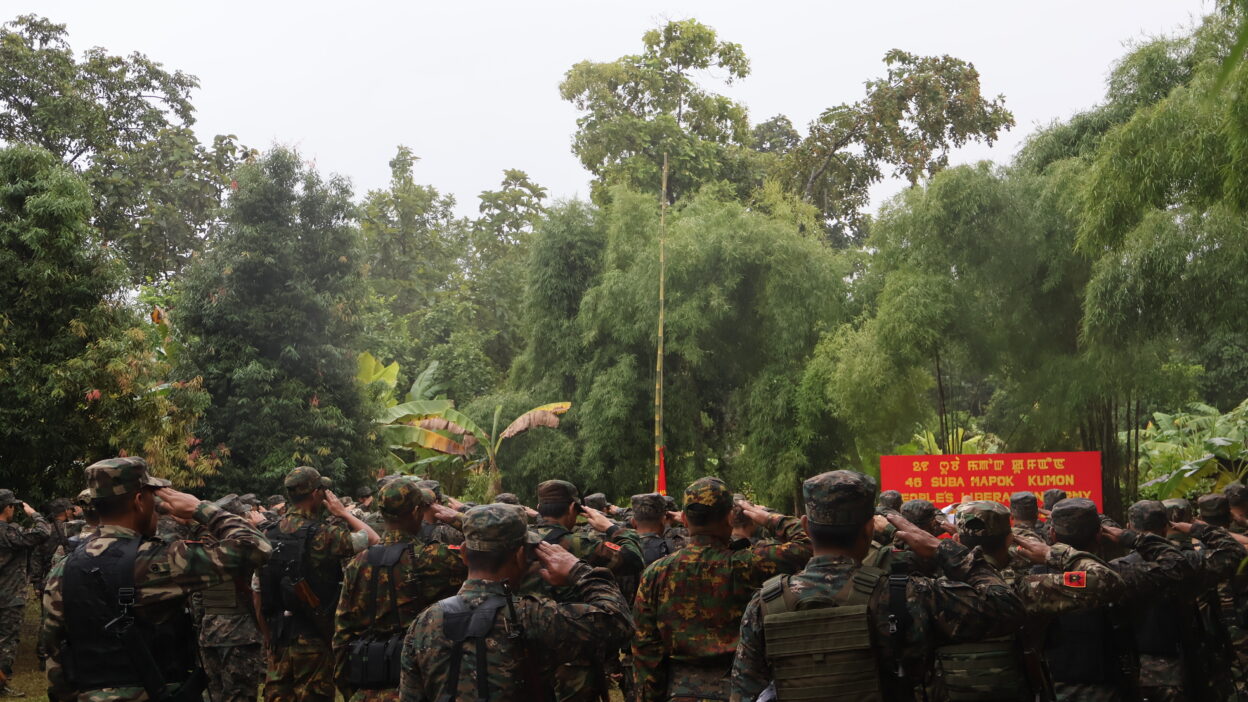
Featured image: People’s Liberation Army (PLA) troops gather. Source: PLA’s website.
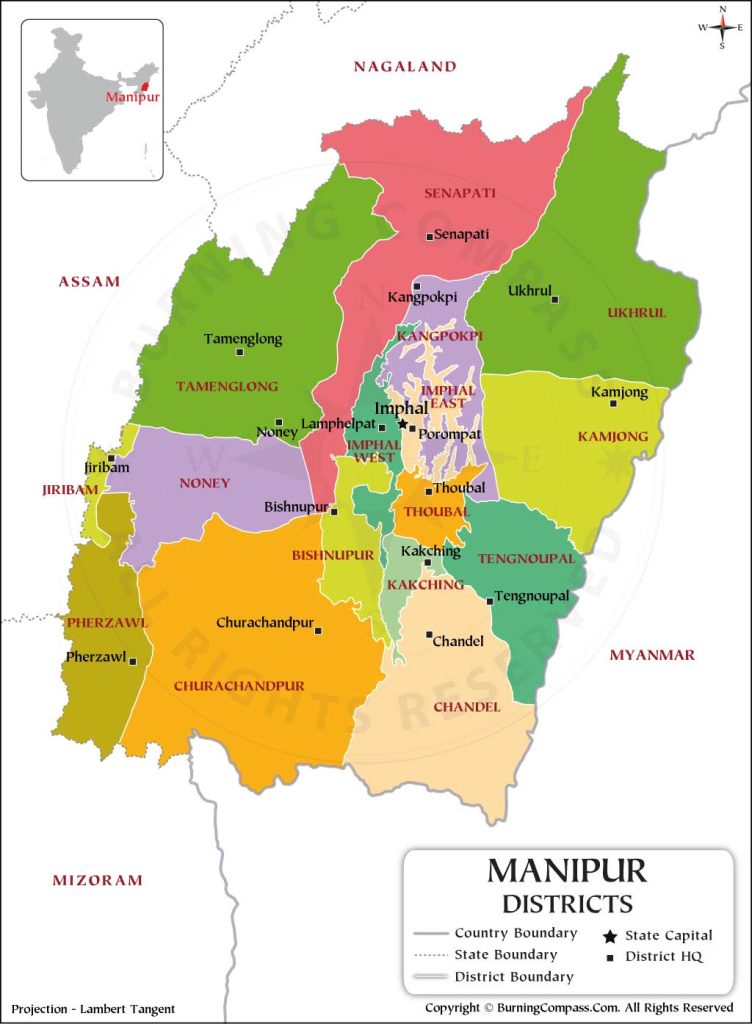
Over the recent months tensions have again escalated in Manipur. The peoples of Manipur have expressed their hatred against the old Indian State and its repressive forces: on the 6th of July two Assam Rifles paramilitaries were eliminated in an ambush in the Ukhrul district. Constant armed clashes are taking place. On April of this year, a rocket attack took place in the district of Bishnupur, where two children were killed and their mother was injured. Six Naga men in Manipur went missing on May 13th, and the bodies were recovered by security forces on June 9th and 10th. Two Kuki peasants were killed and several houses were torched on Thursday, 11th of June.
Additionally there are widespread blockades in Manipur. Reports indicate that “in several districts of Manipur, particularly Kangpokpi, are facing severe disruptions in the supply of food, fuel, and essential commodities due to ongoing economic blockades imposed by tribal organizations.” These organizations are blockading highways that are key for the supplies in the region and the old Indian State has been unable to clear the roads.
Such developments have been completely normal in Manipur in recent years. From time to time, the old Indian State will claim that everything has returned to normalcy due to a decrease in armed actions, however, the unrest soon returns, and can last weeks or even months, and includes blockades of highways, protests and armed actions.
Local and foreign analysts underline that the policy of the Indian ruling classes in Manipur has been a failure: Despite attempts by the old Indian State to apply the tactic of signing ceasefires with the armed groups – in order to afterwards drive them into liquidating their activities – in Manipur this has “proved to be counterproductive”, as around 10,000 overground militants are estimated to be active in Manipur. The political crisis of Manipur is labeled also by regional media as “Modi’s biggest failure”.
The situation in Manipur is not new, but has roots in the history of the region and the struggle against the Indian ruling classes and their local henchmen in Manipur – which has been taking place for decades.
Origin of the political instability in Manipur
The origin of the conflict in Manipur has its roots in the end of the 19th century, when the independent kingdom of Manipur was defeated and subjected by the British government in 1891. Between 1947 and 1949 Manipur was annexed into the newly formed Indian State, being governed directly by Delhi without granting any type of autonomy to the territory. In 1972 the State of Manipur was formed within India. From 1992 until 1997 there was a war between the Kuki and Naga peoples and their guerrillas. For a more detailed analysis of the origin of the current situation, and a more in depth description of the parties involved, we recommend you to read the following article we wrote:
The current phase of the conflict of Manipur started on the 3rd of May of 2023, when the All Tribal Students Union of Manipur (ATSUM) conveyed a mobilization in protest for the inclusion of the Meitei in the list of Scheduled Tribes, which enable Meiteis to legally expel the Kuki and Naga peasantry from their lands. Therefore it is very clear that the main question of the current clashes in Manipur is the question of land. Historically the local ruling classes were part of the Meitei people. Currently there is the Indian bureaucratic capitalist class and the big landlords, who have collaborators among the Meitei people and are interested in stealing the lands of the peasantry. The local ruling classes live mainly in the Valley, around the capital, Imphal. On the other hand there is the peasantry, which gathers part of the Meitei, and most of the Kuki and Naga peoples, who live in the Hills and resist the attacks. The internal contradictions, even among the peasantry, are sharpened due to the policy of the ruling classes to put masses against the masses. There are also increasing numbers of politicians and groups belonging to the Kuki and Naga groups that are joining the ranks of collaboration.
You can read a general description of the situation in Manipur in previous analytical articles that we wrote:
The current situation in Manipur
Despite the old Indian State’s claims that the situation in Manipur has returned to normalcy, the struggle continues, as on a near weekly basis one can find reports of armed clashes in the region between different groups, parties, organizations, and tribes against the paramilitary and army of the old Indian State. A tendency can be seen of the armed clashes increasing in the sense of scale, with frequent reports1 of heavier weapons and explosives being deployed against the old State, monopolies operating in the region, or other armed groups and civilians.
According to incomplete data compiled by agencies of the old Indian State, 44 people, including 17 militants, 26 civilians, and one member of the security forces have already been killed in 21 clashes involving armed movements in Manipur in 2026 (data as of July 5th, 2026). These numbers indicate a downwards trend in armed clashes, down from the 58 recorded deaths in 2025, and 87 in 2024, but they go directly against the State narrative and claims of the situation having returned to normalcy. On the other hand, it must be noted that such figures are given by the old Indian State, which is well-known by hiding its casualties, increasing the casualties of its enemies, and making triumphalist statements. Therefore, these numbers most likely are quite different in reality.
To address this crisis, the old Indian State resorts to increasing repression. There have been numerous denouncements of police abuses, raids, arrests and murders of civilians, tactics used by the old Indian State in its war on the people in Central and East India in the genocidal Operation Kagaar, despite and in the face of the heavy repression carried out against the various armed movements in the region, resistance continues to be waged against the old State, as with the movements coordinated under the Coordinating Committee of Armed Movements (CorCom).
Manipur also has its own Marxist-Leninist-Maoist Communist Party, and since the split from the Communist Party of Manipur (KCP) and its formation in 2011, the Maoist Communist Party of Manipur (MCPM) has been waging, through its armed wing the ‘New People’s Militia’, armed struggle for the foundation of a “People’s Republic of Manipur as a united front of classes based on the alliance of the working class and peasantry led by its Communist Party.” Committed to the path of the New Democratic revolution, MCPM aims to liquidate the semi-feudal property, confiscating it for the peasantry, applying the principle of “land to those who work on it.” After the announcement of its foundation, the news was saluted by the Communist Party of India (Maoist).
One of the most active armed movements in Manipur is the People’s Liberation Army of Manipur (PLA or PLAM), with frequent reports in press media of clashes with the forces of the old Indian State. The PLA describes their ideological position as adhering to Marxism-Leninism-Mao Tsetung Thought, and are fighting for the unification and national liberation of the sovereign State of Manipur. Some of their actions include ambushes of paramilitary forces such as the Assam Rifles, and boycotts coordinated by CorCom, of which they are a member, such as the boycott of Republic Day this January 2026, and a boycott/shutdown in September of 2025 against the State visit of Modi. The PLA recently announced an alliance with the United Liberation Front of Assam and the National Socialist Council of Nagalim, two influential and active armed national liberation movements of neighboring states in the ‘Seven sisters’ region. Reactionary press mostly refer to these actions as carried out by “miscreants”, but one can also conclude – based on the sheer amount of reports2 on arrests, seizures of weapons, and armed actions carried out by “miscreants” – that most of the actions are in fact organized within one of the many armed movements in the region, and not some spontaneous act of violence as it is made out to be.
Another factor influencing the development of the armed struggles of the region is the reactionary old State of India’s ‘Armed Forces (Special Powers) Act’ (AFSPA), essentially subjecting Manipur, along with other neighboring states, into an effective military state of emergency. This policy allows paramilitary groups operating on behalf of the old Indian State, such as the Assam Rifles, to reign freely in their implementation of reactionary BJP measures on the peoples of Manipur. The recent expansion and extension of this act in Manipur is yet another indication of the old State of India’s inability to contain the just armed resistance of the peoples. The role of the old Indian State’s repressive forces in Manipur has sparked the outrage of the masses, which commonly organize protests against their presence in the region.
In 2025, the sitting BJP Chief Minister N. Biren Singh resigned among widespread criticism for the handling of the outbreak of the Manipur clashes, leading to President’s rule being imposed in the State of Manipur for a year – centralizing the state’s internal rule and the control of security in the region directly into the hand of the central government – with the BJP Yumnam Khemchand Singh taking over as Chief Minister in February of 2026.
In 2026, attempts have been made by the old State of India at consolidating its power in the region through the stitching together of yet another political arrangement between its 28 Meitei, six Kuki, and two Naga MLA’s (Note: Members of the Legislative Assembly), after the brief period of President’s rule in the region. Replacing the previously resigned N. Biren Singh with Yumnam Khemchand Singh as chief minister, and as deputy chief minister a second-time BJP MLA and wife of the leader of the Kuki armed group ‘Kuki National Front-President’ (KNF-P), Nemcha Kipgen. Another BJP collaborator, Losii Dikho from the Naga People’s Front was appointed as the second chief deputy.
These political arrangements had been preceded by quiet negotiations between the BJP government and powerful groups in the region, including the United People’s Front (UPF) and the Kuki National Organisation (KNO), who in 2025 handed over a 17-page document to the Union Ministry of Home Affairs, containing a proposal for the carving out of a part of Manipur territory under the rule of the old State, with its own legislature and command over all the areas and isolated pockets across Manipur where Kuki-Zo people live. This would also include Kuki-Zo settlements where Naga, Bengali and Meitei people are in the majority.
While the proposal has not been codified yet, the fact that the BJP government has not publicly rejected the proposal has caused contradictions between the different groups of the region to sharpen, with armed clashes between Naga and Kuki armed groups and tribes escalating. In response, armed groups have publicly denounced Modi and the BJP government, and accused them of using Kuki armed groups to kill Naga people. These appointments and negotiations are part of the old Indian State’s policy of trying to divide the resistance, co-opting part of the Kuki and Naga movements, and putting the masses against the masses.
Some Conclusions
The continued existence of armed groups, particularly along the India-Myanmar border and in areas disputed by various peoples, makes it clear that the old Indian State has failed in its attempt to stabilize Manipur. What happens in this region is similar to some extent with the general situation in South Asia, which, as we reported, is explosive, with a clear inability of the ruling classes to impose their order, as seen in recent years in Bangladesh, Nepal, Myanmar, and specially in India itself:
The old Indian State combines the use of harsh repression with the exploitation of the contradictions within the people. The method is the same as usual: increasing militarization of the area with deployment of dozens of thousands of police officers, paramilitaries and soldiers; curfews; arbitrary repression; psychological warfare informing about ‘miscreants’ and increasing the alleged casualties among the enemy while hiding their own; bribe some groups in order to split the resistance against its domination. Regardless what the Indian ruling classes attempt, the situation is rarely stable for more than some weeks in Manipur.
The contradictions faced in Manipur cannot be solved in the framework of bureaucratic capitalism, under the rule of a bureaucratic-big landlord State, a jail for an enormous variety of oppressed peoples, and which follows orders of imperialism. Therefore, the peoples of Manipur will continue raising demands for their own unified territory, distribution of land for their peoples, and their independence from the State. The solution can only come with the triumph of a New Democratic Revolution in India, which sweeps away the presence of imperialism, the Indian ruling classes and collaborators in Manipur, and that brings a new order for northeastern India.
1Sources: 1 – 2 – 3 – 4 – 5 – 6 – 7 – 8
2Sources: 1 – 2 – 3 – 4 – 5 – 6 – 7 – 8 – 9 – 10 – 11 – 12 – 13 – 14 – 15 – 16