Brazil: Secrecy on Operation Godos Shields the Criminalization of Lenir Correia
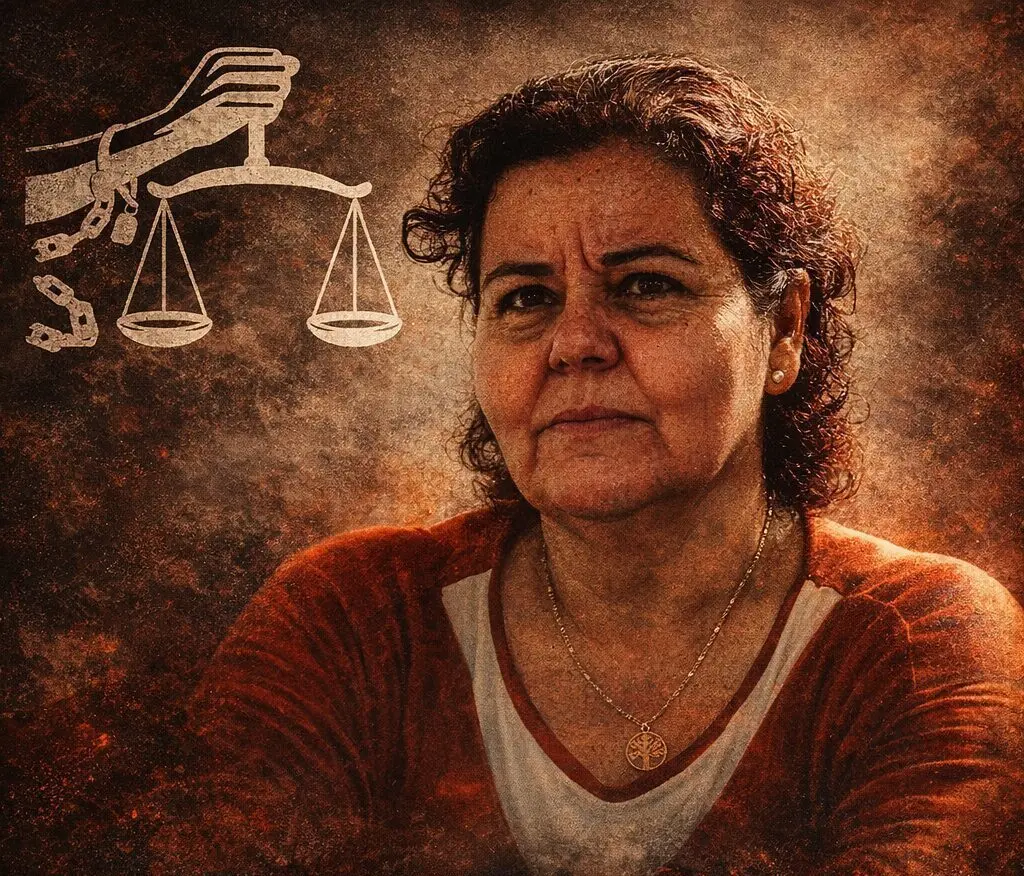
Featured image: The lawyer Dr. Lenir Correia. Source: Abrapo
The Brazilian Association of People’s Lawyers (ABRAPO) has denounced that the judicial secrecy imposed on Operation Godos serves to shield a campaign aimed at criminalizing popular advocacy and the poor peasants’ struggle for land in Rondônia, A Nova Democracia (AND) reports. Lenir Correia Coelho, a political prisoner for over nine months, remains incarcerated without any concrete evidence justifying her detention.
The operation, launched in November 2025 by the Special Action Group to Combat Organized Crime (GAECO) of Rondônia’s Public Prosecutor’s Office, involved hundreds of repressive agents, resulting in dozens of arrests, the killing of peasant Elias Camilo, and his partner being left injured.
The League of the Poor Peasants (LCP) states that none of the arrested were part of their organization and denounces the operation as an attempt to dismantle the struggle of hundreds of families in the Área Tiago Campin dos Santos and criminalize Agrarian Revolution.
ABRAPO’s latest statement focuses on the grounds used to keep Lenir imprisoned. The GAECO accuses her of participating in a supposed criminal organization’s “strategic/logistical core” for communicating case updates to clients. The association argues that informing clients, monitoring processes, and sharing news about conflicts is part of her professional duties, not criminal activity. “Criminalizing the act of informing the client is criminalizing defense itself. The criminalization of popular advocacy is evident!” ABRAPO declares.
The association also highlights that this persecution extends to peasants, asserting that GAECO denies them the right to land and legal defense. AND reports that Lenir’s criminalization predates Operation Godos; in November 2021, police raided her home during Operation Canaã, seizing her personal devices containing confidential client data.
ABRAPO criticizes the secrecy imposed on the case, stating that public scrutiny is essential to prevent abuses. “Secrecy protects not individuals’ privacy but the operation itself, shielding it from public scrutiny,” the association states. It compares the use of secrecy to historical exceptional courts, warning that when the State targets defenders of the poor while impeding public oversight, it constitutes an exceptional situation masked by ordinary legal procedures.
ABRAPO also points out a critical flaw in the case: no alleged victims or witnesses – including those presented by the prosecution – have implicated Lenir in any crime. “Despite this, she has spent over nine months in prison without a sentence or concrete evidence of risk to public order,” the association notes. It declares that her detention amounts to a premature sentence and recalls that the Superior Court of Justice (STJ) previously recognized the State’s inability to investigate peasant leader killings, federalizing six cases.
The association contrasts this history with the persecution of Lenir, stating, “Those who should punish land grabbing and paramilitary groups, target instead a lawyer committed to land democratization.”
In March, Lenir’s status as a political prisoner was recognized by the The People’s Court Against Latifundium Crimes, which demanded her immediate release. Recent events, including public endorsements of “counter-guerilla” tactics by former Military Police of Rondônia commander Régis Braguin, have further exposed the operation’s repressive nature.
The LCP has repeatedly stated that Operation Godos did not dismantle any criminal organization linked to them but instead targeted peasants, supporters, and a popular lawyer amid disputes over the Área Tiago Campin dos Santos. The LCP states collusion between police, big landlords, and public officials intimidates and expel families from the area, with recent deaths of alleged informants suggesting an effort to eliminate witnesses.
The campaign for Lenir’s freedom has gained support, including from the 43rd National Meeting of Pedagogy Students (ENEPe), which condemned her imprisonment as an attack on the supporters of the peasant movement.
ABRAPO concludes by demanding Lenir’s immediate release, the lifting of secrecy, accountability for public agents involved, and an end to the criminalization of peasant movements and popular advocacy. It calls on legal professionals, human rights organizations, and international bodies to join the campaign, declaring, “Defending the people’s right to fight for their rights, is not a crime!”