Dem Volke Dienen: Keiko Fujimori Elected President of Peru
We hereby share an unofficial translation of the article by Dem Volke Dienen published on the 1st of July, and shared by the Association of New Democracy – Germany (Nuevo Peru).
On June 7, the second round of elections took place in Peru.
36 candidates participated in the first round, one of whom passed away during the process. Of these, two candidates advanced to the second round, as the Peruvian Constitution requires a candidate to receive at least 50% of the valid votes to be declared president.
These two candidates were Keiko Fujimori of the Fuerza Popular party, with 2,877,678 votes—representing 17.192% of the valid votes (10.528% of eligible voters, or 8.24% of the population)—and Sánchez Palomino of Juntos por el Perú, with 2,015, 114 votes, representing 12.039% of the valid votes (7.374% of eligible voters, or 5.77% of the population).
It seems that the former generally represents the comprador faction of the bureaucratic bourgeoisie, while the latter represents the bureaucratic faction.
It is also clear that the attempt to legitimize the regime failed even on the first try. These figures are not only far from representing any supposed unity, but the total number of the non-voters and invalid votes is more than double the combined total of these two candidates.
The political crisis facing Peru’s long-standing government is also reflected in the fact that Keiko Fujimori will now be the ninth person in the last ten years to assume this office, despite the standard term of office actually being five years.
The National Office of Electoral Processes (ONPE) has now announced the official results of the second round of voting. Keiko Fujimori won with 50.13% of the valid votes, representing 33.75% of eligible voters or 26.41% of the population. Her opponent, for his part, has announced that he will not recognize the narrow result and is alleging election fraud (election fraud is, as in most countries, commonplace in Peru as well). The “Organization of American States,” led by the Yankees, has already taken a stand in favor of Keiko Fujimori.
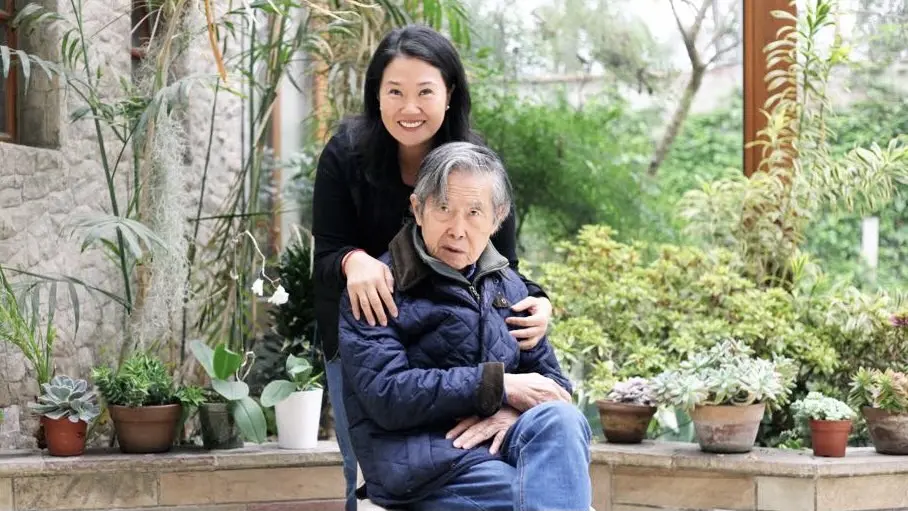
Keiko Fujimori is the daughter of Alberto Fujimori, who from 1990 to 2000 led a genocide that sought to crush the People’s War in Peru in a bloodbath. That swine died on September 11, 2024 (we shared the statement from the Peru People’s Movement at the time). Making his daughter president is an audacious move, but in a country where the genocidal and openly corrupt Alan García was able to become president a second time (1985–1990 and 2006–2011), even that is no longer surprising.
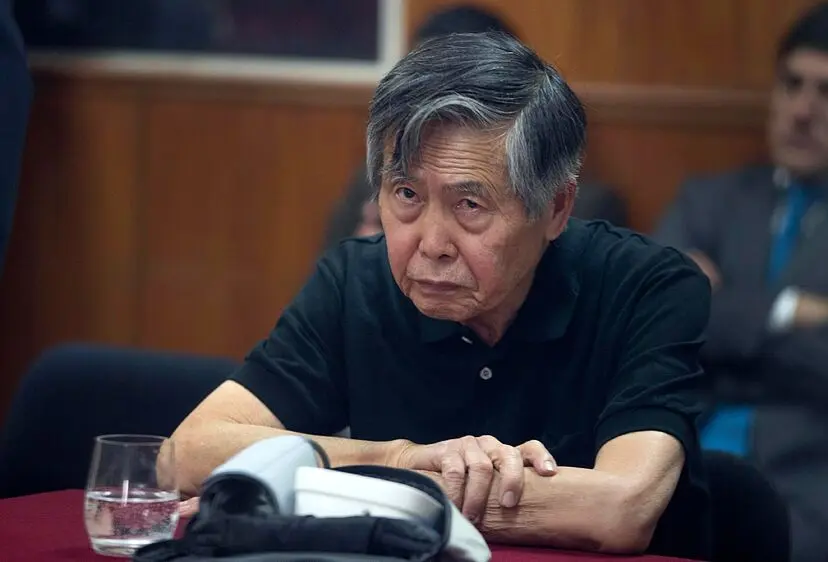
This government stands in direct continuity with the regime that, through Alberto Fujimori’s so-called self-coup of 1992—in which US imperialism directly took over the leadership of the counterrevolutionary war against the People’s War—was established; on the one hand, politically, as has been the case with all governments since then, but in this instance also directly and in terms of personnel.
Nevertheless, it is clear that Keiko Fujimori will have difficulty pushing her agenda through Parliament. Although her party’s caucus is the largest, it controls only about one-third of the seats.
The political crisis of the old Peruvian State is growing daily, and the people’s struggles are also on the rise. The people have nothing to expect from the elections—not in Peru, nor anywhere else in the world. It is clear that there is no other path than the People’s War.