Brazil: Criminalization of the Landless Workers’ Movement
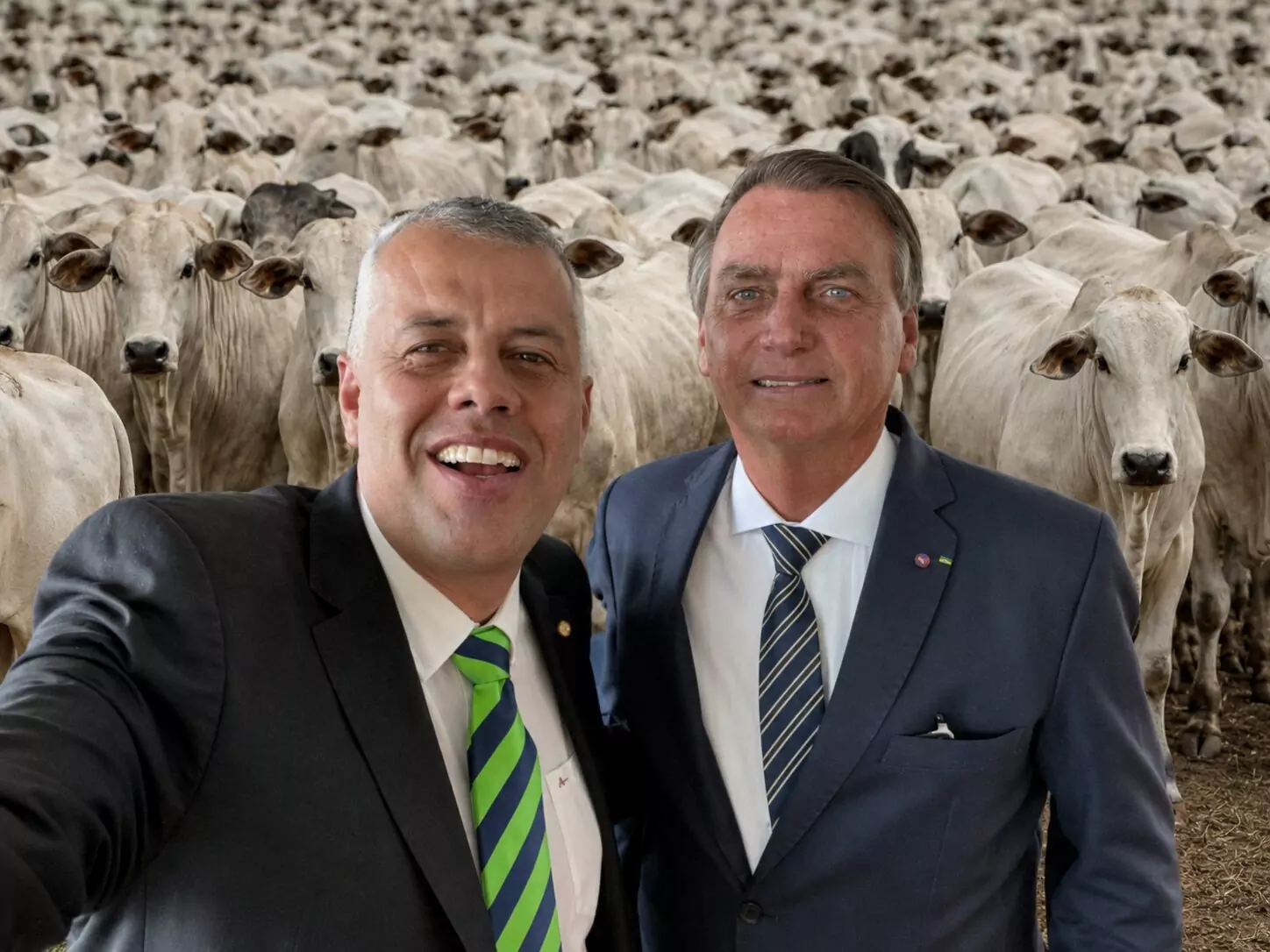
Featured image: A photo collage depicting Evair de Melo posing next to Jair Bolsonaro with a herd of cattle, alluding to the Bolsonaro-supporting congressman’s ties to latifundium and the reactionary offensive to criminalize the peasant movement as “terrorist.” Source: A Nova Democracia
The Landless Rural Workers Movement (MST) faces increasing criminalization and repression, A Nova Democracia (AND) writes in its recent article. In this process of delegitimization, political rhetoric is being used to equate their struggle for land with terrorism and drug-trafficking.
Brazilian federal deputy Evair de Melo, a Bolsonaro supporter with political and financial ties to the big landlord interests, has publicly urged the US to include the MST in the list of “terrorist” organizations”. He accuses the movement of links to “drug trafficking, money laundering, and the possession of firearms,” seeking to criminalize peasant resistance. Melo includes demands for detailed government data on MST land occupations, aiming to justify intensified actions against the movement under the guise of combating “narcoterrorism”.
This rhetoric finds immediate resonance in the reality of the state of Rondônia, AND points, where the Military Police and big landlords label peasant groups, such as the League of the Poor Peasants (LCP), as “armed factions controlling the territory”, thereby rationalizing ever more brutal police operations. This framing bypasses legal protections and transforms struggle for land into a target of the “war on terror.”
Legislative measures such as Bill 5.582/2025, the so-called “Anti-Faction Bill,” institutionalize this repression by creating broad criminal definitions that could include popular movements like the MST—this law carries possible penalties of up to 40 years.
This criminalization campaign aligns with the agenda of Yankee imperialism in the area, as Brazil makes increasingly clear its subjugation to US imperialism under the guise of security and the “war on drugs”. The combined effect of political rhetoric, legal frameworks, and international intervention means deepening the old State’s use of militarized repression to suppress peasant and other popular struggles.