Latest News in the Struggle for Land in Brazil
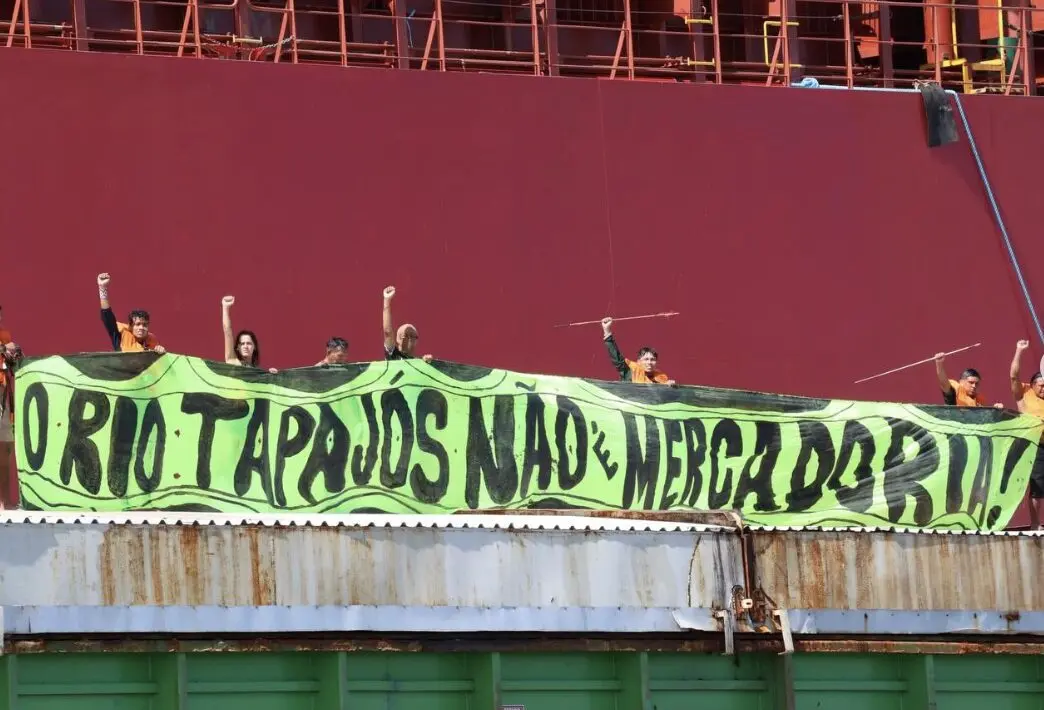
Featured image: Mobilization carried out against dredging project on the Tapajós River. Source: A Nova Democracia
We hereby share some of the latest news on the struggle for land based on reports from The New Brazil Bulletin published in A Nova Democracia on the 13th of July.
Santa Catarina: Quilombola residents denounce the lack of road maintenance
The Quilombola residents of Invernada dos Negros, in Campos Novos, have denounced the lack of maintenance on the roads in their settlement. They report that the poor quality of the roads have left families isolated within their territory, and that vehicles are unable to use the main access road, hindering also the children’s movement to and from school, as well as the elderly to medical appointments.
According to a coordinator of Quilombola Communities (Conaq), and resident of the settlement, the families have been demanding road repairs for months, without the municipal administration having presented a solution, and that a demonstration might be organized in front of the Campos Novos City Hall: “Either the mayor takes the necessary measures or we will organize a large mobilization of the entire Quilombola community in front of the City Hall.”
Pará: Mobilizations of the Cargill Port occupation lead to suspension of dredging project and demands for the creation of a Tapajós River Basin Committee
In early 2026, around 1,200 indigenous people and members of traditional settlements, linked to approximately 20 organizations, occupied the Cargill Port terminal and maintained river blockades in Santarém for more than one month. The mobilization was protesting a “dredging and waterway concession project included in the National Privatization Program of Luiz Inácio’s opportunistic government,” A Nova Democracia (AND) reports.
The mobilizations were successful, leading to the temporary suspension of the dredging project by the Federal Government. The Federal Public Prosecutor’s Office has since filed a lawsuit against the Federal Government and the National Water Agency, demanding the creation of the Tapajós River Basin Committee and an agency responsible for managing the basin.
Rondônia: Families in Abunã demand reparations for damages caused by the Jirau hydroelectric plant
Residents of the Abunã district in Porto Velho reported on July 9th that they remain without resettlement and compensation 12 years after the start of the damage attributed to the Jirau Hydroelectric Plant.
Families report rising groundwater levels, contaminated wells, permanent water accumulation, skin and gastrointestinal diseases, loss of crop production, reduced fishing, deteriorated roads, and landslides near their homes.
Read more: