Sweden – Culture: Radiant Red – Songs from the Struggle Vol I.
We hereby share an unofficial translation of a note published by Kommunisten on the 6th of July, we also include the songs.
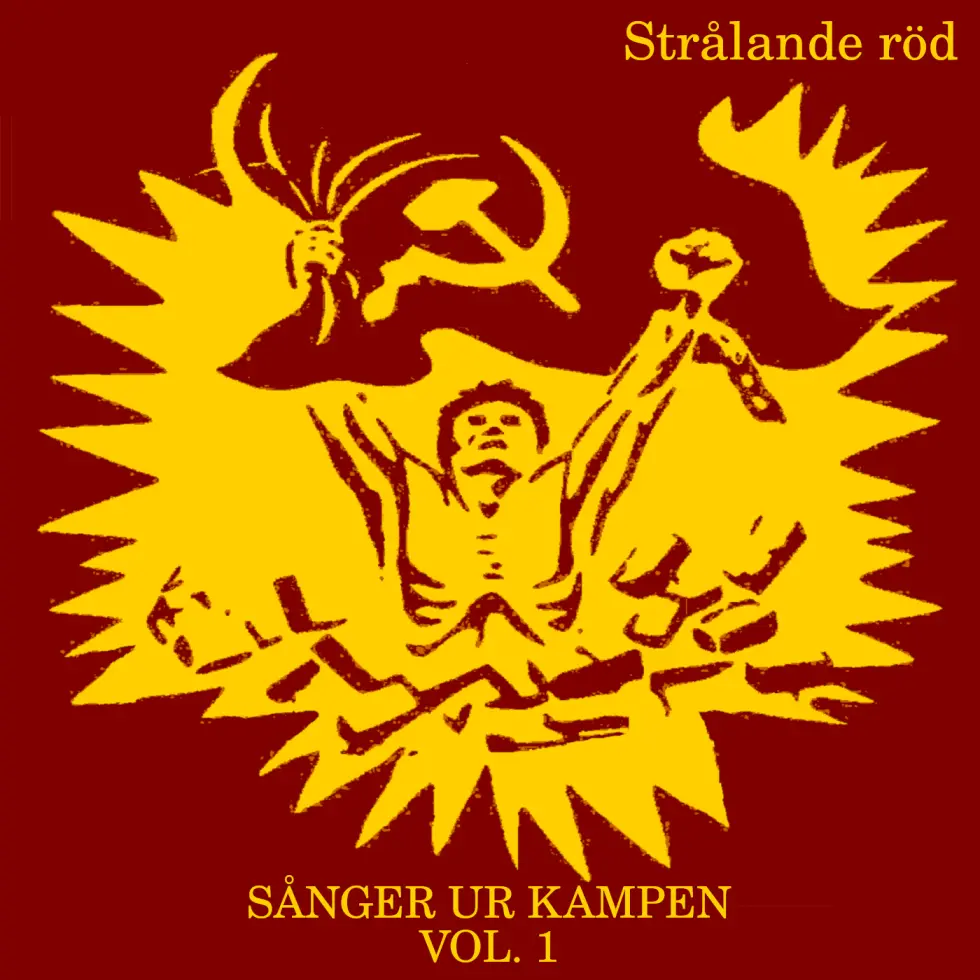
The album “SONGS FROM THE STRUGGLE, VOL. 1” was recently released on Bandcamp.
The group that released it is called “Radiant Red” [Translator’s note: Strålande röd in Swedish]. The album consists of revolutionary songs from various countries in both Swedish and English, as well as other Swedish revolutionary songs that have not been previously published. We welcome this initiative, as the development and consolidation of a revolutionary culture is essential for the formation or reformation of communist parties—and thus also for the victory of the people’s war—in every country, and this album serves this purpose well.
We have chosen to highlight a few of the songs that we consider particularly important.
“Kämpande partisan” – This is a Swedish translation of the song “Combatiente Guerrillero” from Peru. It deals with the life and worldview of the fighters in the People’s Liberation Army (EPL), under the leadership of the Communist Party of Peru, and has the role of the individual in the People’s War as its central theme. It refers to “Kilincho,” the name for the sparrowhawk in certain parts of Peru—presumably of Quechua origin—which is used as a name for a red combatant. The band appears to have taken its name from the lyrics, which read: “For an old order, the sun sets; for the new, it rises radiant and red.” For a revolutionary, there is nothing finer, nothing else but to participate in, develop, and defend the revolution, for without the revolution, without power in the hands of the oppressed classes, everything is an illusion. All the victories of the workers and peasants in their labor struggles in Peru can be swept away at any moment as long as they are not defended by the gun, and that defense cannot be maintained without New Power. The only ways to survive in that society without making a revolution are to bow so low that you can smell your ancestors, or to become a vile parasite riding on the backs of the working people, defended by its oppressors. Only the most heartless, shameless, and worthless people can do that.
“Dandakaranya” – This song appears to be of Swedish origin. Its message is clear: The Communist Party of India (Maoists) and the People’s Liberation Guerrilla Army (PLGA) should, can, and will triumph over the reactionary Indian state. They currently have their main base in Dandakaranya, a large forested area in central and eastern India where a large portion of the population consists of Adivasis—that is, ethnic groups oppressed in every possible way, not least because of the extreme violence perpetrated by the police and their auxiliary forces. Supporting the Indian revolution is of particular importance today, as it faces immense difficulties caused by the misdeeds of opportunism, capitulationism, and open reaction.
“Kärlekssången” [Translators note: “The Love Song”] – Love is the feeling that prepares a person to devote their life to something. But to what? PCP pointed out in “Procedure for Celebrating Marriages Before the Party (or Before the New State)”:
“The relationship between a man and a woman is the most direct and strictly human, it constitutes a social relationship. When those who enter into this relationship are communists (or revolutionaries), this union must contribute to the struggle that both carry out for Communism (or for the revolution).”
The conflict between the two types of love—the kind that contributes to the revolutionary struggle and the kind that hinders it—is brought to a head at various times by the course of social development. For example, what is love worth in Palestine without resistance to Yankee-Zionist aggression? What is love worth in the base areas of the People’s Wars in Peru, India, Turkey, and the Philippines without participation in the revolution? When the people’s liberation is at stake, every romantic relationship is transformed into either an obstacle or a spur to the struggle, and this characteristic becomes the defining feature of the relationship. But as Maoists, we understand that “every difference already contains a contradiction, and that difference in itself is a contradiction.”, that Swedish society is already facing the question of revolution or counterrevolution, even if it is not as prominent as in Peru, Palestine, or India. This fact compels one to ask: What am I fighting for? What do I truly love? Whom does my love serve—the Swedish working class and the peoples of the world, or the deceitful minority of exploiters?
We hereby share the songs: